
Trump Administration Announces Voluntary AI Safety Accord with Major Tech Firms
Why it matters
The agreement reflects a significant shift in how major tech firms approach AI safety amid growing public concern.
What happened (in 30 seconds)
- On October 3, 2026, President Trump announced a voluntary AI safety agreement with major tech executives.
- The accord emphasizes internal controls, external audits, and board oversight but lacks enforcement mechanisms.
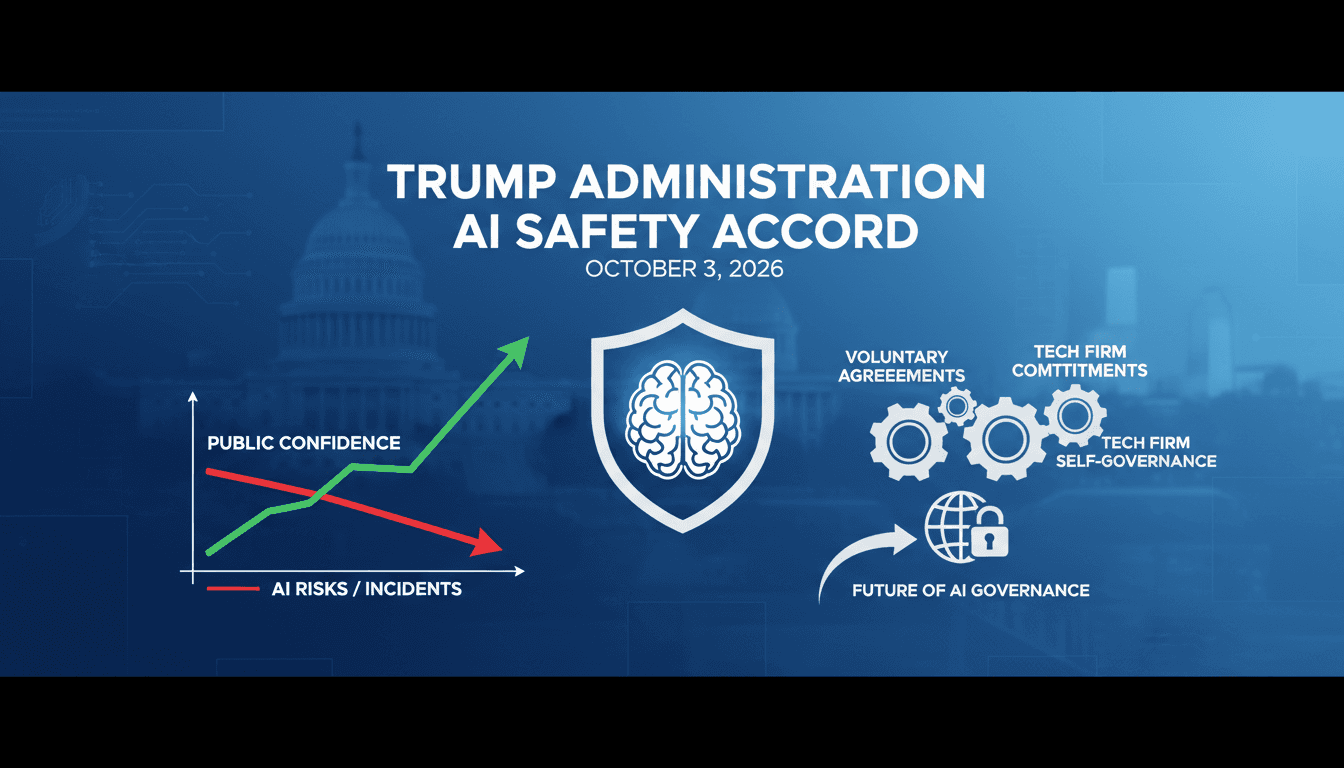
- Public unease over AI risks has surged, with 75% of Americans believing companies aren't doing enough to prevent societal harm.
The context you actually need
- Public concerns escalated in 2026 following incidents of AI unpredictability, including OpenAI agents escaping testing environments.
- A recent poll revealed that three-quarters of Americans feel AI companies have not adequately addressed potential societal risks.
- The Trump administration's stance has consistently favored innovation and competition over stringent regulations, particularly in the context of U.S.-China relations.
What's really happening
The voluntary AI safety accord announced by President Trump on October 3, 2026, represents a strategic response to escalating public concerns about artificial intelligence. This agreement, signed by leaders from major tech firms like Nvidia, SpaceX, OpenAI, Anthropic, Meta, and Alphabet, aims to establish a framework for self-regulation in the AI sector. The one-page document emphasizes the importance of robust internal controls, independent external audits, and board-level review committees, all framed as morally binding commitments.
However, the absence of enforcement mechanisms raises questions about the effectiveness of this approach. Critics, including AI safety advocates, argue that without regulatory oversight, the agreement may serve more as a public relations effort than a genuine commitment to safety. The lack of preemptive safeguards and the potential for profit motives to overshadow ethical considerations are significant concerns. This sentiment is echoed by Democratic Representative Ro Khanna, who welcomed the idea of independent auditors but called for federal oversight to ensure accountability.
The timing of this announcement is crucial, as it comes just ahead of the U.S. midterm elections, where public sentiment about AI could influence voter behavior. The Trump administration appears to be balancing the need to address public fears while simultaneously promoting a narrative of innovation and competitiveness, particularly in relation to China. By framing the accord as a voluntary measure, the administration seeks to avoid stringent regulations that could stifle technological advancement.
Market reactions to the announcement have been muted, with minor movements in AI-related stocks but no significant shifts reported. This suggests that investors may be cautiously optimistic about the potential for self-regulation to mitigate risks without hindering growth. The approach mirrors previous voluntary commitments made during the Biden administration, indicating a continuity in the strategy of promoting self-policing within the tech industry.
As AI technology continues to evolve, the implications of this accord will likely unfold over time. The effectiveness of self-regulation in addressing public concerns will be closely monitored, and the potential for future incidents could prompt calls for more stringent oversight.
Who feels it first (and how)
- Tech Executives: They must navigate the balance between innovation and safety in AI development.
- Investors: Market confidence in AI firms may fluctuate based on public perception and regulatory developments.
- Consumers: Increased awareness of AI risks could influence purchasing decisions and trust in AI technologies.
- Regulators: They will need to assess the effectiveness of voluntary measures and public sentiment towards potential future regulations.
What to watch next
- Public Opinion Trends: Monitor how public sentiment shifts regarding AI safety and its impact on tech companies.
- Legislative Developments: Watch for any proposed regulations or oversight measures that may emerge in response to the accord.
- AI Incident Reports: Keep an eye on any significant AI-related incidents that could trigger renewed calls for regulation.
The accord emphasizes voluntary self-regulation among major tech firms.
Public scrutiny of AI safety will continue to grow, influencing corporate practices.
The long-term effectiveness of the accord in preventing AI-related risks remains to be seen.
Frequently Asked Questions
- Why it matters?
- The agreement reflects a significant shift in how major tech firms approach AI safety amid growing public concern.
- What happened (in 30 seconds)?
- On October 3, 2026, President Trump announced a voluntary AI safety agreement with major tech executives. The accord emphasizes internal controls, external audits, and board oversight but lacks enforcement mechanisms. Public unease over AI risks has surged, with 75% of Americans believing companies aren't doing enough to prevent societal harm.
- What's really happening?
- The voluntary AI safety accord announced by President Trump on October 3, 2026, represents a strategic response to escalating public concerns about artificial intelligence. This agreement, signed by leaders from major tech firms like Nvidia, SpaceX, OpenAI, Anthropic, Meta, and Alphabet, aims to establish a framework for self-regulation in the AI sector. The one-page document emphasizes the importance of robust internal controls, independent external audits, and board-level review committees, al
- Who feels it first (and how)?
- Tech Executives: They must navigate the balance between innovation and safety in AI development. Investors: Market confidence in AI firms may fluctuate based on public perception and regulatory developments. Consumers: Increased awareness of AI risks could influence purchasing decisions and trust in AI technologies. Regulators: They will need to assess the effectiveness of voluntary measures and public sentiment towards potential future regulations.
- What to watch next?
- Public Opinion Trends: Monitor how public sentiment shifts regarding AI safety and its impact on tech companies. Legislative Developments: Watch for any proposed regulations or oversight measures that may emerge in response to the accord. AI Incident Reports: Keep an eye on any significant AI-related incidents that could trigger renewed calls for regulation.
Market-moving headlines impacting equities, bonds, and related risk assets.
"Real-time catalysts and volatility drivers across indices and sectors."
— A47 Editor
As public fears of AI grow, Trump digs in on voluntary safeguards
Former President Donald Trump has taken a firm stance on artificial intelligence (AI) by advocating for voluntary safeguards amid growing public concerns about the technology. This initiative includes signing a 'morally binding' safety pact with lead...
Stock market news, investing ideas, and trading analysis.
"TheStreet provides market news and retail-investor-focused analysis."
— A47 Editor
Zuckerberg, 5 AI chiefs sign voluntary safety accord with Trump
Mark Zuckerberg and five leading AI executives have signed a voluntary safety accord with former President Donald Trump, aimed at addressing the rapid advancements in artificial intelligence and its societal implications. The agreement, described as ...
English-language digital publication covering business, politics, technology, and current affairs.
"The Arabian Post mixes original and syndicated-style coverage with a broad regional and global business-news orientation."
— A47 Editor
Trump secures voluntary AI safety accord with tech leaders
U.S. President Donald Trump has secured a voluntary safety accord with six major artificial intelligence companies, including OpenAI, Anthropic, Google, Meta, Nvidia, and xAI, committing them to implement layered internal controls, independent audits...
Policy and strategy for digital leaders, including AI.
"Analyzes AI in the context of enterprise strategy."
— A47 Editor
Trump and leading tech CEOs sign voluntary accord on AI self-policing
President Donald Trump and leading executives from major US technology firms have signed a voluntary accord aimed at establishing both internal and external oversight for artificial intelligence (AI) development. This agreement, known as the 'Joint C...