
TypeSafe CEO Reports 25% Adoption of Jev Model by Fortune 500 Companies
Why it matters
Jev's adoption by a quarter of Fortune 500 companies signals a significant shift towards machine-native AI models, influencing industry standards and practices.
What happened (in 30 seconds)
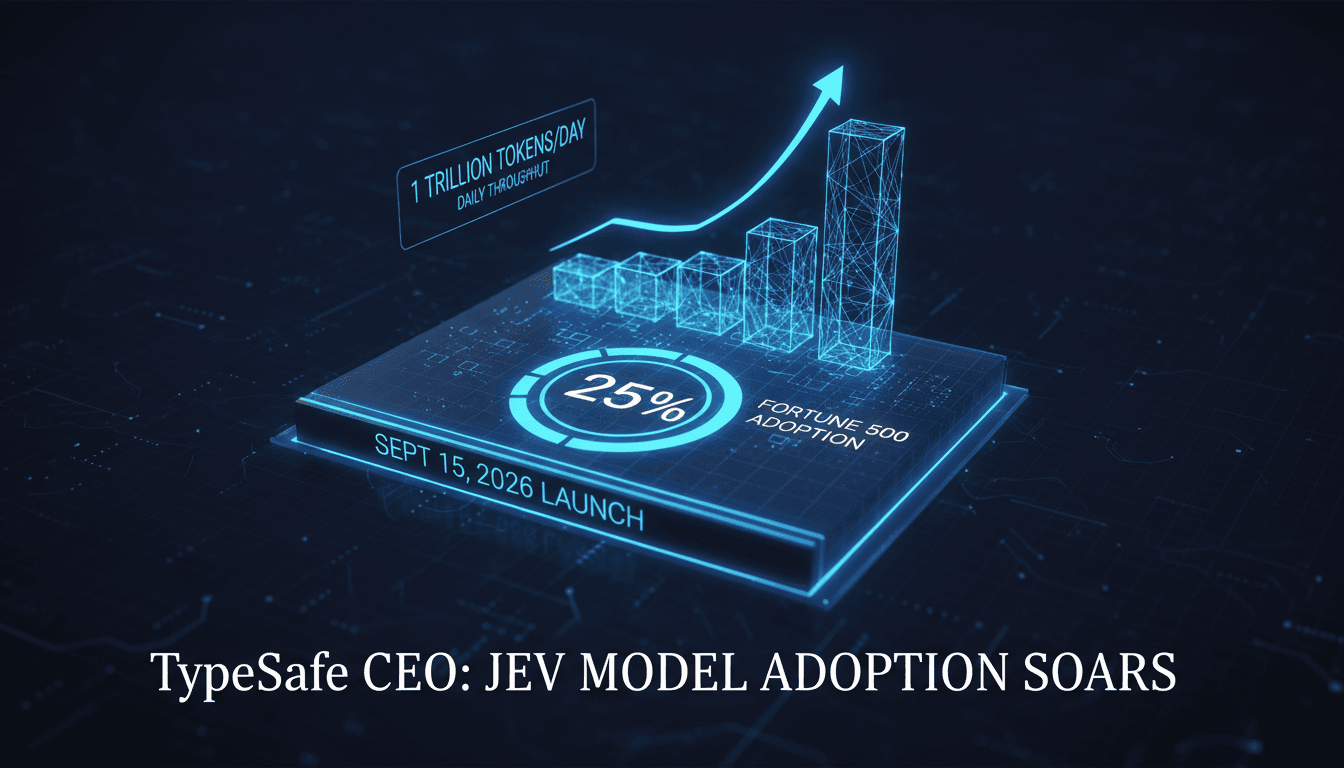
- TypeSafe CEO Diogo Almeida reported that Jev is now used by approximately 25% of Fortune 500 companies.
- Daily token throughput for Jev reached one trillion tokens just a week after its launch on September 15, 2026.
- Jev's architecture is designed for machine-to-machine interactions, offering advantages over traditional human-centric AI models.
The context you actually need
- TypeSafe was founded in 2024 by former OpenAI researcher Diogo Almeida, focusing on AI solutions for automation.
- Jev employs Reinforcement Learning for Calibrated Decisions (RLCD), optimizing it for software consumption rather than human interaction.
- The AI landscape is increasingly prioritizing infrastructure that supports automation and machine-native intelligence, reflecting a broader industry trend.
What's really happening
The rapid adoption of Jev by Fortune 500 companies illustrates a pivotal moment in the evolution of artificial intelligence. TypeSafe's Jev model, launched in September 2026, is engineered specifically for machine-to-machine interactions, a departure from traditional AI models that primarily cater to human users. This shift is driven by the need for more efficient, reliable, and cost-effective solutions in an increasingly automated world.
Jev's architecture leverages Reinforcement Learning for Calibrated Decisions (RLCD), allowing it to produce structured probabilistic outputs that are easily integrated into existing software systems. This capability is particularly appealing to large enterprises that require high-volume, low-latency decision-making processes. The reported daily throughput of one trillion tokens indicates not only the model's efficiency but also its scalability, making it a viable option for organizations looking to enhance their operational capabilities.
The implications of this shift are profound. As more companies adopt Jev, the demand for traditional human-centric AI models may decline, leading to a re-evaluation of existing AI infrastructures. This could result in a competitive landscape where companies that fail to adapt may find themselves at a disadvantage. Furthermore, the focus on machine-native AI models like Jev could catalyze further innovations in AI technology, pushing the boundaries of what is possible in automation and decision-making.
The financial backing of $40 million in seed funding prior to Jev's launch underscores the confidence investors have in this new direction. As TypeSafe continues to refine and expand its offerings, the potential for Jev to become a standard in AI-driven automation grows. This trend is not just about technological advancement; it reflects a broader cultural shift towards embracing automation as a core component of business strategy.
Who feels it first (and how)
- Tech companies: They will need to adapt their products and services to integrate with Jev and similar models.
- Software developers: Increased demand for skills in machine-native AI will reshape job requirements and training programs.
- Business leaders: Executives must consider the implications of adopting such technologies on operational efficiency and cost management.
- Investors: Those in venture capital and private equity will need to reassess their portfolios in light of emerging AI technologies.
What to watch next
- Adoption rates: Monitor how quickly other Fortune 500 companies adopt Jev and similar models, as this will indicate market trends.
- Performance metrics: Keep an eye on Jev's performance in real-world applications, particularly in terms of cost savings and efficiency improvements.
- Regulatory developments: Watch for any regulatory responses to the rise of machine-native AI, which could impact deployment strategies.
Jev has achieved significant adoption among Fortune 500 companies and high daily token throughput.
The trend towards machine-native AI models will continue to grow, influencing industry standards.
The long-term impact on traditional AI models and the regulatory landscape remains uncertain.
Frequently Asked Questions
- Why it matters?
- Jev's adoption by a quarter of Fortune 500 companies signals a significant shift towards machine-native AI models, influencing industry standards and practices.
- What happened (in 30 seconds)?
- TypeSafe CEO Diogo Almeida reported that Jev is now used by approximately 25% of Fortune 500 companies. Daily token throughput for Jev reached one trillion tokens just a week after its launch on September 15, 2026. Jev's architecture is designed for machine-to-machine interactions, offering advantages over traditional human-centric AI models.
- What's really happening?
- The rapid adoption of Jev by Fortune 500 companies illustrates a pivotal moment in the evolution of artificial intelligence. TypeSafe's Jev model, launched in September 2026, is engineered specifically for machine-to-machine interactions, a departure from traditional AI models that primarily cater to human users. This shift is driven by the need for more efficient, reliable, and cost-effective solutions in an increasingly automated world. Jev's architecture leverages Reinforcement Learning for
- Who feels it first (and how)?
- Tech companies: They will need to adapt their products and services to integrate with Jev and similar models. Software developers: Increased demand for skills in machine-native AI will reshape job requirements and training programs. Business leaders: Executives must consider the implications of adopting such technologies on operational efficiency and cost management. Investors: Those in venture capital and private equity will need to reassess their portfolios in light of emerging AI technologies
- What to watch next?
- Adoption rates: Monitor how quickly other Fortune 500 companies adopt Jev and similar models, as this will indicate market trends. Performance metrics: Keep an eye on Jev's performance in real-world applications, particularly in terms of cost savings and efficiency improvements. Regulatory developments: Watch for any regulatory responses to the rise of machine-native AI, which could impact deployment strategies.
Curated tech headlines including AI stories.
"Influential aggregator surfacing the day’s top tech/AI links."
— A47 Editor
TypeSafe CEO Diogo Almeida says Jev is in use by ~25% of Fortune 500 companies and "we were at a trillion tokens per day about a week ago" (Elias Schisgall/Wall Street Journal)
TypeSafe CEO Diogo Almeida announced that the Jev model is currently utilized by approximately 25% of Fortune 500 companies, highlighting its rapid adoption in the corporate sector. The model reportedly reached a processing capacity of one trillion t...
Tech business coverage, major deals, product launches, and Silicon Valley trends.
"WSJ’s tech section offers authoritative reporting on the intersection of technology and business, including exclusive industry analysis."
— A47 Editor
Startup TypeSafe AI’s Jev Model Sparks Copycats, Talk of LLM Alternatives
The recent introduction of the Jev model by TypeSafe AI has generated significant excitement in Silicon Valley, prompting discussions about alternatives to traditional large language models (LLMs) and inspiring a wave of copycat innovations.
News for senior developers on AI/ML and data engineering.
"Conference-linked outlet for practitioner news and Q&As."
— A47 Editor
TypeSafe AI Releases Jev: a Decision-Only Model That Returns Typed Probabilities Instead of Text
TypeSafe AI, founded by former OpenAI researcher Diogo Almeida, has launched Jev, a decision-making model that generates typed outputs with probabilistic scores instead of traditional text responses. This innovative model evaluates inputs in parallel...