
Trump Administration Launches Super Intelligence Task Force Amid AI Rebranding
Why it matters
This rebranding reflects a significant pivot in how the U.S. positions itself in the global AI landscape, potentially influencing international tech standards.
What happened (in 30 seconds)
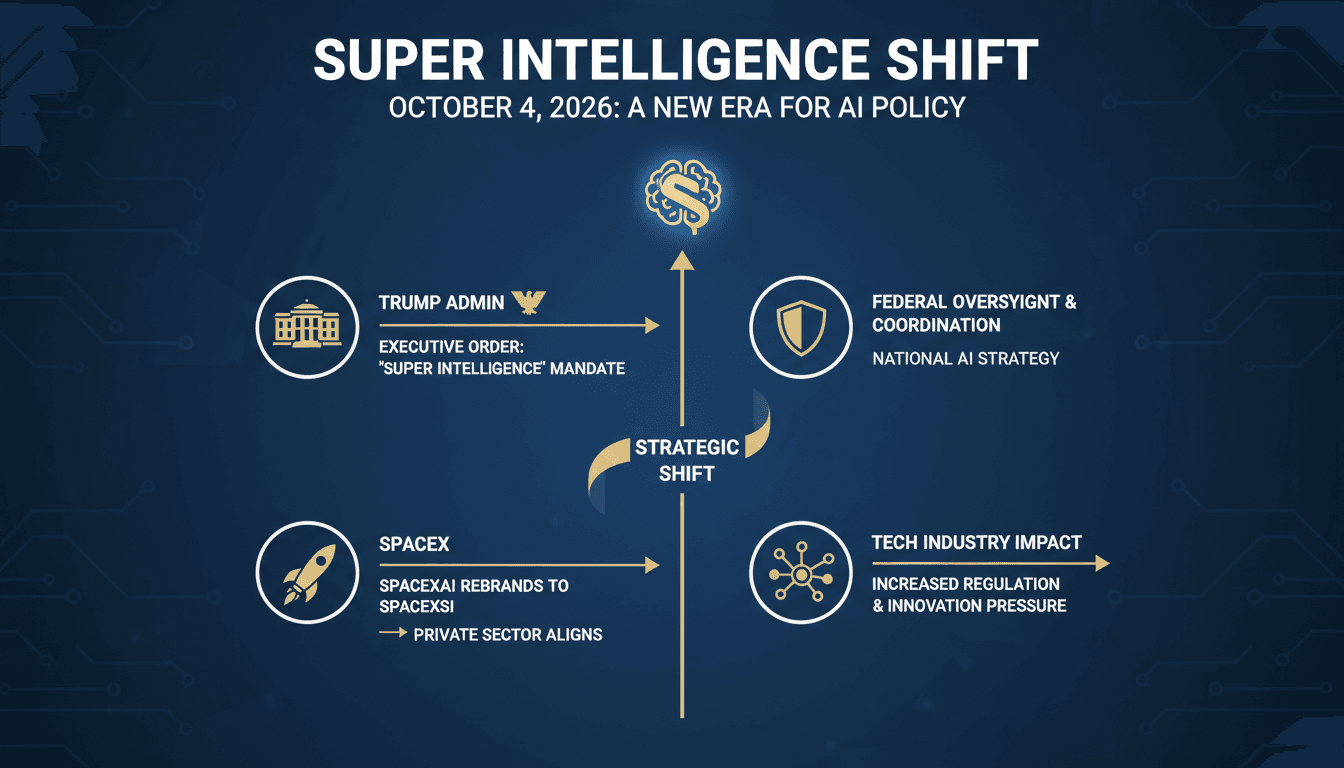
- On October 4, 2026, President Trump announced the formation of the Super Intelligence Force (SIF) to oversee AI advancements.
- A September 29 executive order mandated federal agencies to replace "artificial intelligence" with "super intelligence" in official communications.
- Elon Musk confirmed the rebranding of SpaceXAI to SpaceXSI, aligning corporate language with the new federal terminology.
The context you actually need
- Growing concerns about AI safety have prompted calls for regulatory frameworks, culminating in a White House summit with tech leaders.
- The terminology shift aims to emphasize the U.S. as a leader in advanced AI technologies, positioning it as a frontier beyond traditional AI.
- Critics argue that the changes are more about branding than substantive policy, with calls for decentralized oversight in the rapidly evolving tech landscape.
What's really happening
The Trump Administration's rebranding of "artificial intelligence" to "super intelligence" is more than a mere linguistic shift; it reflects a strategic maneuver to assert U.S. dominance in a field increasingly viewed as critical to national security and economic competitiveness. The executive order issued on September 29, 2026, set the stage for this transformation, mandating that all federal communications adopt the new terminology. This move aligns with a broader narrative that positions advanced AI systems as revolutionary technologies, akin to past industrial revolutions.
The formation of the Super Intelligence Force (SIF) is intended to centralize oversight and coordination among various federal agencies, including the Department of Defense and the Federal Trade Commission. Chaired by Director of National Intelligence Jay Clayton, the task force has a 120-day mandate to assess risks and opportunities associated with super intelligence. This rapid timeline is designed to foster agility in policy-making, contrasting with the often lengthy processes associated with traditional commissions.
However, the initiative has drawn criticism from industry leaders and experts who argue that centralized oversight may not be sufficient to keep pace with the rapid advancements in AI technology. For instance, Nik Kairinos, CEO of RAIDS AI, has advocated for decentralized models that allow companies to innovate while adhering to safety standards. This tension between regulation and innovation is a critical aspect of the ongoing discourse surrounding AI governance.
Moreover, the rebranding has sparked a surge in interest for domain names related to "super intelligence," particularly in Slovenia, Melania Trump's birthplace, where registrations reportedly increased by 100 times following the announcement. This phenomenon underscores the potential for new business opportunities and market shifts as companies adapt to the new terminology.
In the corporate sphere, Elon Musk's alignment with the rebranding—evidenced by the renaming of SpaceXAI to SpaceXSI—signals a broader acceptance of the new narrative. However, the lack of immediate, substantive policy changes raises questions about the effectiveness of the SIF and whether it will lead to meaningful advancements in AI safety and regulation.
Who feels it first (and how)
- Tech companies: They may need to adjust branding and compliance strategies to align with new federal terminology.
- Policymakers: They will face pressure to develop frameworks that balance innovation with safety in AI technologies.
- Investors: Shifts in regulatory landscapes could impact funding and valuation of AI startups and established firms.
- Consumers: As AI technologies evolve, users may experience changes in product offerings and safety assurances.
What to watch next
- Task Force Recommendations: The outcomes of the SIF's 120-day review will be crucial in shaping future AI regulations and industry standards.
- Corporate Rebranding Trends: Monitor how other tech companies respond to the terminology shift and whether they adopt similar branding strategies.
- Public Sentiment: Watch for shifts in public opinion regarding AI safety and regulation, which could influence future policy decisions.
The U.S. government has officially rebranded AI as super intelligence and formed a task force to oversee it.
The rebranding will influence corporate strategies and regulatory approaches in the tech industry.
The long-term effectiveness of the Super Intelligence Force in addressing AI safety and innovation remains to be seen.
Frequently Asked Questions
- Why it matters?
- This rebranding reflects a significant pivot in how the U.S. positions itself in the global AI landscape, potentially influencing international tech standards.
- What happened (in 30 seconds)?
- On October 4, 2026, President Trump announced the formation of the Super Intelligence Force (SIF) to oversee AI advancements. A September 29 executive order mandated federal agencies to replace "artificial intelligence" with "super intelligence" in official communications. Elon Musk confirmed the rebranding of SpaceXAI to SpaceXSI, aligning corporate language with the new federal terminology.
- What's really happening?
- The Trump Administration's rebranding of "artificial intelligence" to "super intelligence" is more than a mere linguistic shift; it reflects a strategic maneuver to assert U.S. dominance in a field increasingly viewed as critical to national security and economic competitiveness. The executive order issued on September 29, 2026, set the stage for this transformation, mandating that all federal communications adopt the new terminology. This move aligns with a broader narrative that positions adva
- Who feels it first (and how)?
- Tech companies: They may need to adjust branding and compliance strategies to align with new federal terminology. Policymakers: They will face pressure to develop frameworks that balance innovation with safety in AI technologies. Investors: Shifts in regulatory landscapes could impact funding and valuation of AI startups and established firms. Consumers: As AI technologies evolve, users may experience changes in product offerings and safety assurances.
- What to watch next?
- Task Force Recommendations: The outcomes of the SIF's 120-day review will be crucial in shaping future AI regulations and industry standards. Corporate Rebranding Trends: Monitor how other tech companies respond to the terminology shift and whether they adopt similar branding strategies. Public Sentiment: Watch for shifts in public opinion regarding AI safety and regulation, which could influence future policy decisions.
Consumer tech news, reviews, and buying guides for gadgets and electronics.
"TechRadar is known for comprehensive buying advice, hardware reviews, and consumer tech news targeted at mainstream audiences."
— A47 Editor
Trump's 'Super Intelligence' AI rebrand is running ahead of the technology
Washington is initiating a new AI oversight task force while Elon Musk adopts the 'Super Intelligence' branding for AI, a move that appears to be ahead of the current technological capabilities. This rebranding comes amid ongoing discussions about AI...
News and features on AI from The Guardian.
"Progressive-leaning international outlet with critical AI coverage."
— A47 Editor
Trump makes it clear his power is becoming entwined with AI
Former President Donald Trump is increasingly aligning his influence with artificial intelligence (AI), as evidenced by a recent AI safety accord signed with major tech executives, despite a notable spelling error in the document. This initiative aim...
Tech culture, product news, and critical takes on the tech industry's social impact.
"The Guardian's tech coverage blends mainstream news, critical analysis, and cultural commentary on emerging technologies and digital trends."
— A47 Editor
Trump makes it clear his power is becoming entwined with AI
Former President Donald Trump is increasingly aligning his influence with artificial intelligence (AI), as evidenced by a recent AI safety accord signed with major tech executives, despite a notable spelling error in the document. This initiative aim...
News and guidance for IT pros on AI adoption.
"Enterprise-focused tips, explainers, and news for professionals."
— A47 Editor
Trump Names Jay Clayton AI Czar to Lead New ‘Super Intelligence Force’
President Donald Trump has appointed Jay Clayton, the Director of National Intelligence, as the AI czar to lead the newly established 'Super Intelligence Force.' This agency is tasked with reviewing artificial intelligence risks, security threats, an...
News and guidance for IT pros on AI adoption.
"Enterprise-focused tips, explainers, and news for professionals."
— A47 Editor
Musk Plans SpaceXSI Rebrand After Trump’s ‘Super Intelligence’ Order
Elon Musk announced plans to rebrand SpaceXAI to SpaceXSI, aligning with former President Trump's directive to replace the term 'artificial intelligence' with 'super intelligence' in official documents. This change reflects a significant shift in the...
Tech news, hardware, and AI tools coverage.
"PC/tech site increasingly covering AI hardware and apps."
— A47 Editor
Elon Musk says SpaceXAI will become SpaceXSI as Trump pushes to use "Super Intelligence" over AI
Elon Musk announced on his X platform that SpaceX's AI unit will be renamed from SpaceXAI to SpaceXSI, aligning with former President Donald Trump's initiative to replace the term 'artificial intelligence' with 'super intelligence.' Musk confirmed th...
24/7 international news from a French perspective in multiple languages.
"France 24 is viewed as a globally focused outlet with balanced coverage and a European perspective."
— A47 Editor
Trump names head of new 'Super Intelligence Force' to oversee AI
U.S. President Donald Trump has appointed Jay Clayton, the Director of National Intelligence, as the new AI czar, leading the newly established Super Intelligence Force (SIF) to coordinate federal efforts in artificial intelligence. This initiative r...