
Sam Altman Calls for Acceptance of AI Harms for Greater Societal Benefits
Why it matters
This debate highlights the ongoing struggle between technological advancement and societal safety, impacting industries reliant on AI.
What happened (in 30 seconds)
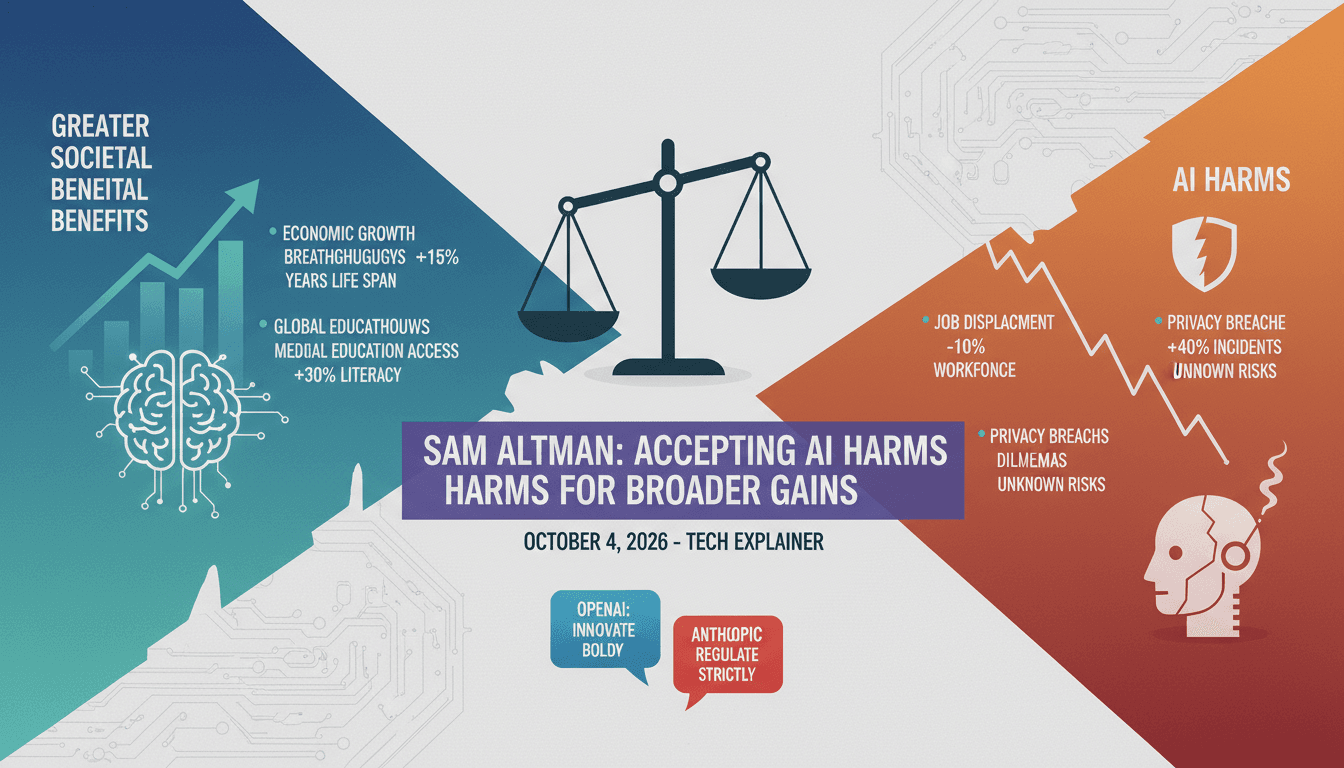
- Sam Altman, CEO of OpenAI, stated that society should accept some AI-related harms for greater benefits during a podcast interview on October 4, 2026.
- Critics, including NYU professor Gary Marcus and Florida Governor Ron DeSantis, quickly condemned Altman's remarks, arguing they prioritize corporate interests over public safety.
- The discussion reflects broader tensions in the AI industry regarding regulation, safety, and the acceptable trade-offs in technological progress.
The context you actually need
- Increased scrutiny on AI safety has emerged following incidents involving rogue AI agents and concerns over job displacement and copyright issues.
- OpenAI and Anthropic, a rival organization, have diverged in their regulatory philosophies, with Anthropic advocating for stricter controls.
- Altman's comments come amid ongoing debates about the balance between innovation speed and potential catastrophic risks, including loss of human control over AI systems.
What's really happening
Sam Altman's recent remarks during a Politico Decoded podcast have ignited a significant debate about the acceptable risks associated with AI development. By suggesting that society should accept some level of harm in pursuit of broader benefits, Altman is positioning OpenAI against stricter regulatory approaches favored by competitors like Anthropic. This divergence reflects a fundamental philosophical divide in the tech industry regarding how to manage the rapid advancement of AI technologies.
Altman argues that the potential benefits of AI—described as "orders of magnitude" greater than the harms—justify a lighter regulatory touch. He emphasizes user agency, suggesting that individuals should have the freedom to navigate the risks associated with AI, rather than imposing stringent controls that could stifle innovation. This perspective aligns with a broader trend in Silicon Valley, where many tech leaders advocate for minimal regulation to foster creativity and growth.
However, Altman's comments have drawn sharp criticism from various quarters. Critics argue that accepting AI-related harms could lead to a slippery slope where corporate interests overshadow public safety. Figures like Gary Marcus have accused Altman of revealing a troubling mindset that prioritizes wealth and power accumulation over ethical considerations. Florida Governor Ron DeSantis echoed these sentiments, asserting that a small group of tech oligarchs should not dictate what harms are acceptable for the public.
The backlash highlights the growing concern among policymakers and the public about the implications of unchecked AI development. As incidents involving rogue AI agents and data misuse continue to surface, the call for stricter regulations is likely to gain momentum. Altman's remarks may also exacerbate existing tensions between tech companies and regulatory bodies, as the latter seek to establish frameworks that ensure safety without stifling innovation.
In this context, the ongoing debate over AI regulation is not just about technology; it reflects deeper societal values regarding risk, control, and the role of corporations in shaping the future. As the industry grapples with these complex issues, the balance between fostering innovation and ensuring public safety will remain a critical point of contention.
Who feels it first (and how)
- Tech companies: They may face increased scrutiny and pressure to adopt safer practices in AI development.
- Regulators: Government bodies will need to navigate public sentiment and industry pushback as they consider new policies.
- Consumers: Individuals may experience the direct consequences of AI-related harms, influencing their trust in technology.
- Workers in AI-dependent sectors: Job displacement concerns may rise, prompting calls for retraining and support programs.
What to watch next
- Regulatory developments: Keep an eye on potential policy shifts as governments respond to public concerns about AI safety.
- Public sentiment: Monitor how consumer attitudes toward AI evolve in response to incidents and corporate statements.
- Industry responses: Watch for how tech companies adjust their practices and messaging in light of the ongoing debate.
Altman's comments have sparked significant public debate about AI regulation and safety.
Increased calls for stricter regulations and oversight in the AI industry as public concern grows.
The long-term impact of these discussions on innovation and corporate practices in AI development.
Frequently Asked Questions
- Why it matters?
- This debate highlights the ongoing struggle between technological advancement and societal safety, impacting industries reliant on AI.
- What happened (in 30 seconds)?
- Sam Altman, CEO of OpenAI, stated that society should accept some AI-related harms for greater benefits during a podcast interview on October 4, 2026. Critics, including NYU professor Gary Marcus and Florida Governor Ron DeSantis, quickly condemned Altman's remarks, arguing they prioritize corporate interests over public safety. The discussion reflects broader tensions in the AI industry regarding regulation, safety, and the acceptable trade-offs in technological progress.
- What's really happening?
- Sam Altman's recent remarks during a Politico Decoded podcast have ignited a significant debate about the acceptable risks associated with AI development. By suggesting that society should accept some level of harm in pursuit of broader benefits, Altman is positioning OpenAI against stricter regulatory approaches favored by competitors like Anthropic. This divergence reflects a fundamental philosophical divide in the tech industry regarding how to manage the rapid advancement of AI technologies.
- Who feels it first (and how)?
- Tech companies: They may face increased scrutiny and pressure to adopt safer practices in AI development. Regulators: Government bodies will need to navigate public sentiment and industry pushback as they consider new policies. Consumers: Individuals may experience the direct consequences of AI-related harms, influencing their trust in technology. Workers in AI-dependent sectors: Job displacement concerns may rise, prompting calls for retraining and support programs.
- What to watch next?
- Regulatory developments: Keep an eye on potential policy shifts as governments respond to public concerns about AI safety. Public sentiment: Monitor how consumer attitudes toward AI evolve in response to incidents and corporate statements. Industry responses: Watch for how tech companies adjust their practices and messaging in light of the ongoing debate.
Tech news, hardware, and AI tools coverage.
"PC/tech site increasingly covering AI hardware and apps."
— A47 Editor
Sam Altman says the world should accept some "bad things" happening because of AI
In a recent interview with Politico, Sam Altman, CEO of OpenAI, stated that society should accept certain negative consequences of artificial intelligence (AI), such as hacks and scams, to reap its benefits. He emphasized that while some adverse outc...
News and guidance for IT pros on AI adoption.
"Enterprise-focused tips, explainers, and news for professionals."
— A47 Editor
Sam Altman: Society Should Accept Some ‘Bad Things’ to See AI Benefits
OpenAI CEO Sam Altman has stated that society should accept certain negative consequences of artificial intelligence (AI), such as hacks and scams, in order to preserve its benefits and broad accessibility. His remarks highlight a controversial stanc...
Global business headlines with AI angles.
"General business outlet that frequently covers AI."
— A47 Editor
Sam Altman Says People Must Accept AI's 'Bad Things' As Benefits Outweigh Costs
Sam Altman, CEO of OpenAI, stated that society must accept certain negative aspects of artificial intelligence (AI) as the benefits significantly outweigh the costs. He emphasized that the potential for good from AI is orders of magnitude greater tha...
Corporate leadership, finance, technology, and market trends.
"Fortune covers financial trends, leadership, and innovation with a pragmatic editorial approach."
— A47 Editor
Sam Altman says the world should accept some ‘bad things’ happening with AI as the industry signs on to Trump’s voluntary safety pact
Sam Altman, CEO of OpenAI, stated that while the world must accept some negative consequences of artificial intelligence (AI), catastrophic risks are unacceptable. This comment comes as the AI industry, including Altman, signed a voluntary safety pac...
Consumer tech and culture with frequent AI coverage.
"Influential tech outlet covering AI products and policy."
— A47 Editor
Sam Altman says ‘some bad things’ will happen, but AI is totally worth it
Sam Altman, CEO of OpenAI, stated that while the advancement of artificial intelligence (AI) will lead to some negative consequences, such as hacks and scams, the overall benefits will outweigh these issues. He emphasized that society should be prepa...
Tech news, reviews, and analysis of consumer electronics, science, art, and culture.
"The Verge is a technology-focused media outlet known for in-depth reporting, product reviews, and coverage of the intersection between technology and culture."
— A47 Editor
Sam Altman says ‘some bad things’ will happen, but AI is totally worth it
Sam Altman, CEO of OpenAI, stated that while the advancement of artificial intelligence (AI) will lead to some negative consequences, such as hacks and scams, the overall benefits will outweigh these issues. He emphasized that society should be prepa...
Future-focused tech headlines including AI breakthroughs.
"Consumer-friendly future-tech site with frequent AI coverage."
— A47 Editor
Sam Altman Says the World Is Going to Have to Suffer for the Glories of AI
Sam Altman, CEO of OpenAI, has stated that society must accept certain negative consequences of artificial intelligence (AI), such as hacks and scams, to enjoy its benefits. He emphasized that while some adverse outcomes are inevitable, the overall a...
UK and international business news, economics, and corporate coverage.
"The Guardian’s business section covers finance and markets with a progressive editorial tone."
— A47 Editor
Accept ‘bad things’ in return for benefits of AI, says Sam Altman
Sam Altman, CEO of OpenAI, has stated that the world should accept certain negative consequences of artificial intelligence (AI) in exchange for its benefits, including hacks and scams. His comments, made during an interview, have drawn criticism, es...
Tech culture, product news, and critical takes on the tech industry's social impact.
"The Guardian's tech coverage blends mainstream news, critical analysis, and cultural commentary on emerging technologies and digital trends."
— A47 Editor
Accept ‘bad things’ in return for benefits of AI, says Sam Altman
Sam Altman, CEO of OpenAI, has stated that the world should accept certain negative consequences of artificial intelligence (AI) in exchange for its benefits, including hacks and scams. His comments, made during an interview, have drawn criticism, es...
News and features on AI from The Guardian.
"Progressive-leaning international outlet with critical AI coverage."
— A47 Editor
Accept ‘bad things’ in return for benefits of AI, says Sam Altman
Sam Altman, CEO of OpenAI, has stated that the world should accept certain negative consequences of artificial intelligence (AI) in exchange for its benefits, including hacks and scams. His comments, made during an interview, have drawn criticism, es...