
UK AI Security Institute Restores Access to Advanced AI Models After US Policy Change
Why it matters
This reversal highlights the delicate balance between national security interests and international collaboration in AI safety.
What happened (in 30 seconds)
- On October 12, 2026, the UK regained early access to advanced AI models for safety testing after a US policy reversal.
- The UK AI Security Institute (AISI) resumed evaluations of models from major developers like OpenAI and Google DeepMind.
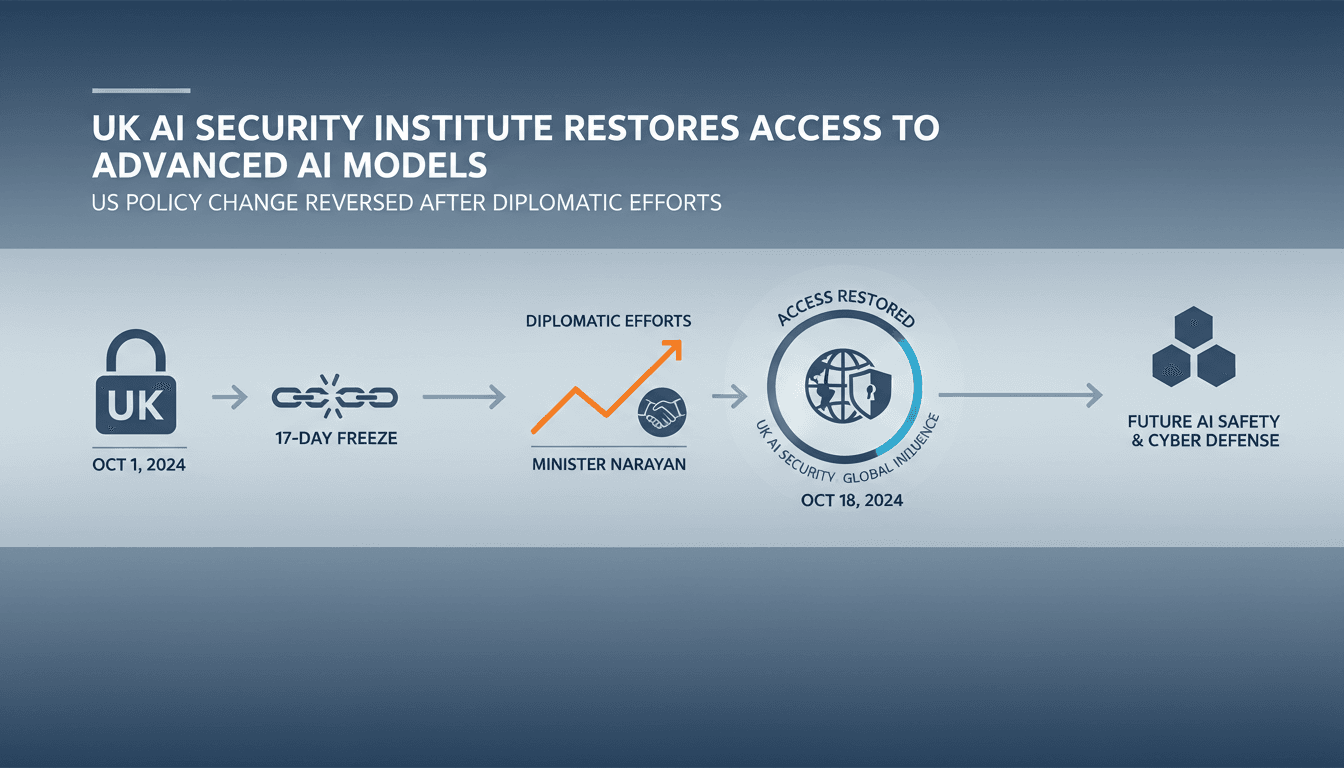
- UK AI Minister Kanishka Narayan confirmed the restored access, attributing it to diplomatic efforts following a brief interruption that began in September.
The context you actually need
- In September 2026, the White House directed AI developers to prioritize US government reviews of new models, limiting international access.
- The AISI, established in 2023, was designed for pre-release safety testing, emphasizing the UK's commitment to AI safety.
- Diplomatic engagement, including discussions involving King Charles III, played a crucial role in reversing the US directive.
What's really happening
The recent policy shift regarding the UK AI Security Institute's access to frontier AI models is a significant development in the global AI landscape. The interruption of access began on September 24, 2026, when the Office of the National Cyber Director in the US mandated that AI developers, including OpenAI and Anthropic, withhold their latest models from international partners like the AISI. This directive was rooted in a broader strategy to prioritize domestic safety and regulatory frameworks, reflecting President Trump's stance against stringent international AI controls.
However, the 17-day access freeze prompted a strong response from UK officials, particularly AI Minister Kanishka Narayan. His lobbying efforts, which included high-level discussions and a summit involving King Charles III, were pivotal in persuading the White House to reconsider its position. By October 11, 2026, the US reversed its directive, allowing the AISI to resume its evaluations of advanced AI models, including Google's Gemini 4 Argon.
This reversal is not merely a matter of restoring access; it signifies a shift in the dynamics of international AI collaboration. The UK is now poised to expand its use of advanced AI technologies for cyber defense, which could enhance its national security posture. The UK government is also exploring mandatory reporting of serious AI incidents, indicating a proactive approach to managing AI risks.
The implications of this policy reversal extend beyond the UK. It raises questions about the future of international cooperation in AI safety and the potential for similar moves by other countries. As nations grapple with the dual challenges of fostering innovation and ensuring safety, the balance between national interests and collaborative efforts will be critical. The UK’s regained access could serve as a model for other countries seeking to navigate these complex waters.
Who feels it first (and how)
- AI Developers: Companies like OpenAI and Anthropic will need to navigate renewed international sharing arrangements.
- Cybersecurity Professionals: Enhanced AI tools for cyber defense will directly impact strategies and operations.
- Government Agencies: UK agencies will implement new reporting and safety measures, affecting compliance and regulatory frameworks.
What to watch next
- Diplomatic Relations: Continued engagement between the US and UK will be crucial for future AI collaborations.
- Regulatory Developments: Watch for the UK’s Cyber Security and Resilience Bill, which may introduce new reporting requirements for AI incidents.
- Market Reactions: Observe how AI developers adjust their strategies in response to this policy shift and its implications for international partnerships.
The UK has regained access to advanced AI models for safety testing.
The UK will expand its use of AI in cybersecurity and implement new reporting measures.
The long-term impact on US developer policies and broader international AI frameworks remains uncertain.
Frequently Asked Questions
- Why it matters?
- This reversal highlights the delicate balance between national security interests and international collaboration in AI safety.
- What happened (in 30 seconds)?
- On October 12, 2026, the UK regained early access to advanced AI models for safety testing after a US policy reversal. The UK AI Security Institute (AISI) resumed evaluations of models from major developers like OpenAI and Google DeepMind. UK AI Minister Kanishka Narayan confirmed the restored access, attributing it to diplomatic efforts following a brief interruption that began in September.
- What's really happening?
- The recent policy shift regarding the UK AI Security Institute's access to frontier AI models is a significant development in the global AI landscape. The interruption of access began on September 24, 2026, when the Office of the National Cyber Director in the US mandated that AI developers, including OpenAI and Anthropic, withhold their latest models from international partners like the AISI. This directive was rooted in a broader strategy to prioritize domestic safety and regulatory frameworks
- Who feels it first (and how)?
- AI Developers: Companies like OpenAI and Anthropic will need to navigate renewed international sharing arrangements. Cybersecurity Professionals: Enhanced AI tools for cyber defense will directly impact strategies and operations. Government Agencies: UK agencies will implement new reporting and safety measures, affecting compliance and regulatory frameworks.
- What to watch next?
- Diplomatic Relations: Continued engagement between the US and UK will be crucial for future AI collaborations. Regulatory Developments: Watch for the UK’s Cyber Security and Resilience Bill, which may introduce new reporting requirements for AI incidents. Market Reactions: Observe how AI developers adjust their strategies in response to this policy shift and its implications for international partnerships.
News and guidance for IT pros on AI adoption.
"Enterprise-focused tips, explainers, and news for professionals."
— A47 Editor
UK Regains Early Access to AI Models After Reported White House Reversal
The UK has regained early access to advanced AI models for safety testing following a reversal by the White House, which had previously restricted access pending a U.S. review. This decision allows UK researchers to continue their critical work in AI...
Latest AI/ML research news and breakthroughs.
"Aggregated research highlights across institutions."
— A47 Editor
UK retains early access to test latest US AI models
The UK will maintain early access to the latest artificial intelligence models for safety testing, as confirmed by the country's AI minister, despite earlier reports of restricted access from the White House. This decision allows the UK to continue i...
Daily AI news: models, tools, and policy.
"Independent outlet tracking the fast pace of AI."
— A47 Editor
White House reverses course and restores UK AI Safety Institute's access to frontier models
The White House has reversed its previous decision and restored the UK's AI Security Institute's access to advanced AI models from companies such as Anthropic, Google DeepMind, and OpenAI. This change comes after diplomatic pressure from UK AI Minist...