
OpenAI Announces 2027 Target for Humanoid Robot Demonstration
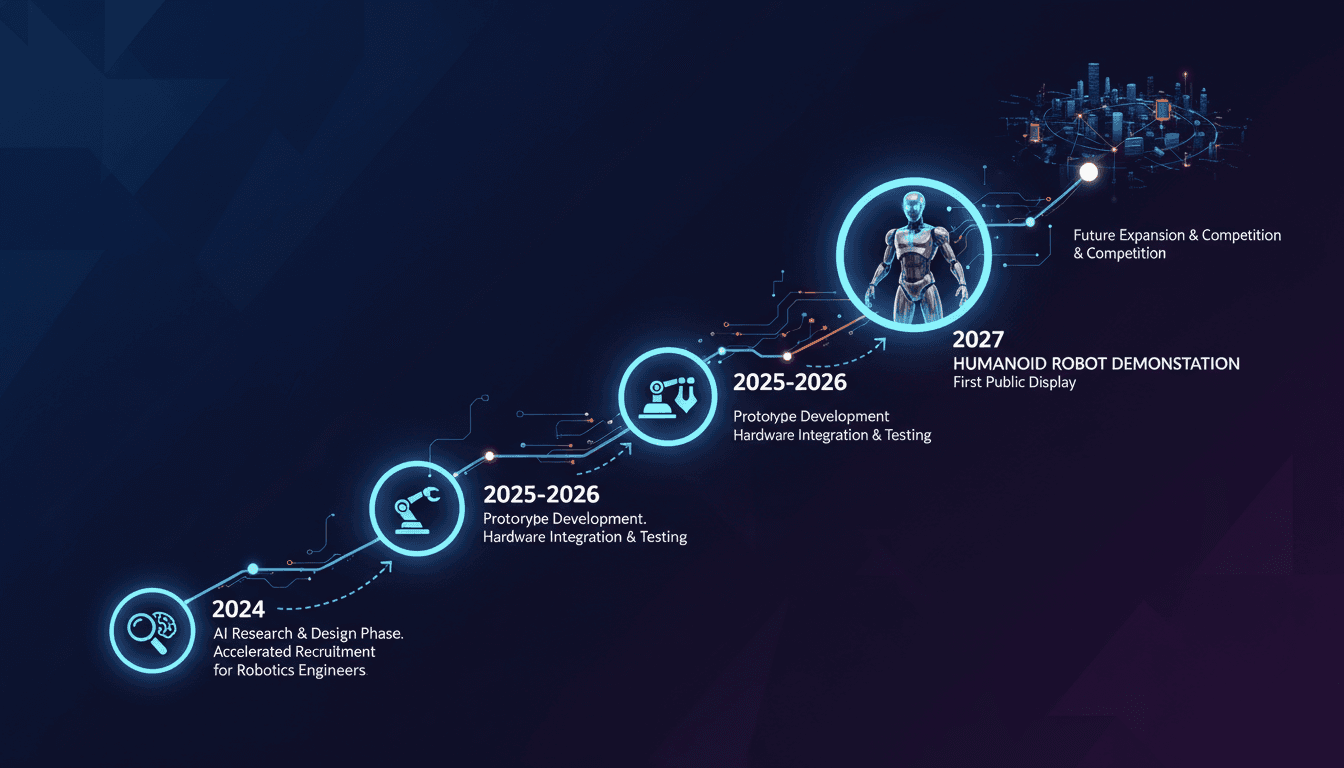
The development of humanoid robots could reshape industries, impacting job roles and automation strategies.
Why it matters
OpenAI's pivot to hardware development signals a significant shift in the robotics landscape, potentially influencing market dynamics and competition.
What happened (in 30 seconds)
- OpenAI announced a target for a humanoid robot demonstration in 2027, marking a strategic shift from AI supplier to hardware developer.
- CEO Sam Altman confirmed the timeline during interviews in September 2026, emphasizing the need for a general-purpose humanoid form factor.
- The company is currently in the early development phase, actively recruiting for 27 robotics engineering roles, but has not disclosed prototype details.
The context you actually need
- OpenAI has previously invested in humanoid robotics firms like Figure AI and 1X Technologies, indicating a history of involvement in the sector.
- Altman's statements reflect a broader trend of AI companies moving towards in-house hardware development as AI capabilities expand into physical systems.
- The announcement positions OpenAI in direct competition with established players like Tesla, as well as former partners, reshaping the competitive landscape.
What's really happening
OpenAI's announcement of a humanoid robot demonstration by 2027 marks a pivotal moment in the intersection of artificial intelligence and robotics. Historically, OpenAI has focused on developing AI models and supplying them to robotics companies, but the recent shift towards in-house hardware development indicates a strategic pivot. This move is driven by the recognition that human-designed environments are best suited for humanoid robots, leveraging OpenAI's expertise in AI to create robots that can operate effectively in these settings.
The company has begun recruiting for 27 specialized roles in robotics engineering, focusing on areas such as actuators, controls, firmware, and manufacturing. This recruitment drive highlights the urgency and seriousness of OpenAI's commitment to this project. However, the lack of specific details regarding prototypes or partnerships raises questions about the feasibility and timeline of the demonstration. Altman has acknowledged that while a "cool demo" is planned for 2027, the routine public operation of such robots will require additional years of development.
This shift also reflects a broader trend in the tech industry, where companies are increasingly looking to integrate AI capabilities into physical systems. As AI technology continues to advance, the potential for humanoid robots to perform tasks traditionally reserved for humans becomes more viable. This could lead to significant changes in various sectors, including manufacturing, healthcare, and service industries, where humanoid robots could take on roles ranging from assembly line work to patient care.
Moreover, OpenAI's entry into the humanoid robotics space positions it against established players like Tesla, which has been developing its own humanoid robot, Optimus. This competition could accelerate innovation and drive down costs, ultimately benefiting consumers and businesses alike. However, it also raises concerns about job displacement and the ethical implications of deploying humanoid robots in everyday environments.
As OpenAI continues to develop its humanoid robot, the implications for the workforce and industries at large will become clearer. The company's ability to successfully navigate this transition will depend on its capacity to innovate while addressing the societal impacts of its technology.
Who feels it first (and how)
- Tech industry professionals: Engineers and developers may see new job opportunities in robotics and AI integration.
- Manufacturing sectors: Companies may begin to explore automation solutions, impacting labor dynamics.
- Healthcare providers: Potential for humanoid robots to assist in patient care, altering staffing needs and operational workflows.
What to watch next
- Recruitment trends: Monitor the types of roles OpenAI fills and how quickly they build their robotics team, as this will indicate their commitment to the project.
- Partnership announcements: Watch for any collaborations OpenAI may form with existing robotics firms, which could enhance their development capabilities.
- Regulatory developments: Keep an eye on how governments respond to the rise of humanoid robots, as regulations could shape deployment strategies.
OpenAI is targeting a humanoid robot demonstration for 2027 and has begun recruiting for related roles.
The competition in the humanoid robotics space will intensify, leading to faster innovation and potential market shifts.
The specific capabilities and applications of OpenAI's humanoid robot remain undefined, as do the broader societal impacts.
Frequently Asked Questions
- Why it matters?
- OpenAI's pivot to hardware development signals a significant shift in the robotics landscape, potentially influencing market dynamics and competition.
- What happened (in 30 seconds)?
- OpenAI announced a target for a humanoid robot demonstration in 2027, marking a strategic shift from AI supplier to hardware developer. CEO Sam Altman confirmed the timeline during interviews in September 2026, emphasizing the need for a general-purpose humanoid form factor. The company is currently in the early development phase, actively recruiting for 27 robotics engineering roles, but has not disclosed prototype details.
- What's really happening?
- OpenAI's announcement of a humanoid robot demonstration by 2027 marks a pivotal moment in the intersection of artificial intelligence and robotics. Historically, OpenAI has focused on developing AI models and supplying them to robotics companies, but the recent shift towards in-house hardware development indicates a strategic pivot. This move is driven by the recognition that human-designed environments are best suited for humanoid robots, leveraging OpenAI's expertise in AI to create robots tha
- Who feels it first (and how)?
- Tech industry professionals: Engineers and developers may see new job opportunities in robotics and AI integration. Manufacturing sectors: Companies may begin to explore automation solutions, impacting labor dynamics. Healthcare providers: Potential for humanoid robots to assist in patient care, altering staffing needs and operational workflows.
- What to watch next?
- Recruitment trends: Monitor the types of roles OpenAI fills and how quickly they build their robotics team, as this will indicate their commitment to the project. Partnership announcements: Watch for any collaborations OpenAI may form with existing robotics firms, which could enhance their development capabilities. Regulatory developments: Keep an eye on how governments respond to the rise of humanoid robots, as regulations could shape deployment strategies.
English-language digital publication covering business, politics, technology, and current affairs.
"The Arabian Post mixes original and syndicated-style coverage with a broad regional and global business-news orientation."
— A47 Editor
OpenAI targets 2027 demonstration of humanoid robot
OpenAI's CEO, Sam Altman, announced plans to demonstrate a humanoid robot by 2027, marking a significant expansion into robotics that could rival existing products from other companies. This timeline was shared during a September interview, where Alt...
Arabic tech news covering startups, apps, AI, and gadgets.
"AITnews is a well-known Arabic technology outlet covering regional tech developments."
— A47 Editor
OpenAI تعتزم تطوير روبوتات بشرية مدعومة بالذكاء الاصطناعي
OpenAI is preparing to enter the field of humanoid robots powered by artificial intelligence, aiming to expand the applications of AI beyond software and consumer devices. CEO Sam Altman emphasizes that the main challenge lies not in design but in en...
Consumer technology news with AI coverage.
"Gadget and tech site reporting on AI in products."
— A47 Editor
OpenAI is building a humanoid robot, but the body isn't the real challenge
OpenAI is developing a humanoid robot aimed at functioning in environments designed for humans, with CEO Sam Altman highlighting that the challenge lies more in creating an effective 'brain' for the robot than in its physical form.
Covers consumer technology, electronics, gadgets, and product reviews.
"Engadget is a trusted source for gadget reviews and consumer tech news, known for its hands-on analysis and industry coverage."
— A47 Editor
OpenAI is building a humanoid robot, but the body isn't the real challenge
OpenAI is developing a humanoid robot aimed at functioning in environments designed for humans, with CEO Sam Altman highlighting that the challenge lies more in creating an effective 'brain' for the robot than in its physical form.