
Mastercard Launches Stablecoin Security API for Fraud and Sanctions Screening
Why it matters
Mastercard's Stablecoin Security API addresses critical compliance challenges in the rapidly evolving stablecoin market, impacting how businesses manage risk.
What happened (in 30 seconds)
- Mastercard launched its Stablecoin Security API on October 19, 2026, at the Money20/20 USA conference.
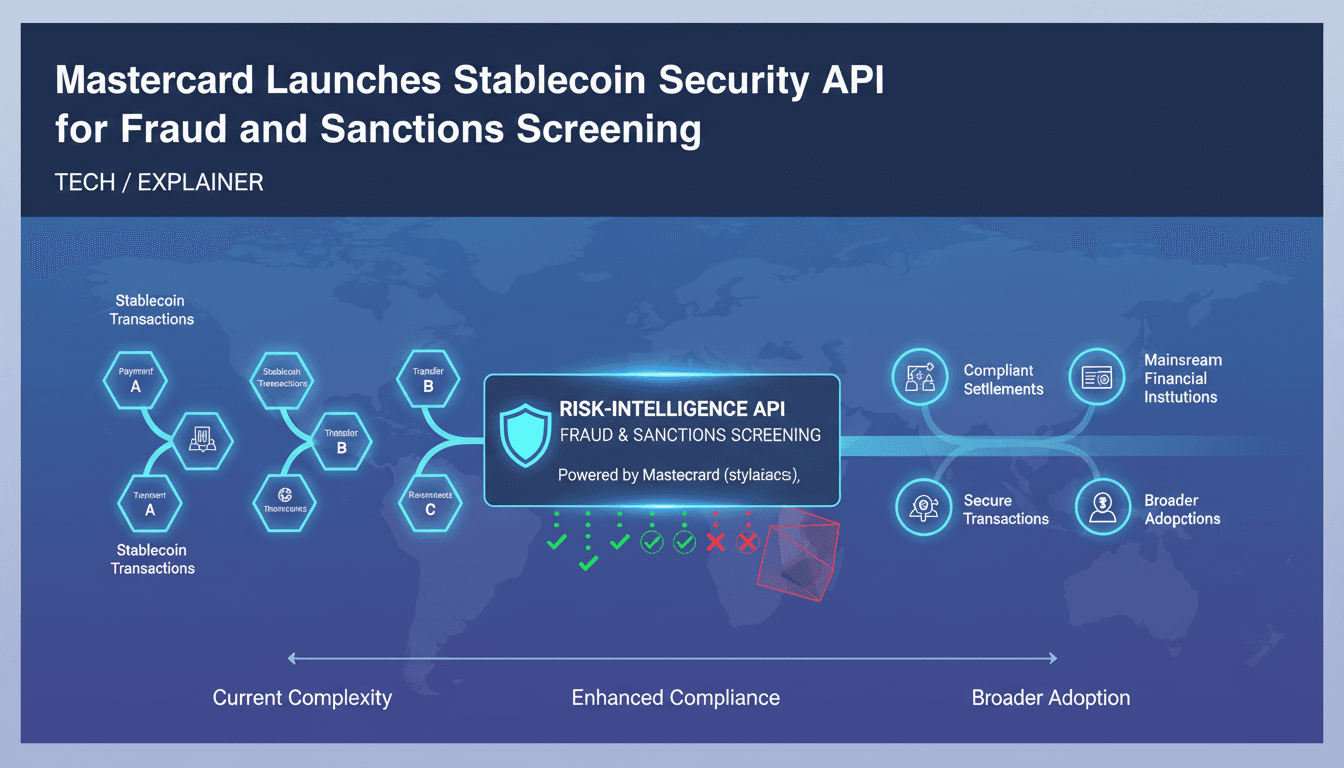
- The API combines traditional payment data with blockchain analytics to assess risks before stablecoin transactions are finalized.
- Initial rollout is in North America, with a global launch expected in 2027, partnering with Borderless.xyz and Keyrails.
The context you actually need
- Stablecoin adoption has surged for cross-border and B2B payments, complicating traditional anti-money laundering (AML) monitoring.
- A Bank for International Settlements study revealed that nearly 60% of stablecoin transfers in 2025 involved complex, multi-step routes, making them harder to track.
- Existing fraud tools are being adapted for on-chain environments, where transactions are irreversible, highlighting the need for enhanced security measures.
What's really happening
On October 19, 2026, Mastercard unveiled its Stablecoin Security API, a significant step in the integration of traditional payment systems with blockchain technology. This platform-agnostic API is designed to evaluate various aspects of stablecoin transactions, including transaction context, fund origins, restricted-party exposure, and indicators of potential scams. By generating a risk score that can be integrated into existing compliance systems, Mastercard aims to streamline the compliance process for businesses engaging in stablecoin transactions.
The launch comes in response to the increasing complexity of stablecoin flows, which have been highlighted by a Bank for International Settlements analysis. This study indicated that a substantial portion of stablecoin transfers involves intricate, multi-hop routes rather than straightforward one-to-one transactions. As stablecoins gain traction for cross-border payments and B2B transactions, the need for robust compliance mechanisms becomes paramount. Mastercard's API addresses this gap by providing a tool that can assess risks before funds are moved on-chain, thereby preventing potential fraud and ensuring compliance with sanctions.
Key partners in this initiative, Borderless.xyz and Keyrails, are positioned to facilitate licensed stablecoin access and support cross-border trade. This collaboration underscores the importance of integrating compliance solutions into the evolving landscape of digital currencies. The API builds on Mastercard's previous offerings, such as Crypto Secure, and follows the company's acquisition of BVNK in August 2026, signaling a strategic push into the digital asset space.
The initial rollout in North America is a calculated move, allowing Mastercard to refine the API's functionality and gather feedback before a broader global launch in 2027. This phased approach not only mitigates risks associated with new technology but also positions Mastercard as a leader in the secure integration of stablecoins into mainstream financial systems.
Who feels it first (and how)
- Financial institutions: Banks and payment processors will need to adapt their compliance frameworks to integrate the new API.
- Businesses using stablecoins: Companies engaging in cross-border transactions will benefit from enhanced security and reduced fraud risk.
- Regulatory bodies: Increased scrutiny on stablecoin transactions may lead to new compliance requirements and standards.
What to watch next
- Adoption rates: Monitor how quickly financial institutions and businesses integrate the Stablecoin Security API into their operations, as this will indicate its effectiveness.
- Regulatory developments: Keep an eye on any new regulations or guidelines issued by financial authorities regarding stablecoin transactions and compliance.
- Market response: Observe how the market reacts to the API's launch, particularly in terms of stablecoin transaction volumes and fraud incidents.
Mastercard's Stablecoin Security API is designed to enhance compliance and reduce fraud in stablecoin transactions.
The API will see increased adoption among financial institutions and businesses engaged in stablecoin payments.
The long-term impact on regulatory frameworks and compliance standards for stablecoins remains to be seen.
Frequently Asked Questions
- Why it matters?
- Mastercard's Stablecoin Security API addresses critical compliance challenges in the rapidly evolving stablecoin market, impacting how businesses manage risk.
- What happened (in 30 seconds)?
- Mastercard launched its Stablecoin Security API on October 19, 2026, at the Money20/20 USA conference. The API combines traditional payment data with blockchain analytics to assess risks before stablecoin transactions are finalized. Initial rollout is in North America, with a global launch expected in 2027, partnering with Borderless.xyz and Keyrails.
- What's really happening?
- On October 19, 2026, Mastercard unveiled its Stablecoin Security API, a significant step in the integration of traditional payment systems with blockchain technology. This platform-agnostic API is designed to evaluate various aspects of stablecoin transactions, including transaction context, fund origins, restricted-party exposure, and indicators of potential scams. By generating a risk score that can be integrated into existing compliance systems, Mastercard aims to streamline the compliance pr
- Who feels it first (and how)?
- Financial institutions: Banks and payment processors will need to adapt their compliance frameworks to integrate the new API. Businesses using stablecoins: Companies engaging in cross-border transactions will benefit from enhanced security and reduced fraud risk. Regulatory bodies: Increased scrutiny on stablecoin transactions may lead to new compliance requirements and standards.
- What to watch next?
- Adoption rates: Monitor how quickly financial institutions and businesses integrate the Stablecoin Security API into their operations, as this will indicate its effectiveness. Regulatory developments: Keep an eye on any new regulations or guidelines issued by financial authorities regarding stablecoin transactions and compliance. Market response: Observe how the market reacts to the API's launch, particularly in terms of stablecoin transaction volumes and fraud incidents.
Bitcoin news, technical analysis, and forecasts across crypto markets.
"NewsBTC covers Bitcoin news, technical analysis, and forecasts across crypto markets and major blockchain projects."
— A47 Editor
Mastercard Introduces Fraud Screening Before Stablecoin Payments Go On-Chain
Mastercard has launched Stablecoin Security, a new risk-scoring tool aimed at helping financial institutions assess payments before and during their movement across blockchains. This initiative was unveiled at the Money20/20 conference in Las Vegas a...
Real-time updates, analysis, and reports on the blockchain and cryptocurrency sectors.
"Crypto News delivers real-time updates, analysis, and reports on the blockchain and cryptocurrency sectors."
— A47 Editor
Mastercard introduces fraud and sanctions screening to stablecoin payments
Mastercard has launched a new service called Stablecoin Security, designed to screen stablecoin transactions for fraud, scams, and sanctions risks before they are processed on blockchain networks. This announcement was made during the Money20/20 conf...
Covers Bitcoin plus altcoin news, market updates, and educational resources.
"Bitcoin.com provides news, market data, and guides focused on Bitcoin and the wider crypto industry."
— A47 Editor
Mastercard Unveils Stablecoin Security to Police Digital Payments
Mastercard has introduced a new stablecoin security feature aimed at enhancing the safety of digital payments. This initiative is part of a broader strategy to integrate stablecoin technology into its payment systems, ensuring compliance and security...