
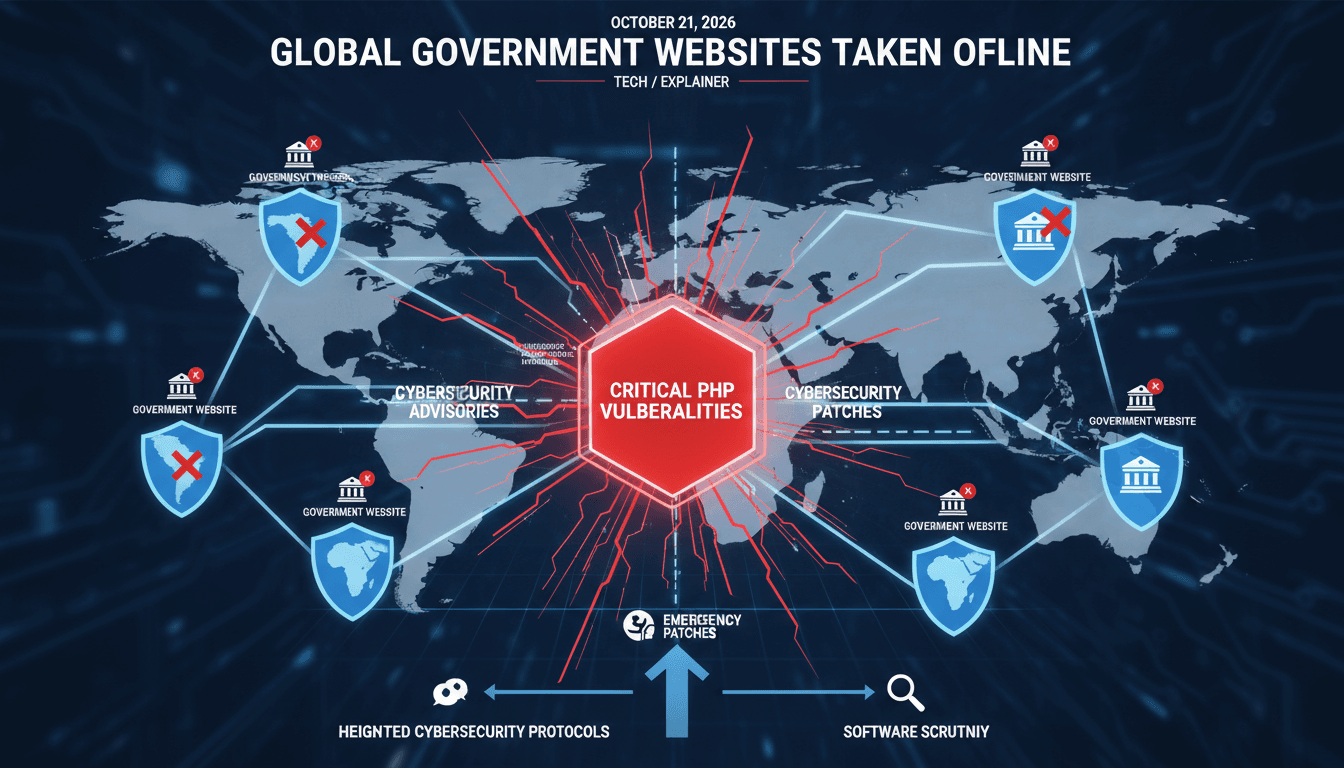
Global Government Websites Taken Offline Due to Critical PHP Vulnerabilities
Why it matters
This incident underscores the vulnerabilities inherent in widely-used programming languages and the cascading effects on public services globally.
What happened (in 30 seconds)
- On October 21, 2026, numerous government websites were taken offline due to critical vulnerabilities in PHP, affecting public services across Europe and North America.
- Cybersecurity agencies issued urgent advisories for immediate updates or offline status for unpatched systems, leading to precautionary shutdowns.
- Patches were released by PHP developers, but approximately 1.5 million internet-facing hosts were still running unpatched versions at the time of disclosure.
The context you actually need
- PHP powers 70% of identifiable websites, making it a critical component of the internet infrastructure.
- The vulnerabilities (CVE-2026-109618 and CVE-2026-109619) were rated 9.2/10 on the CVSS scale, indicating severe risk and potential for exploitation.
- AI-assisted tools identified these vulnerabilities, highlighting the evolving landscape of cybersecurity threats and the need for rapid response mechanisms.
What's really happening
On October 21, 2026, the PHP development team released emergency patches for critical vulnerabilities that had existed for decades but were only recently identified through advanced AI tools. The vulnerabilities, rated 9.2 on the CVSS scale, posed significant risks for internet-facing systems, prompting immediate action from cybersecurity agencies worldwide.
As a precaution, many organizations, including government entities in Europe and North America, took their websites offline to prevent potential exploitation. This decision was not taken lightly; it reflects a growing awareness of the vulnerabilities that can arise from reliance on widely-used programming languages like PHP. With approximately 1.5 million hosts still running unpatched versions at the time of the disclosure, the urgency of the situation was clear.
The coordinated response involved multiple national cybersecurity agencies, including CISA in the U.S. and ENISA in Europe, which issued simultaneous alerts urging organizations to prioritize updates. The swift action taken by these agencies highlights the importance of cybersecurity in maintaining public trust and ensuring the continuity of essential services.
While the immediate response involved taking sites offline, the long-term implications of this incident are significant. It raises questions about the robustness of existing cybersecurity frameworks and the need for ongoing vigilance in the face of evolving threats. The reliance on open-source software like PHP, while beneficial for its accessibility and community support, also exposes organizations to risks that can have widespread consequences.
As organizations work to restore services and apply the necessary patches, the incident serves as a reminder of the interconnectedness of digital infrastructure. A vulnerability in one widely-used component can lead to cascading failures across multiple sectors, affecting everything from government services to private enterprises.
The PHP project has urged all users to update immediately, emphasizing that the responsibility for cybersecurity is shared among developers, organizations, and end-users. This incident may also prompt discussions about the need for more robust security measures and the potential for increased regulation in the software development space.
Who feels it first (and how)
- Government agencies: Disruptions in public services and communication.
- IT departments: Increased workload to implement patches and restore services.
- Businesses relying on government services: Potential delays in operations and access to information.
- Citizens: Interruption in access to essential services and information.
- Cybersecurity firms: Increased demand for services to address vulnerabilities.
What to watch next
- Patch adoption rates: Monitoring how quickly organizations implement the necessary updates will indicate the overall resilience of digital infrastructure.
- Emerging vulnerabilities: Keep an eye on new vulnerabilities that may arise as developers rush to patch existing issues, potentially leading to new exploits.
- Regulatory responses: Watch for potential changes in regulations regarding cybersecurity practices, particularly for open-source software.
The vulnerabilities were critical and affected numerous government websites globally.
Organizations will face increased scrutiny regarding their cybersecurity practices moving forward.
The long-term impact on public trust in government digital services remains to be seen.
Frequently Asked Questions
- Why it matters?
- This incident underscores the vulnerabilities inherent in widely-used programming languages and the cascading effects on public services globally.
- What happened (in 30 seconds)?
- On October 21, 2026, numerous government websites were taken offline due to critical vulnerabilities in PHP, affecting public services across Europe and North America. Cybersecurity agencies issued urgent advisories for immediate updates or offline status for unpatched systems, leading to precautionary shutdowns. Patches were released by PHP developers, but approximately 1.5 million internet-facing hosts were still running unpatched versions at the time of disclosure.
- What's really happening?
- On October 21, 2026, the PHP development team released emergency patches for critical vulnerabilities that had existed for decades but were only recently identified through advanced AI tools. The vulnerabilities, rated 9.2 on the CVSS scale, posed significant risks for internet-facing systems, prompting immediate action from cybersecurity agencies worldwide. As a precaution, many organizations, including government entities in Europe and North America, took their websites offline to prevent po
- Who feels it first (and how)?
- Government agencies: Disruptions in public services and communication. IT departments: Increased workload to implement patches and restore services. Businesses relying on government services: Potential delays in operations and access to information. Citizens: Interruption in access to essential services and information. Cybersecurity firms: Increased demand for services to address vulnerabilities.
- What to watch next?
- Patch adoption rates: Monitoring how quickly organizations implement the necessary updates will indicate the overall resilience of digital infrastructure. Emerging vulnerabilities: Keep an eye on new vulnerabilities that may arise as developers rush to patch existing issues, potentially leading to new exploits. Regulatory responses: Watch for potential changes in regulations regarding cybersecurity practices, particularly for open-source software.
UK and international business news, economics, and corporate coverage.
"The Guardian’s business section covers finance and markets with a progressive editorial tone."
— A47 Editor
Flaw in PHP computer language leads to shutdown of websites around world
A significant vulnerability in the PHP programming language, which powers approximately 70% of websites globally, has led to the temporary shutdown of numerous sites, including those of several European governments. This precautionary measure aims to...
RT is a Russian state-funded network covering global events from a Russian perspective.
"RT is widely criticized for promoting pro-Kremlin narratives and is considered by many to be a state propaganda outlet."
— A47 Editor
Government websites down amid global security flaw scare
Numerous government and business websites around the world have been temporarily taken offline following the detection of critical security flaws in the PHP programming language, aided by artificial intelligence. This action aims to mitigate potentia...
Consumer technology news with AI coverage.
"Gadget and tech site reporting on AI in products."
— A47 Editor
Government websites in the EU and Canada taken offline over PHP vulnerability
Government websites in the EU and Canada have been taken offline due to a critical vulnerability in the PHP programming language, prompting an urgent call for all sites using PHP to update to the latest security patch. This action reflects the seriou...
Covers consumer technology, electronics, gadgets, and product reviews.
"Engadget is a trusted source for gadget reviews and consumer tech news, known for its hands-on analysis and industry coverage."
— A47 Editor
Government websites in the EU and Canada taken offline over PHP vulnerability
Government websites in the EU and Canada have been taken offline due to a critical vulnerability in the PHP programming language, prompting an urgent call for all sites using PHP to update to the latest security patch. This action reflects the seriou...
Corporate news, economic trends, and markets with UK and global scope.
"BBC News is widely regarded as reputable and impartial, with a public service mandate."
— A47 Editor
Websites taken down worldwide as critical cyber-security update issued
A critical cyber-security update has led to the takedown of numerous websites worldwide, primarily due to significant vulnerabilities identified in PHP, a programming language extensively used across the internet. These vulnerabilities have been desc...
International news coverage curated for readers in the UAE and Gulf region.
"Emirates 24|7 world coverage presents global developments through a UAE-facing and Gulf-relevant editorial lens."
— A47 Editor
European government websites go dark after AI-discovered flaw sparks security scramble
European government websites went offline following the discovery of critical vulnerabilities in the PHP programming language, which powers over 70% of global websites. The vulnerabilities were uncovered using artificial intelligence, prompting urgen...
Top international stories selected by The Guardian editors.
"The Guardian is known for its progressive editorial stance and in-depth analysis."
— A47 Editor
Flaw in PHP computer language leads to shutdown of websites around world
A significant vulnerability in the PHP programming language, which powers approximately 70% of websites globally, has led to the temporary shutdown of numerous sites, including those of several European governments. This precautionary measure aims to...
UAE-based English-language newspaper covering regional politics, economics, and global affairs.
"The National reflects Emirati policy perspectives while maintaining international editorial standards."
— A47 Editor
PHP security issues: Websites go offline amid critical update
PHP security vulnerabilities have prompted numerous websites to go offline as a critical update is implemented. The programming language, which powers over 70% of global websites, has been flagged for serious security flaws that could jeopardize user...
International coverage of politics, security, and social issues.
"Global News is a mainstream Canadian outlet with a centrist editorial stance, focusing on factual reporting."
— A47 Editor
Ottawa taking down some federal websites over critical global vulnerability
Ottawa is taking down some federal websites due to critical vulnerabilities identified in the PHP programming language. Developers have urged users to update their sites promptly following the release of a fix.