
Neura Robotics secures $1.4 billion funding to scale humanoid robot production
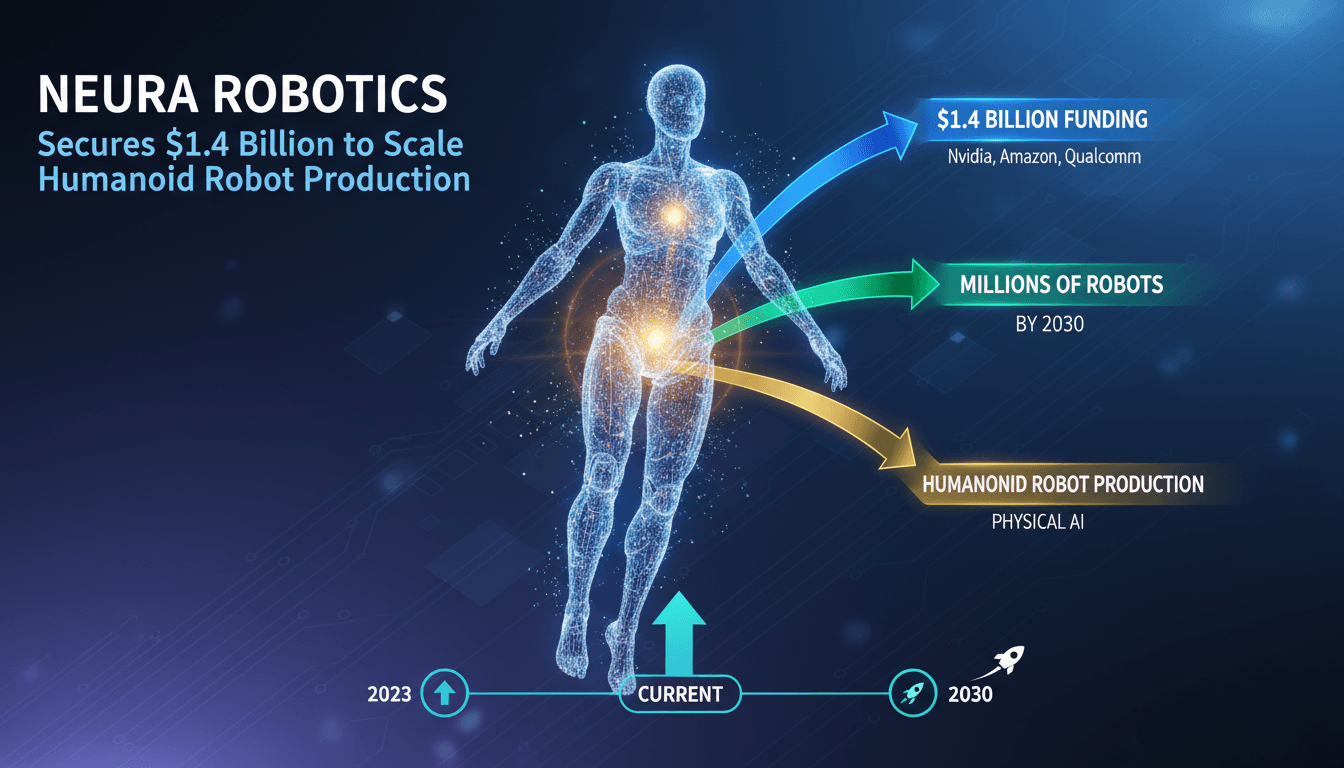
Here's what it means for you.
The recent funding boost for Neura Robotics signals a pivotal moment in the robotics industry, particularly in the realm of humanoid robots and physical AI technologies. With major investments from tech giants like Nvidia, Amazon, and Qualcomm, the company is poised to significantly impact sectors reliant on automation. This development not only enhances Neura Robotics' production capabilities but also reflects a broader trend of increasing interest in advanced robotics solutions. As industries evolve, the demand for innovative automation technologies will likely grow, making Neura Robotics a key player in this transformation. Stakeholders should monitor the company's progress as it aims to produce millions of robots by 2030.
What happened
Neura Robotics has successfully raised $1.4 billion in funding, a significant milestone for the German company. This funding round saw substantial contributions from leading tech companies, including Nvidia, Amazon, and Qualcomm. The investment is aimed at enhancing Neura Robotics' production capabilities for humanoid robots and physical AI technologies.
The announcement was made on June 11, 2026, marking a crucial step in the company's ambitious plans. With this financial backing, Neura Robotics is set to scale its production efforts significantly, targeting the production of several million robots by the year 2030.
The Context
The funding round reflects a growing interest in the fields of robotics and physical AI, as industries increasingly seek automation solutions. Neura Robotics, based in Germany, is strategically positioned to capitalize on this trend, with its focus on humanoid robots and AI development. The involvement of major investors underscores the confidence in the future of robotics technology.
As the demand for advanced robotics solutions rises, Neura Robotics aims to meet this need head-on. The timing of this investment aligns with a broader shift towards automation across various sectors, making it a critical moment for the company and the industry at large.
Takeaway
With the recent funding, Neura Robotics is well-positioned to lead in the development of humanoid robots and physical AI technologies. Stakeholders should keep an eye on the company's production milestones and technological advancements in the coming years. Additionally, potential partnerships or collaborations within the robotics sector may emerge as the company seeks to expand its influence.
As Neura Robotics works towards its goal of producing millions of robots by 2030, the implications for industries reliant on automation could be transformative. The investment not only supports their ambitious production goals but also highlights the increasing demand for innovative robotics solutions.
Industry news and analysis for the global AI community.
"A business-first look at AI adoption, policy, and ecosystem trends."
— A47 Editor
Neura Robotics Raises $1.4B for Physical AI
Neura Robotics has successfully raised approximately $1.4 billion in funding, with significant contributions from major investors including Nvidia, Amazon, and Qualcomm. This funding will support the company's development of humanoid robots and physi...
Markets desk coverage, trading insights, and investor updates.
"WSJ’s markets reporting provides in-depth analysis and context for investors."
— A47 Editor
Nvidia, Amazon Back Neura Robotics’ $1.4 Billion Fundraise
Neura Robotics, a German robotics company, has successfully raised $1.4 billion in funding, backed by Nvidia and Amazon, with plans to scale production to several million robots by 2030. This significant investment marks a pivotal moment for the comp...
Tech business coverage, major deals, product launches, and Silicon Valley trends.
"WSJ’s tech section offers authoritative reporting on the intersection of technology and business, including exclusive industry analysis."
— A47 Editor
Nvidia, Amazon Back Neura Robotics’ $1.4 Billion Fundraise
Neura Robotics, a German startup, has successfully raised $1.4 billion in funding, backed by major investors including Nvidia and Amazon, with plans to scale production to millions of robots by 2030.