
Nvidia Requires Fleet Intelligence Monitoring for Southeast Asian Cloud Partners to Curb AI Chip Diversion to China
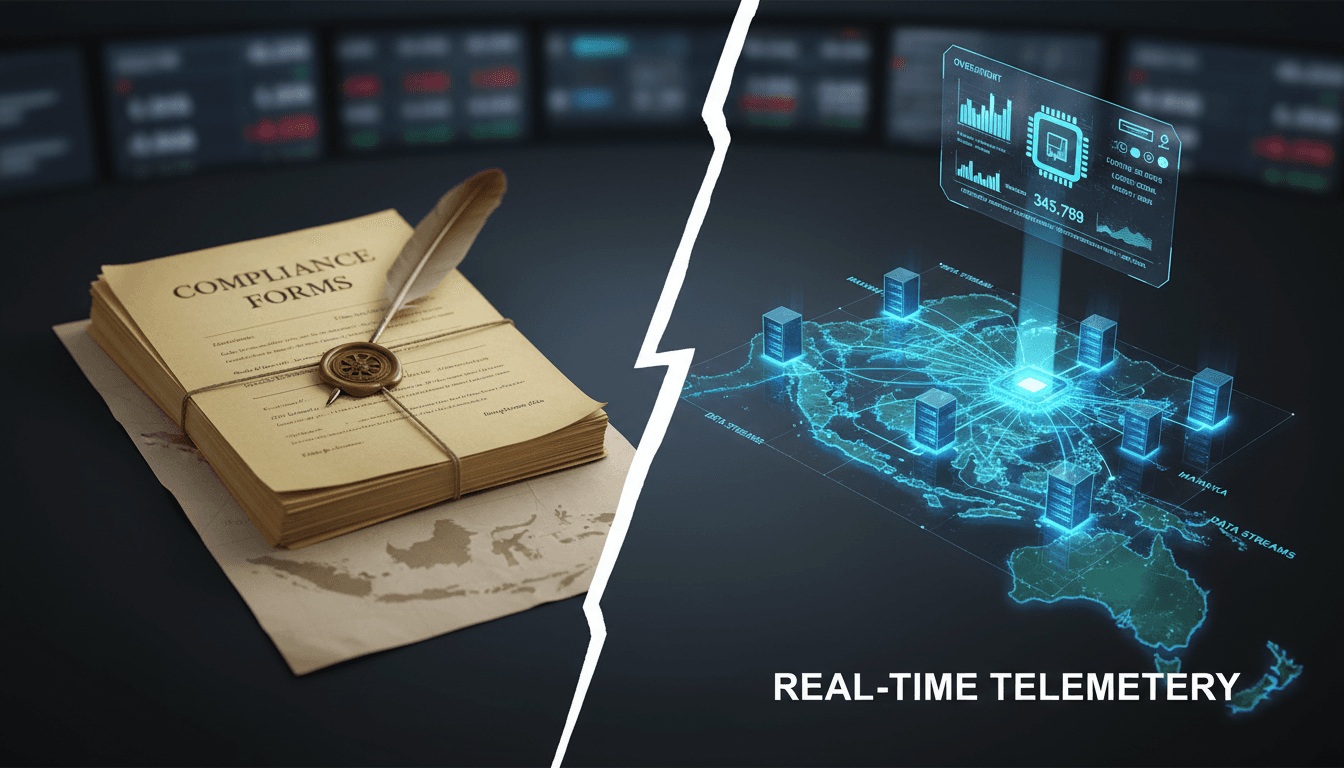
If you source high-performance compute or manage cross-border cloud infrastructure, compliance validation is shifting from static paperwork directly into active hardware telemetry.
Why it matters
The enforcement of semiconductor export controls is moving down the stack into live, software-agent tracking, reshaping partner certification and commercial access to advanced compute clusters.
What happened (in 30 seconds)
- Mandatory telemetry enrollment: Nvidia now requires cloud providers in Southeast Asia seeking official Nvidia Cloud Partner status to onboard their infrastructure into Fleet Intelligence, a system collecting operational performance, health, inventory, and physical geolocation data.
- Targeted geographic scope: The requirement applies to prospective partners in regional hubs such as Singapore and Malaysia to prevent advanced accelerators like A100 and H100 GPUs from leaking into unauthorized jurisdictions.
- Selective implementation: The mandate applies strictly to new applicants seeking the preferred access and official endorsements of partner status, leaving existing partners and ordinary commercial customers exempt for now.
The context you actually need
- Ongoing transshipment scrutiny: Southeast Asia has functioned as an intermediary hub for unauthorized hardware rerouting, highlighted by a March 2026 indictment involving $2.5 billion in diverted servers and an October 2026 case alleging $300 million in smuggled processors.
- Aggressive vendor curation: Under regulatory scrutiny from U.S. authorities, Nvidia has already removed approximately half of Asian companies from its preapproved buyer lists and issued stricter guidance regarding acceptable customer mix.
- Regulatory enforcement exposure: U.S. export controls carry severe legal and operational liabilities for equipment manufacturers, creating strong institutional incentives to verify physical end-use environments directly.
What's really happening
The traditional compliance model for advanced hardware relied on "know your customer" forms, end-user declarations, and point-of-sale audits. That administrative perimeter broke under market pressure. Intermediaries, broker layers, and specialized shell firms in transshipment hubs routinely bypassed paper checks, redirecting controlled compute assets toward restricted markets.
By conditioning Nvidia Cloud Partner (NCP) status on Fleet Intelligence integration, the vendor is replacing bureaucratic trust with continuous observability. Fleet Intelligence is not an abstract audit log. It relies on installed software agents operating directly on the host environments, streaming operational metrics, system states, and geolocation data back to central dashboards. This creates a technical feedback loop: if a cluster goes dark, changes network routing patterns, or exhibits hardware signatures inconsistent with its documented data center address, the operational discrepancy is identified systematically.
The strategic trade-off for prospective cloud operators is stark. Gaining NCP status is critical for commercial visibility, public vendor backing, and allocation priority for advanced hardware lines like the H100 and A100. Denying telemetry access means forfeiting tiered status and operating without official vendor endorsement. By making this enrollment a requirement for new partner status rather than a blanket retroactive demand on existing contracts, Nvidia establishes a commercial sorting mechanism. Operators willing to absorb full operational transparency secure priority allocations; entities maintaining opaque customer mixes or non-compliant infrastructure topologies are weeded out before receiving preferred hardware allocations.
This operational shift also insulates the manufacturer from severe regulatory exposure. U.S. authorities, including the Department of Justice, have accelerated enforcement actions, illustrated by multi-billion-dollar enforcement actions against regional intermediaries like Singapore-based Megaspeed International. For Nvidia, implementing active telemetry acts as an operational barrier against compliance liabilities, demonstrating verifiable oversight directly at the node level. The cost of running high-performance AI infrastructure in Southeast Asia now incorporates recurring telemetry monitoring and higher data-handling overheads, formalizing software-defined hardware governance across cross-border compute supply chains.
Who feels it first (and how)
- Southeast Asian cloud infrastructure operators: Must allocate technical and legal resources to integrate agent-level monitoring software, trade off data privacy against preferred hardware allocation, and submit to continuous operational auditing.
- Enterprise AI engineering teams in Singapore and Malaysia: Face altered vendor selection criteria, as uncertified regional hosts may face restricted hardware supply or operational delays compared to certified providers.
- Hardware brokerages and third-party resellers: Experience heightened structural barriers as continuous telemetry limits the secondary market for diverted enterprise accelerators.
- Compliance and legal officers at regional data centers: Require revised service-level agreements and tenant disclosures explaining the technical footprint of vendor-operated monitoring agents.
What to watch next
- Telemetry mandate expansion: Watch whether Nvidia extends Fleet Intelligence requirements to legacy partners or broader global jurisdictions beyond Southeast Asia, signaling a universal operational standard.
- Alternative accelerator adoption: Track whether regional infrastructure operators opt out of vendor partner programs to build capacity on alternative architectures that do not mandate host-level telemetry agents.
- Regulatory adoption of hardware-level monitoring: Monitor if trade regulatory bodies establish software telemetry as an explicit legal safe harbor or mandatory export condition for advanced silicon.
Nvidia conditioned NCP designation in Southeast Asia on enrollment in Fleet Intelligence, which collects operational and geolocation data via installed agents. Approximately half of Asian firms were previously eliminated from Nvidia's preapproved buyer lists.
Cloud providers adopting the Fleet Intelligence agent will pass increased integration and compliance overhead directly down to regional compute tenants.
Whether authorities will require this monitoring platform across other regional transshipment corridors, or how long legacy partners can operate without mandatory enrollment.
Frequently Asked Questions
- Why it matters?
- The enforcement of semiconductor export controls is moving down the stack into live, software-agent tracking, reshaping partner certification and commercial access to advanced compute clusters.
- What happened (in 30 seconds)?
- Mandatory telemetry enrollment: Nvidia now requires cloud providers in Southeast Asia seeking official Nvidia Cloud Partner status to onboard their infrastructure into Fleet Intelligence, a system collecting operational performance, health, inventory, and physical geolocation data. Targeted geographic scope: The requirement applies to prospective partners in regional hubs such as Singapore and Malaysia to prevent advanced accelerators like A100 and H100 GPUs from leaking into unauthorized jurisd
- What's really happening?
- The traditional compliance model for advanced hardware relied on "know your customer" forms, end-user declarations, and point-of-sale audits. That administrative perimeter broke under market pressure. Intermediaries, broker layers, and specialized shell firms in transshipment hubs routinely bypassed paper checks, redirecting controlled compute assets toward restricted markets. By conditioning Nvidia Cloud Partner (NCP) status on Fleet Intelligence integration, the vendor is replacing bureaucrat
- Who feels it first (and how)?
- Southeast Asian cloud infrastructure operators: Must allocate technical and legal resources to integrate agent-level monitoring software, trade off data privacy against preferred hardware allocation, and submit to continuous operational auditing. Enterprise AI engineering teams in Singapore and Malaysia: Face altered vendor selection criteria, as uncertified regional hosts may face restricted hardware supply or operational delays compared to certified providers. Hardware brokerages and third-par
- What to watch next?
- Telemetry mandate expansion: Watch whether Nvidia extends Fleet Intelligence requirements to legacy partners or broader global jurisdictions beyond Southeast Asia, signaling a universal operational standard. Alternative accelerator adoption: Track whether regional infrastructure operators opt out of vendor partner programs to build capacity on alternative architectures that do not mandate host-level telemetry agents. Regulatory adoption of hardware-level monitoring: Monitor if trade regulatory b
News and guidance for IT pros on AI adoption.
"Enterprise-focused tips, explainers, and news for professionals."
— A47 Editor
Nvidia Tightens AI Chip Tracking in Southeast Asia as China Smuggling Concerns Grow
Nvidia is reportedly requiring Southeast Asian cloud partners seeking Nvidia Cloud Partner status to enroll in a program that tracks the locations of their AI chips, as concerns about illegal shipments of its accelerators to Chinese companies grow. T...
Curated tech headlines including AI stories.
"Influential aggregator surfacing the day’s top tech/AI links."
— A47 Editor
Sources: Nvidia is requiring Southeast Asian customers seeking Nvidia Cloud Partner status to enroll in a program that tracks the locations of their AI chips (Mackenzie Hawkins/Bloomberg)
Nvidia is requiring Southeast Asian customers seeking Nvidia Cloud Partner status to enroll in a program that tracks the locations of their AI accelerators, according to sources cited by Bloomberg. The move is part of a stepped-up monitoring effort i...
Technology business and AI-related headlines.
"Data-driven tech newsroom with global scope."
— A47 Editor
Nvidia Boosts Chip Tracking in Southeast Asia to Fight Smuggling
Nvidia Corp. is increasing monitoring of AI accelerators sold in Southeast Asia as part of a strategic effort to curb semiconductor smuggling, following criticism that it has not done enough to stop shipments from reaching Chinese companies illegally...
Technology business news, market impacts, and innovation trends.
"Bloomberg is a premier financial and tech news provider, respected for its in-depth reporting and analytical rigor."
— A47 Editor
Nvidia Boosts Chip Tracking in Southeast Asia to Fight Smuggling
Nvidia Corp. is increasing monitoring of AI accelerators sold in Southeast Asia as part of a strategic effort to curb semiconductor smuggling, following criticism that it has not done enough to stop shipments from reaching Chinese companies illegally...