
US Commerce Department Cleared Nvidia H200 Sales to Chinese Firms With Empty Offices and Blacklisted Ties
Why it matters
The regulatory clearance of advanced compute hardware to entities with unverifiable physical footprints exposes the structural gap between rapid commercial export licensings and ground-level enforcement.
What happened (in 30 seconds)
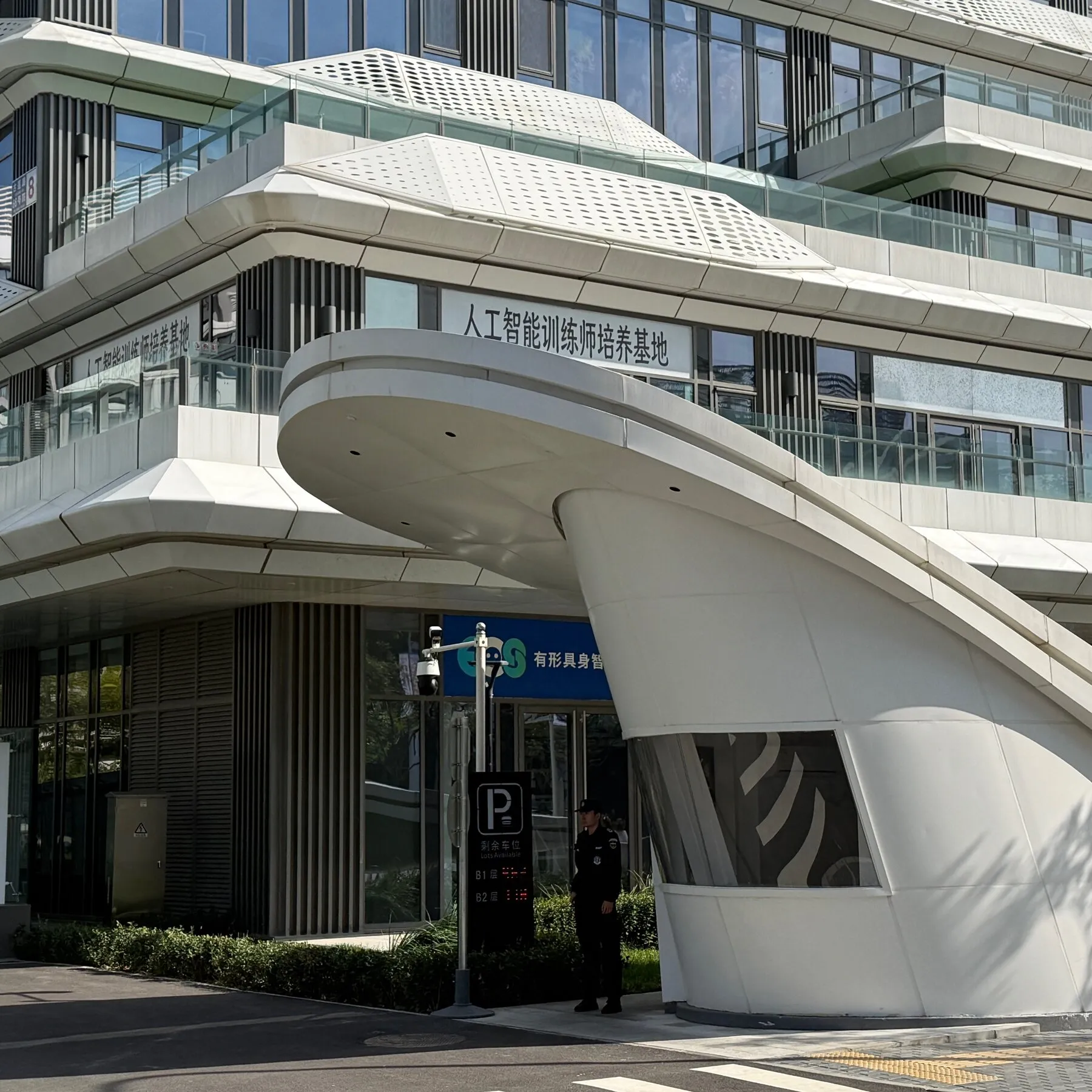
* Washington granted export permissions: The U.S. Commerce Department cleared approximately two dozen Chinese entities to acquire or assemble Nvidia H200 AI processors into operational enterprise servers. * Reporters uncovered non-operational footprints: On-site inspections in Beijing revealed approved recipients, including New Matrix and Maginfra, operating from empty industrial spaces and vacant office suites. * Sanctioned links surfaced: Corporate registry filings linked the newly cleared entities directly to previously blacklisted groups, specifically Wise Road Capital and server manufacturer Inspur.
The context you actually need
* Export controls were restructured in late 2025: Following prior total bans on advanced Nvidia chips to limit AI developments, updated rules allowed H200 sales subject to specific Commerce Department security reviews. * Corporate formation moved faster than screening: Key recipient New Matrix was established approximately 17 months prior to receiving approval to handle high-tier hardware integration. * The Entity List faces structural bypassing: When targeted firms like Inspur or Wise Road Capital face restrictions, capital and personnel frequently reorganize under newly registered shell companies to clear automated checklist verifications.
What's really happening
The core tension in high-end semiconductor controls is the divergence between bureaucratic compliance and operational reality. When export restrictions on Nvidia’s H200 accelerators were adjusted in late 2025, the Commerce Department replaced broad perimeter bans with entity-specific licensing. That transition transferred the burden of national security enforcement from hardware choke points to administrative due diligence.
Under this framework, approximately two dozen Chinese organizations obtained clearances to purchase or integrate H200 processors. However, the commercial reality on the ground does not reflect functional computing operations. New Matrix, an entity incorporated roughly 17 months before obtaining assembly authorization, listed its headquarters at an empty industrial building in Beijing with zero physical infrastructure or personnel. Corporate records establish ownership connections between New Matrix’s operators and Wise Road Capital, an investment entity placed on the U.S. trade blacklist in 2024.
Similarly, Maginfra secured regulatory clearance to handle the hardware while maintaining a completely vacant commercial address. Independent analyst reviews showed corporate relationships connecting Maginfra directly to Inspur, an enterprise previously placed on the U.S. Entity List due to military-adjacent supply links.
This mechanism illustrates how commercial incentives interact with export rules. Semiconductor manufacturers operate under quarterly market targets, creating strong pressure to service enterprise compute demand in major markets wherever legal channels exist. Concurrently, regulatory screeners in Washington evaluate applications primarily against administrative databases, identity registries, and documented ownership percentages.
When a buyer creates an independent corporate vehicle 17 months in advance, that entity presents a clean formal record on paper. Unless regulators conduct physical, ground-level verification of facilities, equipment, and workforce presence, the paper entity passes screening criteria designed for established corporate buyers.
The structural result is an asymmetry in modern tech controls: capital and technical talent can spin up an unlisted corporate shell in Beijing in weeks, while government review processes rely on trailing historical databases to evaluate risk. The clearance of advanced H200 chips to entities lacking physical operational footprints demonstrates that perimeter export bans cannot easily function without continuous, physical end-use monitoring.
Who feels it first (and how)
* Global hardware supply chain officers: Must prepare for mandatory, layered audit requirements that verify physical facilities rather than relying on standard commercial trade registry checks. * Semiconductor sales and compliance executives: Face immediate reputational exposure and regulatory friction if hardware shipped under standard export licenses is traced to blacklisted parent networks. * Enterprise AI infrastructure teams: Risk sudden supply interruptions or downstream compliance flags if their international server assembly and packaging rely on newly flagged entities.
What to watch next
* Ground-level verification mandates: Watch for regulatory bodies to introduce physical site inspections and verified utility usage metrics as prerequisites for advanced chip export licenses. * Blacklist expansion to affiliate networks: Monitor whether the Commerce Department broadens the Entity List to automatically capture newly formed subsidiaries and capital affiliates of groups like Wise Road Capital and Inspur. * Shipment tracking data: Track whether initial commercial deliveries of H200 hardware are physically dispatched to cleared Chinese assemblers or paused pending secondary audits.
The U.S. Commerce Department authorized approximately two dozen Chinese firms to purchase or package Nvidia H200 chips; inspections confirmed that recipients New Matrix and Maginfra maintain empty office footprints and documented ties to sanctioned entities.
Scrutiny from former national security officials will trigger administrative reviews into how license processing evaluated shell entities and corporate registry linkages.
Whether physical shipments of H200 chips have already arrived at these staging locations, and whether Commerce will formally revoke the existing licenses.
Frequently Asked Questions
- Why it matters?
- The regulatory clearance of advanced compute hardware to entities with unverifiable physical footprints exposes the structural gap between rapid commercial export licensings and ground-level enforcement.
- What happened (in 30 seconds)?
- Washington granted export permissions: The U.S. Commerce Department cleared approximately two dozen Chinese entities to acquire or assemble Nvidia H200 AI processors into operational enterprise servers. Reporters uncovered non-operational footprints: On-site inspections in Beijing revealed approved recipients, including New Matrix and Maginfra, operating from empty industrial spaces and vacant office suites. Sanctioned links surfaced: Corporate registry filings linked the newly cleared entities
- What's really happening?
- The core tension in high-end semiconductor controls is the divergence between bureaucratic compliance and operational reality. When export restrictions on Nvidia’s H200 accelerators were adjusted in late 2025, the Commerce Department replaced broad perimeter bans with entity-specific licensing. That transition transferred the burden of national security enforcement from hardware choke points to administrative due diligence. Under this framework, approximately two dozen Chinese organizations obt
- Who feels it first (and how)?
- Global hardware supply chain officers: Must prepare for mandatory, layered audit requirements that verify physical facilities rather than relying on standard commercial trade registry checks. Semiconductor sales and compliance executives: Face immediate reputational exposure and regulatory friction if hardware shipped under standard export licenses is traced to blacklisted parent networks. Enterprise AI infrastructure teams: Risk sudden supply interruptions or downstream compliance flags if thei
- What to watch next?
- Ground-level verification mandates: Watch for regulatory bodies to introduce physical site inspections and verified utility usage metrics as prerequisites for advanced chip export licenses. Blacklist expansion to affiliate networks: Monitor whether the Commerce Department broadens the Entity List to automatically capture newly formed subsidiaries and capital affiliates of groups like Wise Road Capital and Inspur. Shipment tracking data: Track whether initial commercial deliveries of H200 hardwar
Consumer tech and culture with frequent AI coverage.
"Influential tech outlet covering AI products and policy."
— A47 Editor
The US let Nvidia sell chips to an empty office in China
The New York Times reported that the U.S. Commerce Department approved Chinese firm New Matrix to receive Nvidia's H200 AI chips, yet the company's offices were described as an empty, hollow gray shell, raising concerns that neither regulators nor Nv...
Tech news, reviews, and analysis of consumer electronics, science, art, and culture.
"The Verge is a technology-focused media outlet known for in-depth reporting, product reviews, and coverage of the intersection between technology and culture."
— A47 Editor
The US let Nvidia sell chips to an empty office in China
The New York Times reported that the U.S. Commerce Department approved Chinese firm New Matrix to receive Nvidia's H200 AI chips, yet the company's offices were described as an empty, hollow gray shell, raising concerns that neither regulators nor Nv...
Curated tech headlines including AI stories.
"Influential aggregator surfacing the day’s top tech/AI links."
— A47 Editor
Investigation: some Chinese companies approved by the US Commerce Department to handle Nvidia's H200 chips have empty offices and ties to firms under sanctions (New York Times)
The New York Times reported that the U.S. Commerce Department has approved dozens of Chinese companies to handle Nvidia's H200 AI chips, but an investigation found that some of these firms operate from empty offices and have ties to companies under s...
Research, news, and analysis on blockchain startups, DeFi, and regulations.
"Crypto Briefing provides research, news, and analysis on blockchain startups, DeFi, and crypto regulations with investor-focused coverage."
— A47 Editor
Nvidia H200 assembler New Matrix lists an empty Beijing address
Crypto Briefing reports that Nvidia H200 assembler New Matrix lists an empty Beijing address, raising questions about transparency in US-China technology collaborations. The base report, categorized under cryptocurrency coverage, frames the listing a...
Markets, economy, and company analysis from NYT’s business desk.
"The New York Times is a globally recognized newspaper offering authoritative reporting with a center-left editorial stance."
— A47 Editor
U.S. Cleared Nvidia Chips to Chinese Firms With Empty Offices and Troubling Ties
The U.S. Commerce Department has approved dozens of Chinese companies to handle Nvidia's H200 chips, according to reporting that some of the approved firms have ties to entities under sanctions over national security concerns. One approved company, N...