
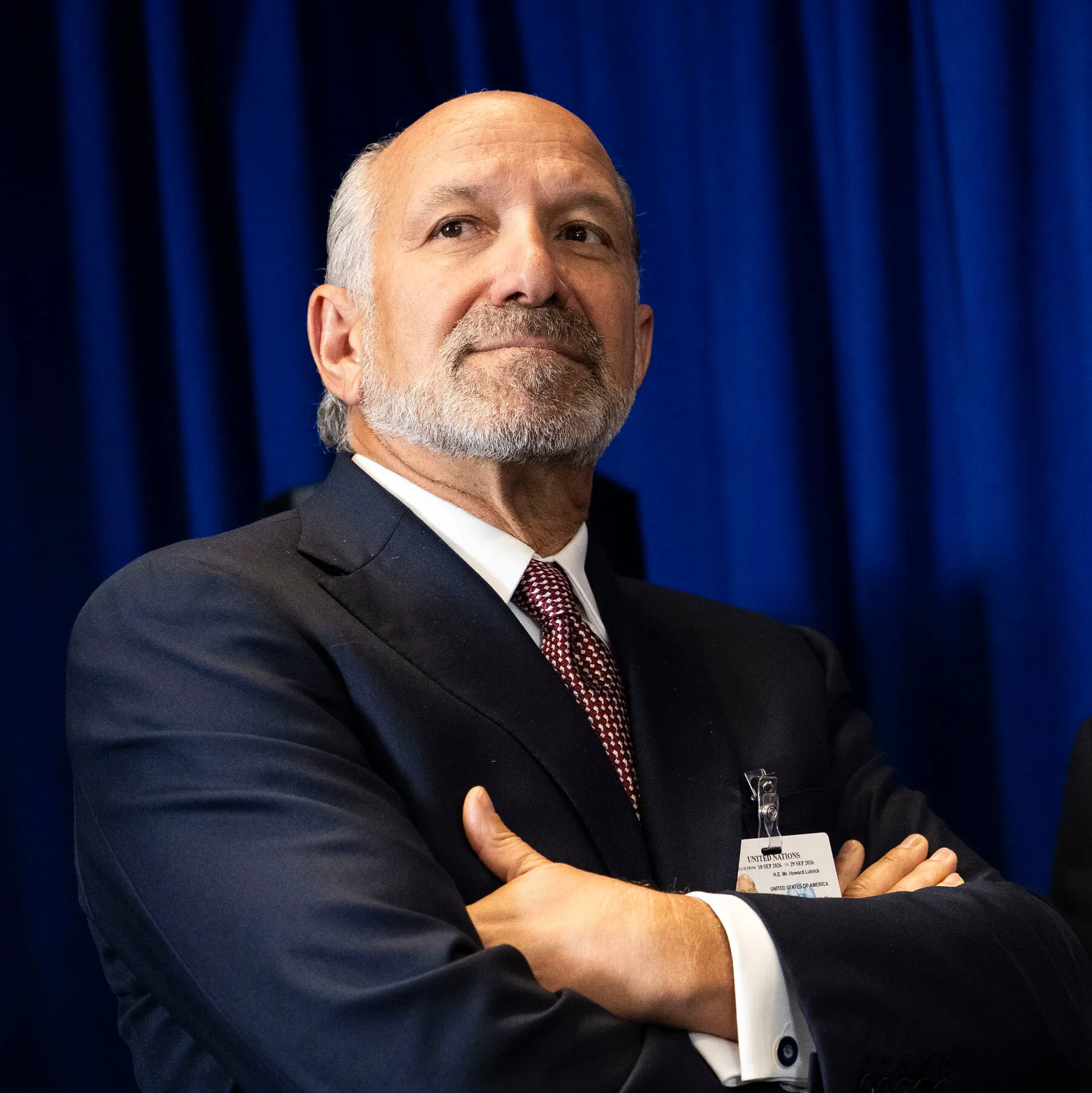
Lutnick Delayed Stricter Nvidia Chip Export Controls Amid Internal Administration Dispute
Why it matters
The friction inside Washington over semiconductor export rules reveals how difficult it is to decouple advanced compute supply chains without destabilizing domestic tech champions and trade balances.
What happened (in 30 seconds)
- A regulatory split surfaced: U.S. Commerce Secretary Howard Lutnick resisted stricter export controls on advanced Nvidia artificial intelligence chips, clashing with Treasury Secretary Scott Bessent and Secretary of State Marco Rubio.
- Diversion scrutiny mounted: Federal scrutiny intensified around Singapore-based Megaspeed after investigators identified roughly 50,000 excess Nvidia processors imported beyond the firm's verified data center capacity.
- Executive fallout followed: Jensen Huang stepped down as Nvidia CEO on November 12, 2026, amid disclosures involving Megaspeed links, sending company shares lower.
The context you actually need
- The policy pendulum swung: In January 2025, the previous administration drafted rules targeting remote access loopholes that allowed Chinese entities to tap compute clusters in Southeast Asian facilities, which the incoming administration subsequently paused.
- Entity additions stalled: The Commerce Department logged a pause of over one year without new additions to the export restriction entity list, marking the longest stretch between updates in nearly two decades.
- The regional scope stayed narrow: The contested enforcement targets third-party intermediaries and data center operations across Southeast Asia rather than technology corridors in the Gulf or Europe.
What's really happening
The standoff over semiconductor enforcement illustrates the structural tension between two distinct economic objectives: defending proprietary artificial intelligence hardware advantages and shielding market leaders from revenue shocks during broader trade negotiations.
At the center of the dispute sits the Commerce Department's Bureau of Industry and Security, which holds statutory authority over export classifications and entity listings. Throughout 2026, proposals to tighten restrictions on high-end processor sales and plug remote data center access across Southeast Asia faced persistent friction within the administration. While officials at State and Treasury pushed to curb intermediaries funneling compute power toward Chinese firms, the Commerce leadership cautioned that rapid regulatory shifts risked commercial retaliation and trade escalation.
The mechanism exposed by investigators relies on third-country data infrastructure. Advanced processors subject to direct bilateral export bans can be sold lawfully to infrastructure providers in neutral jurisdictions. Once deployed, regional facilities can sell processing time remotely or physically re-route hardware across borders. Singapore-based Megaspeed became the primary flashpoint when Commerce Department findings identified an estimated 50,000 units imported beyond what verified data center installations could account for.
When senior cabinet members convened in early November 2026, the disagreement turned on whether to freeze sales immediately through administrative designations or defer action to preserve broader leverage. A draft regulatory package restricting remote access via regional compute hubs had secured support from technology executives including Elon Musk and Mark Zuckerberg, along with presidential approval in October 2026. However, procedural intervention by Commerce officials delayed formal publication.
The resulting leadership transition at Nvidia—triggered by disclosures surrounding former chief executive Jensen Huang and entities associated with Megaspeed—transferred the dispute from closed interagency debates into the open market. The underlying dilemma remains unresolved: as long as third-party cloud infrastructure offers compute access without requiring physical domestic custody of the silicon, export enforcement requires constant, aggressive expansion into regional trade hubs. Halting that expansion leaves alternative pathways open; pursuing it disrupts international revenue flows for domestic semiconductor designers.
Who feels it first (and how)
- Semiconductor supply chain directors: Teams managing hardware allocations face revised compliance checks and potential delays as authorities review distribution pathways through Southeast Asia.
- Enterprise cloud operators in Asia: Data center providers in transit hubs face increased audits over capacity utilization and customer verification procedures.
- Institutional tech investors: Portfolios exposed to hardware manufacturing encounter volatility as equity valuations adjust to executive departures and regulatory uncertainty.
- Cross-border trade attorneys: Corporate legal teams must navigate a widening gap between stated national security posture and operational export rules.
What to watch next
- Entity list activity: Whether the Commerce Department resumes adding Southeast Asian intermediary firms to the restricted list will signal which cabinet faction won regulatory control.
- Data center access rules: Publication of specific parameters around remote access tracking will determine if offshore compute leases fall under direct export jurisdiction.
- Interim leadership guidance: Nvidia's initial filings following the CEO departure will show whether shipment forecasts to non-restricted Asian destinations face immediate downward revisions.
The Commerce Department delayed proposed curbs on chip exports and remote access throughout 2026; Jensen Huang resigned on November 12, 2026; Megaspeed imported approximately 50,000 chips beyond verified holdings.
Scrutiny from congressional committees and competing executive agencies will force a resumption of formal entity listings and tighter third-country audits.
Whether revised regulations will introduce direct liability for domestic chip designers when independent foreign data centers lease processing capacity to overseas entities.
Frequently Asked Questions
- Why it matters?
- The friction inside Washington over semiconductor export rules reveals how difficult it is to decouple advanced compute supply chains without destabilizing domestic tech champions and trade balances.
- What happened (in 30 seconds)?
- A regulatory split surfaced: U.S. Commerce Secretary Howard Lutnick resisted stricter export controls on advanced Nvidia artificial intelligence chips, clashing with Treasury Secretary Scott Bessent and Secretary of State Marco Rubio. Diversion scrutiny mounted: Federal scrutiny intensified around Singapore-based Megaspeed after investigators identified roughly 50,000 excess Nvidia processors imported beyond the firm's verified data center capacity. Executive fallout followed: Jensen Huang stepp
- What's really happening?
- The standoff over semiconductor enforcement illustrates the structural tension between two distinct economic objectives: defending proprietary artificial intelligence hardware advantages and shielding market leaders from revenue shocks during broader trade negotiations. At the center of the dispute sits the Commerce Department's Bureau of Industry and Security, which holds statutory authority over export classifications and entity listings. Throughout 2026, proposals to tighten restrictions on
- Who feels it first (and how)?
- Semiconductor supply chain directors: Teams managing hardware allocations face revised compliance checks and potential delays as authorities review distribution pathways through Southeast Asia. Enterprise cloud operators in Asia: Data center providers in transit hubs face increased audits over capacity utilization and customer verification procedures. Institutional tech investors: Portfolios exposed to hardware manufacturing encounter volatility as equity valuations adjust to executive departure
- What to watch next?
- Entity list activity: Whether the Commerce Department resumes adding Southeast Asian intermediary firms to the restricted list will signal which cabinet faction won regulatory control. Data center access rules: Publication of specific parameters around remote access tracking will determine if offshore compute leases fall under direct export jurisdiction. Interim leadership guidance: Nvidia's initial filings following the CEO departure will show whether shipment forecasts to non-restricted Asian
Tech industry coverage with AI angles.
"Mainstream tech news intersecting with AI policy and culture."
— A47 Editor
Lutnick Took a Softer Line on Nvidia as Calls for Tougher Controls Grew
The New York Times reports that Commerce Secretary Howard Lutnick and his department have taken a softer line on Nvidia even as calls for tougher controls on A.I. chip sales to firms such as Megaspeed have grown, with Lutnick frequently clashing with...
Tech policy, trends, and innovation news.
"The New York Times is a globally recognized newspaper offering authoritative reporting with a center-left editorial stance."
— A47 Editor
Lutnick Took a Softer Line on Nvidia as Calls for Tougher Controls Grew
The New York Times reports that Commerce Secretary Howard Lutnick and his department have taken a softer line on Nvidia even as calls for tougher controls on A.I. chip sales to firms such as Megaspeed have grown, with Lutnick frequently clashing with...
Editor-curated FT homepage stories spanning markets, business, world, and opinion.
"The Financial Times is a globally respected business publication with a centrist/center-left tone and strong markets focus."
— A47 Editor
US lawmakers pile pressure on Howard Lutnick as Nvidia scandal widens
US lawmakers, including members of both parties, are pressing Commerce Secretary Howard Lutnick to explain why his department allowed chip sales to Nvidia-linked interests tied to an alleged Chinese spy, as the scandal surrounding Nvidia CEO Jensen H...
Insights and news on social issues, policy, and political movements across the United States.
"The Wall Street Journal is known for its deep political coverage, especially at the intersection of policy, regulation, and social dynamics."
— A47 Editor
Some of President Trump’s top advisers have started shifting blame for the Jensen Huang political mess toward one man: Commerce Secretary Howard Lutnick
Some of President Trump's top advisers have begun shifting blame for the political fallout surrounding Nvidia CEO Jensen Huang toward Commerce Secretary Howard Lutnick, according to The Wall Street Journal, citing his inaction on chip-export controls...
24/7 international news from a French perspective in multiple languages.
"France 24 is viewed as a globally focused outlet with balanced coverage and a European perspective."
— A47 Editor
White House reportedly discussing Howard Lutnick's future as Commerce secretary
Senior White House officials are reportedly discussing whether Commerce Secretary Howard Lutnick should be pushed out, in the wake of a spy scandal surrounding Nvidia's now former CEO Jensen Huang, according to two people familiar with the matter who...
Curated tech headlines including AI stories.
"Influential aggregator surfacing the day’s top tech/AI links."
— A47 Editor
Sources: senior White House officials are discussing whether Commerce Secretary Howard Lutnick should be pushed out in the wake of the Nvidia spy scandal (Reuters)
Senior White House officials are reportedly discussing whether Commerce Secretary Howard Lutnick should be pushed out in the wake of the Nvidia spy scandal, according to sources cited by Reuters. The discussions come amid reports that the Commerce De...
Corporate leadership, finance, technology, and market trends.
"Fortune covers financial trends, leadership, and innovation with a pragmatic editorial approach."
— A47 Editor
After Jensen Huang is Howard Lutnick the prime target of national security inquiry?
The base article, published by Fortune, examines whether Commerce Secretary Howard Lutnick could become the next focus of a national security inquiry, following reports that Nvidia CEO Jensen Huang is under scrutiny after reports, citing a New York T...
Coverage of national news and events from across the United States.
"HuffPost is known for its progressive editorial stance, offering opinionated yet comprehensive coverage on social, political, and cultural topics."
— A47 Editor
White House Discussing Howard Lutnick's Future As Commerce Secretary, People Familiar Say
The White House is reportedly discussing the future of Commerce Secretary Howard Lutnick, according to people familiar with the matter, as critics argue he has not done enough to restrict shipments of AI chips to China.
U.S. political news and right-leaning commentary.
"Fox News is a highly influential conservative news outlet known for right-leaning political commentary and coverage."
— A47 Editor
Howard Lutnick is next Trump official top Dems want on the chopping block amid NVIDIA scandal
Fox News reports that top House Democrats are calling for an investigation into Commerce Secretary Howard Lutnick over his alleged role in the Nvidia and Jensen Huang Chinese spy scandal, which centers on reports that Huang had an intimate relationsh...
Technology business and AI-related headlines.
"Data-driven tech newsroom with global scope."
— A47 Editor
Trump Backs Lutnick Despite Uproar Over Nvidia Chip Controls
President Donald Trump publicly backed Commerce Secretary Howard Lutnick despite reports that his department had been slow to prevent China from obtaining Nvidia's advanced AI chips, amid scrutiny of the administration's ties to Nvidia CEO Jensen Hua...
Curated tech headlines including AI stories.
"Influential aggregator surfacing the day’s top tech/AI links."
— A47 Editor
Sources: Howard Lutnick has stalled curbs on companies suspected of diverting Nvidia chips to China; Trump approved them for the third time this year on Nov. 5 (Axios)
On Nov. 5, President Trump approved curbs on companies suspected of diverting Nvidia's advanced AI chips to China, the third such authorization this year, according to sources cited by Axios. The sources say Commerce Secretary Howard Lutnick has stal...