
Trump Administration Backs Selective Nvidia Chip Sales to China Amid Huang Espionage Scandal and Internal Export Control Divisions
Why it matters
The debate over advanced semiconductor access exposes the structural tension between preserving domestic market dominance through customer dependency and closing perimeter leaks across global compute supply chains.
What happened (in 30 seconds)
- High-level regulatory clash: Revelations surrounding former Nvidia CEO Jensen Huang and a suspected Chinese intelligence-linked intermediary surfaced a fierce internal divide between Commerce Secretary Howard Lutnick and Treasury Secretary Scott Bessent over semiconductor restrictions.
- Intermediary diversion route: Restricted Nvidia H200 silicon reached Chinese operations by moving through Inspur subsidiary Aivres to Megaspeed facilities across Malaysia and Indonesia.
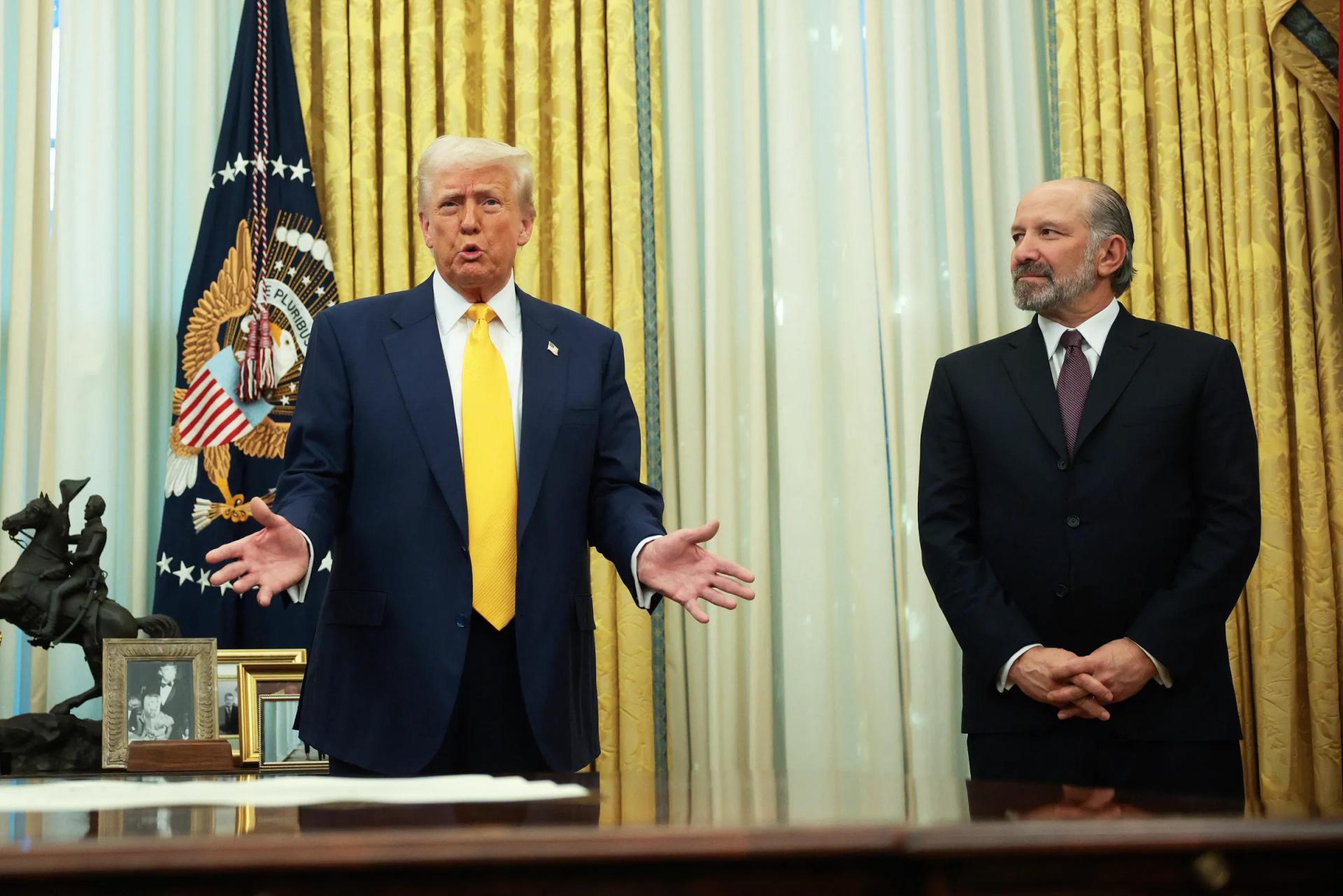
- Selective policy response: Following a November 5, 2026 Oval Office review, President Donald Trump rejected blanket blacklisting, opting to maintain sales of specific hardware while preparing an interim rule targeting remote compute access.
The context you actually need
- Prior policy rollbacks: The administration previously rescinded the AI Diffusion Rule and greenlit H200 sales in 2025, prioritizing US vendor market share over total containment.
- Supply chain retaliation: A September 2025 expansion of the foreign affiliates rule prompted Beijing to halt rare earth exports, triggering a trade truce following the October 2025 Busan summit.
- Capital market reaction: Nvidia shed approximately $430 billion in market capitalization across two trading sessions following public reporting on the intermediary pipeline.
What's really happening
The mechanics behind Washington's semiconductor debate reveal a conflict of economic incentives rather than a standard enforcement breakdown. The White House operates on a dependency framework: cutting off Chinese firms entirely incentivizes domestic Chinese semiconductor development, whereas permitting sales of previous-generation architectures like the H200 maintains foreign reliance on the US compute ecosystem. This approach creates a distinct regulatory line between cutting-edge Blackwell and Rubin platforms and older architectures.
However, enforcement mechanisms struggle against cross-jurisdictional cloud provisioning. Megaspeed operated as a crucial conduit, deploying hardware into data centers across Southeast Asia—specifically Malaysia and Indonesia. Because compute can be rented virtually across borders, physical export destinations no longer correspond to the ultimate point of workload execution. By acquiring chips via entities such as Inspur subsidiary Aivres, buyers built a compute layer that insulated end users from direct US entity list designations.
Treasury Secretary Scott Bessent, supported by Marco Rubio and Jamieson Greer, advocated for immediate entity list additions to sever this bypass route. Conversely, Commerce Secretary Howard Lutnick adhered to an approach that prioritizes broader diplomatic leverage and hardware sales, backed by presidential guidance. Trump’s strategy deliberately avoids broad export bans in favor of an interim rule designed to police remote access—preventing Chinese research laboratories from leasing advanced compute clusters hosted offshore.
This selective enforcement posture reflects the systemic risk of full decoupling. When US rules expanded under the affiliates framework in September 2025, China's counter-restriction on rare earth materials disrupted industrial supply chains, ultimately compelling the Busan summit truce. Consequently, trade officials are balancing technological containment against structural leverage: using previous-generation architecture shipments to sustain US revenue streams and monitor end-use, while attempting to construct digital barriers around offshore cloud leasing.
Who feels it first (and how)
- Enterprise cloud architects: Teams provisioning infrastructure across Southeast Asian colocation hubs must account for tighter compliance scrutiny on remote server leasing.
- Data center operators in Malaysia and Indonesia: Facilities housing high-density US compute clusters face sudden audit trails and potential restrictions on Chinese tenant contracts.
- Public equity tech investors: Portfolios exposed to hyperscalers and semiconductor fabricators absorb valuation volatility driven by rapid shifts in export policy enforcement.
- Hardware procurement officers: Enterprise buyers of AI servers navigate bifurcated supply pipelines as vendors alter geographic allocation to insulate against interim compliance rules.
What to watch next
- The interim remote-compute rule: Commerce's forthcoming framework will test whether regulators can enforce restrictions on virtual access without disrupting commercial hyperscale cloud operations.
- Southeast Asian data center audits: Regulatory scrutiny of Megaspeed facilities will indicate whether enforcement focuses on intermediary corporate structures or cross-border compute flows.
- Enforcement disputes within the administration: Public positions taken by Marco Rubio and Scott Bessent will signal whether hardline entity list additions will eventually replace selective sales approvals.
Nvidia lost approximately $430 billion in market value over two sessions; restricted H200 hardware reached intermediary operations in Malaysia and Indonesia via Aivres and Megaspeed; and the administration opted against immediate broad blacklisting at the November 5, 2026 meeting.
New compliance burdens will fall on offshore data center operators leasing compute to international clients, forcing structural separation of Chinese and non-Chinese workloads.
Whether the interim rule on remote compute leasing can successfully close access points without triggering another round of Chinese industrial retaliations similar to the 2025 rare earth halts.
Frequently Asked Questions
- Why it matters?
- The debate over advanced semiconductor access exposes the structural tension between preserving domestic market dominance through customer dependency and closing perimeter leaks across global compute supply chains.
- What happened (in 30 seconds)?
- High-level regulatory clash: Revelations surrounding former Nvidia CEO Jensen Huang and a suspected Chinese intelligence-linked intermediary surfaced a fierce internal divide between Commerce Secretary Howard Lutnick and Treasury Secretary Scott Bessent over semiconductor restrictions. Intermediary diversion route: Restricted Nvidia H200 silicon reached Chinese operations by moving through Inspur subsidiary Aivres to Megaspeed facilities across Malaysia and Indonesia. Selective policy response:
- What's really happening?
- The mechanics behind Washington's semiconductor debate reveal a conflict of economic incentives rather than a standard enforcement breakdown. The White House operates on a dependency framework: cutting off Chinese firms entirely incentivizes domestic Chinese semiconductor development, whereas permitting sales of previous-generation architectures like the H200 maintains foreign reliance on the US compute ecosystem. This approach creates a distinct regulatory line between cutting-edge Blackwell an
- Who feels it first (and how)?
- Enterprise cloud architects: Teams provisioning infrastructure across Southeast Asian colocation hubs must account for tighter compliance scrutiny on remote server leasing. Data center operators in Malaysia and Indonesia: Facilities housing high-density US compute clusters face sudden audit trails and potential restrictions on Chinese tenant contracts. Public equity tech investors: Portfolios exposed to hyperscalers and semiconductor fabricators absorb valuation volatility driven by rapid shifts
- What to watch next?
- The interim remote-compute rule: Commerce's forthcoming framework will test whether regulators can enforce restrictions on virtual access without disrupting commercial hyperscale cloud operations. Southeast Asian data center audits: Regulatory scrutiny of Megaspeed facilities will indicate whether enforcement focuses on intermediary corporate structures or cross-border compute flows. Enforcement disputes within the administration: Public positions taken by Marco Rubio and Scott Bessent will sign
Breaking news, politics, business, and entertainment from the U.S. and around the world.
"The New York Post is a tabloid-format newspaper known for its sensationalist headlines and conservative-leaning editorial tone."
— A47 Editor
Trump’s portfolio traded Nvidia five times in September — months before CEO Jensen Huang’s scandal-ridden exit
President Trump's investment accounts traded Nvidia stock five times in September, two months before CEO Jensen Huang resigned with immediate effect following an independent board investigation into his personal relationships, according to a periodic...
Global business headlines with AI angles.
"General business outlet that frequently covers AI."
— A47 Editor
Trump's New Filing Reveals Nvidia, SpaceX And Tesla Purchases. White House Says He Didn't Direct Trades.
Trump disclosed 751 securities transactions from September, including purchases of Nvidia, SpaceX, Tesla and Palantir stock, while the White House says independent managers control his investments and that he did not direct the trades.
Celebrity news, photo galleries, and Hollywood updates.
"Wonderwall covers celebrity gossip, Hollywood rumors, and pop culture photo galleries."
— A47 Editor
Michael Wolff accuses Donald Trump of changing US policy to boost his Nvidia fortune
Author Michael Wolff told Joanna Coles on the "Inside Trump's Head" podcast that President Donald Trump's relationship with former Nvidia chief executive Jensen Huang could lead to Trump's impeachment. Wolff claimed Trump eased U.S. restrictions on N...
Political, social, and economic news across Asia and the Pacific.
"France 24 is viewed as a globally focused outlet with balanced coverage and a European perspective."
— A47 Editor
Xi welcomes Trump: Does Nvidia scandal upend US-China AI race?
At the APEC summit in Shenzhen, Chinese President Xi Jinping welcomed US President Donald Trump as the two leaders prepared to meet, but the expected conversation has been overshadowed by a scandal at Nvidia. Co-founder Jensen Huang, who was set to a...
Markets, economy, and company analysis from NYT’s business desk.
"The New York Times is a globally recognized newspaper offering authoritative reporting with a center-left editorial stance."
— A47 Editor
Trump had urged Jensen Huang to fight for his job.
President Donald Trump had urged Nvidia co-founder Jensen Huang to fight for his job, according to reporting by The New York Times, after Huang resigned as president, CEO and board member with immediate effect following an internal, board-led investi...
Global political, business, and cultural coverage from WSJ international desks.
"The Wall Street Journal offers extensive international reporting with a reputation for financial insight and a center-right editorial stance."
— A47 Editor
Opinion | Jensen Huang’s Offense Wasn’t Infidelity
The Wall Street Journal opinion piece, "Jensen Huang's Offense Wasn't Infidelity," argues that Nvidia CEO Jensen Huang's ouster stemmed from more than his personal conduct, linking the episode to pressure over export controls on Nvidia chips to China...
Tech business coverage, major deals, product launches, and Silicon Valley trends.
"WSJ’s tech section offers authoritative reporting on the intersection of technology and business, including exclusive industry analysis."
— A47 Editor
Opinion | Jensen Huang’s Offense Wasn’t Infidelity
The WSJ opinion piece "Jensen Huang's Offense Wasn't Infidelity" argues that the Nvidia co-founder's removal stems from export-control concerns rather than the personal conduct reported in the press. Reports cite a New York Times account and U.S. int...
Startup news with frequent AI coverage.
"Covers launches, funding, and product updates in AI."
— A47 Editor
SEC reportedly investigating Nvidia amid Huang exit
The Securities and Exchange Commission is reportedly investigating Nvidia following the departure of CEO Jensen Huang, who resigned as president, chief executive and board member after an internal, board-led investigation into alleged extramarital re...
Global markets, investing, and macroeconomics from a premier financial newsroom.
"Bloomberg is respected for in-depth financial reporting and data-driven analysis."
— A47 Editor
SEC Is Probing Nvidia Amid Jensen Huang’s Exit, WSJ Reports
The U.S. Securities and Exchange Commission is investigating Nvidia Corp., the Wall Street Journal reported, as the chipmaker deals with the fallout from the resignation of co-founder Jensen Huang as president, chief executive and board member with i...
In-depth reporting on tech, policy, and science including AI.
"Respected analysis for technically savvy readers, including AI topics."
— A47 Editor
“Trump was in bed with Jensen”: Critics balk at Huang’s wish to return to Nvidia
Jensen Huang, co-founder and CEO of Nvidia, resigned as president, CEO and board member with immediate effect after the company's board opened an investigation into alleged extramarital relationships, including one linked to Alice Huang, a Megaspeed ...
In-depth coverage of hardware, software, science, and policy.
"Ars Technica provides expert technology news, hardware reviews, and analysis for a technically savvy audience."
— A47 Editor
“Trump was in bed with Jensen”: Critics balk at Huang’s wish to return to Nvidia
Jensen Huang, co-founder and CEO of Nvidia, resigned as president, CEO and board member with immediate effect after the company's board opened an investigation into alleged extramarital relationships, including one linked to Alice Huang, a Megaspeed ...
Tech policy, trends, and innovation news.
"The New York Times is a globally recognized newspaper offering authoritative reporting with a center-left editorial stance."
— A47 Editor
Jensen Huang Says He Would Return as Nvidia CEO if Asked
Nvidia co-founder Jensen Huang resigned as president, chief executive and board member with immediate effect last week after an internal, board-led investigation into alleged extramarital relationships, including reports linked to an employee and a w...
Tech industry coverage with AI angles.
"Mainstream tech news intersecting with AI policy and culture."
— A47 Editor
Jensen Huang Says He Would Return as Nvidia CEO if Asked
Nvidia co-founder Jensen Huang resigned as president, chief executive and board member with immediate effect last week after an internal, board-led investigation into alleged extramarital relationships, including reports linked to an employee and a w...
Markets, economy, and company analysis from NYT’s business desk.
"The New York Times is a globally recognized newspaper offering authoritative reporting with a center-left editorial stance."
— A47 Editor
Jensen Huang Says He Would Return as Nvidia CEO if Asked
Nvidia co-founder Jensen Huang resigned as president, chief executive and board member with immediate effect last week after an internal, board-led investigation into alleged extramarital relationships, including reports linked to an employee and a w...
Emerging technologies, digital transformation, IT, and cultural impact of tech.
"WIRED covers the intersection of technology, culture, and politics with a progressive, forward-looking editorial stance."
— A47 Editor
The Nvidia Scandal Could Upend Chip Sales to China. Trump Wants to Keep Them Going
WIRED reports that Nvidia's board ousted co-founder and CEO Jensen Huang after reports of an intimate relationship with Alice Huang, a Megaspeed executive whom U.S. officials reportedly determined was working for Chinese intelligence. Commerce Secret...
Global political, business, and cultural coverage from WSJ international desks.
"The Wall Street Journal offers extensive international reporting with a reputation for financial insight and a center-right editorial stance."
— A47 Editor
Nvidia Forms National-Security Committee After Huang’s Exit
Nvidia has formed a national-security committee following the departure of co-founder and CEO Jensen Huang, a move that comes amid a geopolitical firestorm over reports that U.S. intelligence believed Huang was targeted by a Chinese intelligence oper...