
U.S. Data Centers Running American Chips Serve Chinese AI Models Despite Dominance Strategy
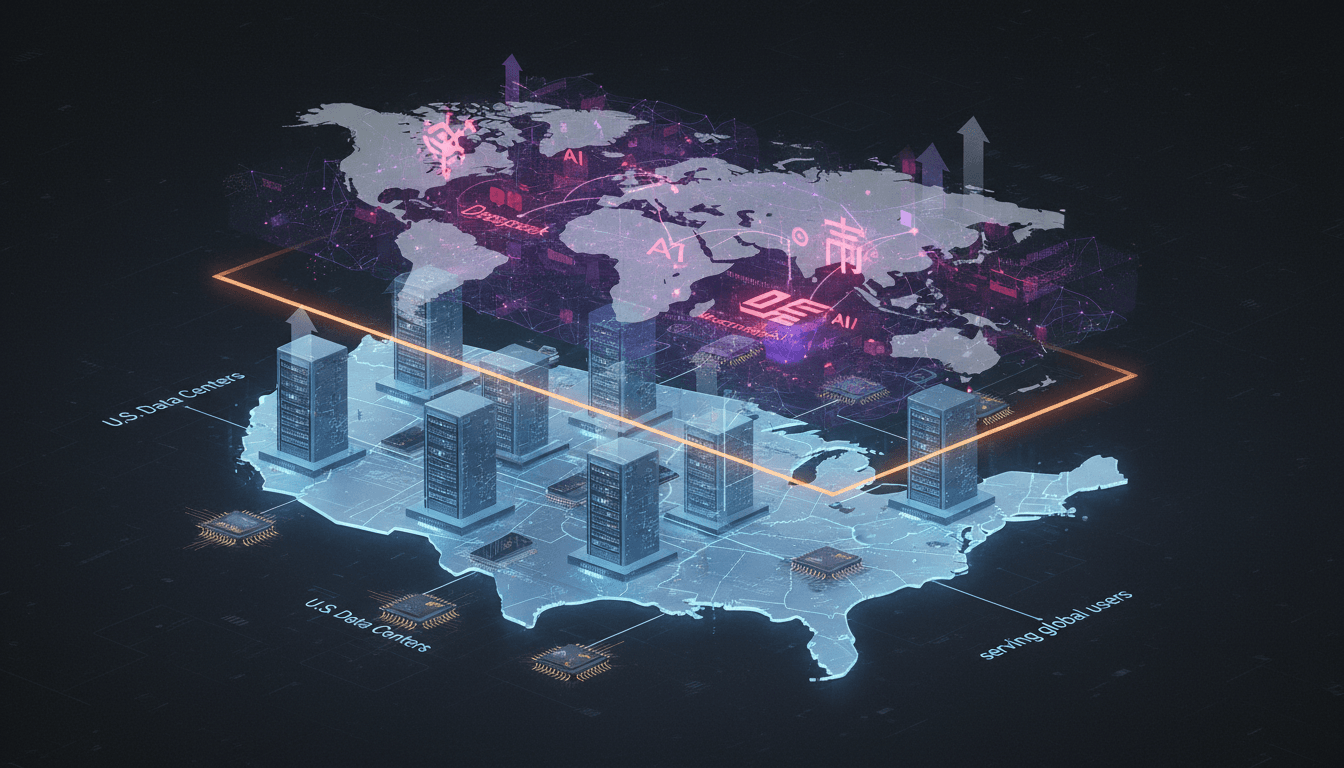
Why it matters
Physical dominance in advanced semiconductors does not guarantee software dominance when the world's most accessible open-weight models originate from Beijing.
What happened (in 30 seconds)
- A core hardware-software split surfaced: A November 21, 2026 analysis from Georgetown University’s Center for Security and Emerging Technology (CSET) revealed that U.S.-owned data centers running U.S.-designed chips are actively serving inference for leading Chinese artificial intelligence models worldwide.
- Hyperscalers host the competition: Platforms including Together AI, Baseten, Fireworks, and Amazon Bedrock host open-weight models from Chinese laboratories like DeepSeek, while firms like Moonshot AI actively pursue commercial revenue-sharing models with Western cloud providers.
- New export hurdles emerged: On November 19, 2026, the U.S. Commerce Department introduced rules requiring licenses for advanced semiconductor exports to specific high-risk jurisdictions to regulate foreign data centers providing remote computing capacity to Chinese entities.
The context you actually need
- Hardware concentration remains absolute: U.S. enterprises design nearly all advanced data-center artificial intelligence processors deployed globally, establishing tight control over the physical layer of the computing stack.
- Cloud distribution is highly consolidated: Amazon, Microsoft, and Google collectively command more than half of the entire global cloud infrastructure market, giving American platforms unmatched reach in international compute deployment.
- The software distribution model diverged: While leading U.S. artificial intelligence labs emphasize closed, proprietary platforms, Chinese developers have focused on open-weight architectures, driving rapid enterprise adoption across emerging markets where compute accessibility dictates commercial viability.
What's really happening
The architecture of global artificial intelligence is splitting along an unexpected economic fault line. While public policy focuses on restricting the cross-border flow of physical silicon, the commercial software layer operates under different incentive structures.
American hyperscalers—who control more than half of global cloud capacity—invest billions building high-density data centers across Latin America, Southeast Asia, and the Middle East. To monetize these massive capital expenditures, cloud platforms must host the models that enterprise customers actually demand. A significant portion of that global demand has shifted toward open-weight models produced by Chinese teams like DeepSeek and Moonshot AI.
Because open-weight models provide inspectable code and lower deployment costs, international developers and enterprises routinely choose them over proprietary American alternatives. U.S. cloud providers face a direct commercial trade-off: refuse to host high-performing foreign models and lose inference workloads to regional infrastructure providers, or host those models on American-designed chips and capture the margin.
Consequently, platforms like Amazon Bedrock, Together AI, and Baseten host Chinese open-weight options alongside Western counterparts. Developers such as Moonshot AI—seeking annualized sales targets of $2 billion—have actively negotiated revenue-sharing arrangements with Western platforms to distribute models like Kimi K3.
This dynamic creates an operational paradox for semiconductor trade controls. U.S. policy aims to maintain complete technological leverage by restricting China's direct domestic access to cutting-edge chips. Yet, international developers run Chinese intellectual property on genuine American chips hosted in third countries. Instead of checking Chinese artificial intelligence software, global deployments of American hardware subsidize the distribution, adoption, and commercial viability of Chinese algorithmic ecosystems.
Attempts to close remote-access loopholes via export controls create compliance burdens for data centers operating overseas. However, regulating the software weights executing on remote infrastructure presents a far greater enforcement hurdle than intercepting hardware shipments at border customs. As long as global enterprises prioritize flexibility and cost, the economic incentives of cloud providers favor hosting the most competitive open models—regardless of where the developers reside.
Who feels it first (and how)
- Enterprise Chief Technology Officers: Engineering leaders outside the United States gain enterprise-grade access to Chinese open-weight architectures hosted on reliable, compliant Western cloud infrastructure.
- Independent Inference Providers: Specialist platforms like Together AI, Baseten, and Fireworks secure high-margin inference traffic by offering competitive global models, balancing commercial customer demand against tightening export oversight.
- Data Center Developers in Emerging Hubs: Facilities in the Middle East and Southeast Asia encounter heightened compliance monitoring from U.S. regulators regarding remote-access compute arrangements.
- Proprietary Software Developers: U.S. artificial intelligence firms selling closed-API models face margin pressure from well-funded, open-weight Chinese models running on the exact same underlying hardware.
What to watch next
- Overseas Remote-Access Licensing: The pace and strictness with which the U.S. Commerce Department issues licenses under its November 19 rule will indicate whether overseas facilities will be forced to restrict remote hosting.
- Revenue-Sharing Precedents: Any formalized commercial contracts between major American cloud hyperscalers and Chinese model builders like Moonshot AI will set the monetization standard for cross-border model hosting.
- Western Open-Weight Model Funding: Federal procurement shifts or strategic investments directed toward domestic open-weight models will signal whether policy pivots from export restriction to active open-source software competition.
U.S. cloud providers and inference platforms actively host and monetize Chinese-developed models on American-designed processors across international infrastructure footprints.
Scrutiny will expand beyond physical chip exports toward the operational software hosted on American-managed servers located abroad.
Whether export regulators can design enforceable mechanisms to prevent foreign open-weight software from utilizing globally deployed American compute capacity without fragmenting the international cloud market.
Frequently Asked Questions
- Why it matters?
- Physical dominance in advanced semiconductors does not guarantee software dominance when the world's most accessible open-weight models originate from Beijing.
- What happened (in 30 seconds)?
- A core hardware-software split surfaced: A November 21, 2026 analysis from Georgetown University’s Center for Security and Emerging Technology (CSET) revealed that U.S.-owned data centers running U.S.-designed chips are actively serving inference for leading Chinese artificial intelligence models worldwide. Hyperscalers host the competition: Platforms including Together AI, Baseten, Fireworks, and Amazon Bedrock host open-weight models from Chinese laboratories like DeepSeek, while firms like Mo
- What's really happening?
- The architecture of global artificial intelligence is splitting along an unexpected economic fault line. While public policy focuses on restricting the cross-border flow of physical silicon, the commercial software layer operates under different incentive structures. American hyperscalers—who control more than half of global cloud capacity—invest billions building high-density data centers across Latin America, Southeast Asia, and the Middle East. To monetize these massive capital expenditures
- Who feels it first (and how)?
- Enterprise Chief Technology Officers: Engineering leaders outside the United States gain enterprise-grade access to Chinese open-weight architectures hosted on reliable, compliant Western cloud infrastructure. Independent Inference Providers: Specialist platforms like Together AI, Baseten, and Fireworks secure high-margin inference traffic by offering competitive global models, balancing commercial customer demand against tightening export oversight. Data Center Developers in Emerging Hubs: Faci
- What to watch next?
- Overseas Remote-Access Licensing: The pace and strictness with which the U.S. Commerce Department issues licenses under its November 19 rule will indicate whether overseas facilities will be forced to restrict remote hosting. Revenue-Sharing Precedents: Any formalized commercial contracts between major American cloud hyperscalers and Chinese model builders like Moonshot AI will set the monetization standard for cross-border model hosting. Western Open-Weight Model Funding: Federal procurement sh
Corporate leadership, finance, technology, and market trends.
"Fortune covers financial trends, leadership, and innovation with a pragmatic editorial approach."
— A47 Editor
Data centers full of U.S. chips are serving Chinese AI models–undermining Trump’s tech ambitions
Fortune reports that data centers filled with U.S. chips are serving Chinese AI models, a development that undercuts the Trump administration's technology ambitions by allowing the infrastructure meant to secure America's lead in chips and cloud serv...
Technology business and AI-related headlines.
"Data-driven tech newsroom with global scope."
— A47 Editor
How an American AI Company Uses Chinese Open-Weight Models
Bloomberg Technology reports that the Trump administration is reportedly considering requiring US companies to publicly disclose their use of Chinese AI models, a move that could discourage American businesses from adopting cheaper Chinese open-sourc...
Technology business news, market impacts, and innovation trends.
"Bloomberg is a premier financial and tech news provider, respected for its in-depth reporting and analytical rigor."
— A47 Editor
How an American AI Company Uses Chinese Open-Weight Models
Bloomberg Technology reports that the Trump administration is reportedly considering requiring US companies to publicly disclose their use of Chinese AI models, a move that could discourage American businesses from adopting cheaper Chinese open-sourc...
Tech business coverage, major deals, product launches, and Silicon Valley trends.
"WSJ’s tech section offers authoritative reporting on the intersection of technology and business, including exclusive industry analysis."
— A47 Editor
China’s AI Firms Are Addicted to Nvidia Chips. Now They Are Facing Withdrawal.
The U.S. move to cut off Chinese access to high-end computing power, centred on Nvidia AI chips, has dealt a blow to Beijing's artificial-intelligence ambitions, according to a WSJ Tech report on China's AI firms facing withdrawal from Nvidia hardwar...