
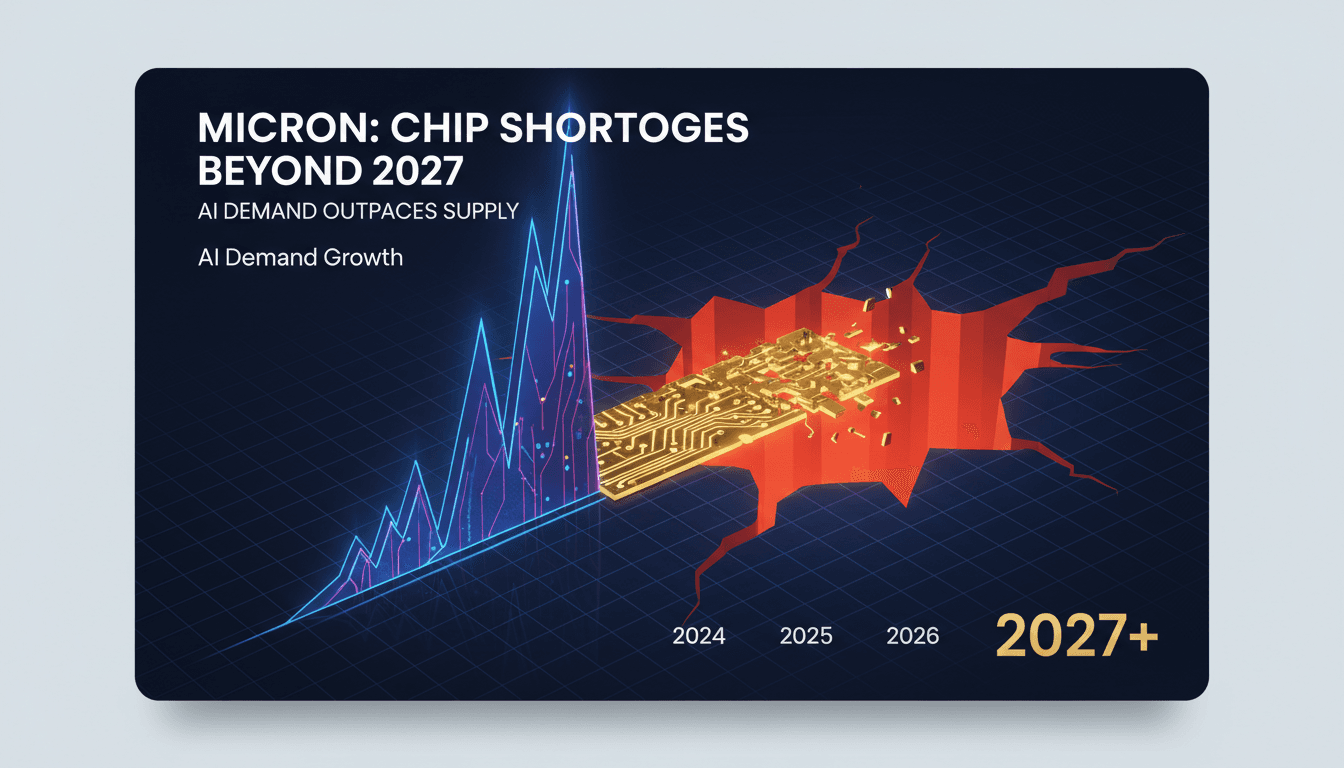
Micron forecasts memory chip shortages to persist beyond 2027 due to AI demand
Here's what it means for you.
The ongoing memory chip shortages signal a critical challenge for industries reliant on semiconductor technology, particularly as demand surges due to artificial intelligence applications. Companies may need to rethink their supply chain strategies and invest in innovative solutions to mitigate the impact of these shortages. As the semiconductor landscape evolves, stakeholders must remain agile to adapt to the changing market dynamics.
What happened
Micron has announced that memory chip shortages are expected to persist beyond 2027, primarily driven by unprecedented demand from AI applications and ongoing supply constraints. The company's CEO, Sanjay Mehrotra, emphasized that these tight conditions will continue to affect the market. Customers are actively seeking innovative workarounds to cope with the ongoing shortages, highlighting the urgency of the situation.
The forecast indicates that the semiconductor industry faces significant challenges as it grapples with both AI-driven demand and structural supply issues. This combination is exacerbating the existing shortages, prompting a reevaluation of how companies approach their supply chains and technology investments.
The Context
The surge in AI spending is a key factor driving the unprecedented demand for memory chips, which are essential for various applications in the technology sector. Structural supply constraints further complicate the landscape, making it difficult for manufacturers to keep pace with the growing needs of their customers. As a result, companies are being forced to innovate and adapt to navigate these challenges effectively.
The implications of these shortages extend beyond immediate supply issues; they underscore the critical intersection of technology and supply chain dynamics in the semiconductor market. As AI technology continues to evolve, the pressure on memory chip availability is expected to intensify, making it a focal point for industry stakeholders.
Takeaway
Looking ahead, the memory chip market will need to innovate and adapt to meet the growing demands of AI technology. Companies should monitor advancements in memory chip technology and shifts in AI spending patterns, as these factors will significantly impact supply chains. The long-term outlook suggests that investment in new technologies and supply chain strategies will be essential for navigating the anticipated shortages.
As the semiconductor industry evolves, stakeholders must remain vigilant and proactive in addressing the challenges posed by ongoing memory chip shortages. The ability to adapt will be crucial for companies aiming to thrive in this rapidly changing technological landscape.
Tech business coverage, major deals, product launches, and Silicon Valley trends.
"WSJ’s tech section offers authoritative reporting on the intersection of technology and business, including exclusive industry analysis."
— A47 Editor
The Long-Term Threat to the Memory Chip Boom Is Innovation
Micron Technology has acknowledged that the ongoing shortage of memory chips will persist, prompting customers to seek alternative solutions to manage their needs. This situation highlights the challenges faced by the memory chip industry amid rising...
Markets desk coverage, trading insights, and investor updates.
"WSJ’s markets reporting provides in-depth analysis and context for investors."
— A47 Editor
The Long-Term Threat to the Memory Chip Boom Is Innovation
Micron Technology has acknowledged that the ongoing shortage of memory chips will persist, prompting customers to seek alternative solutions to mitigate the impact. This situation highlights the challenges faced by the semiconductor industry as deman...
Tech news, hardware, and AI tools coverage.
"PC/tech site increasingly covering AI hardware and apps."
— A47 Editor
Micron CEO expects memory shortages to stretch beyond 2027 as AI spending surges
Micron Technology's CEO, Sanjay Mehrotra, has projected that memory shortages will extend beyond 2027, driven by surging demand for artificial intelligence (AI) applications and ongoing supply constraints. This forecast highlights the challenges face...