
OpenAI launches custom AI chip Jalapeño to reduce costs and reliance on Nvidia
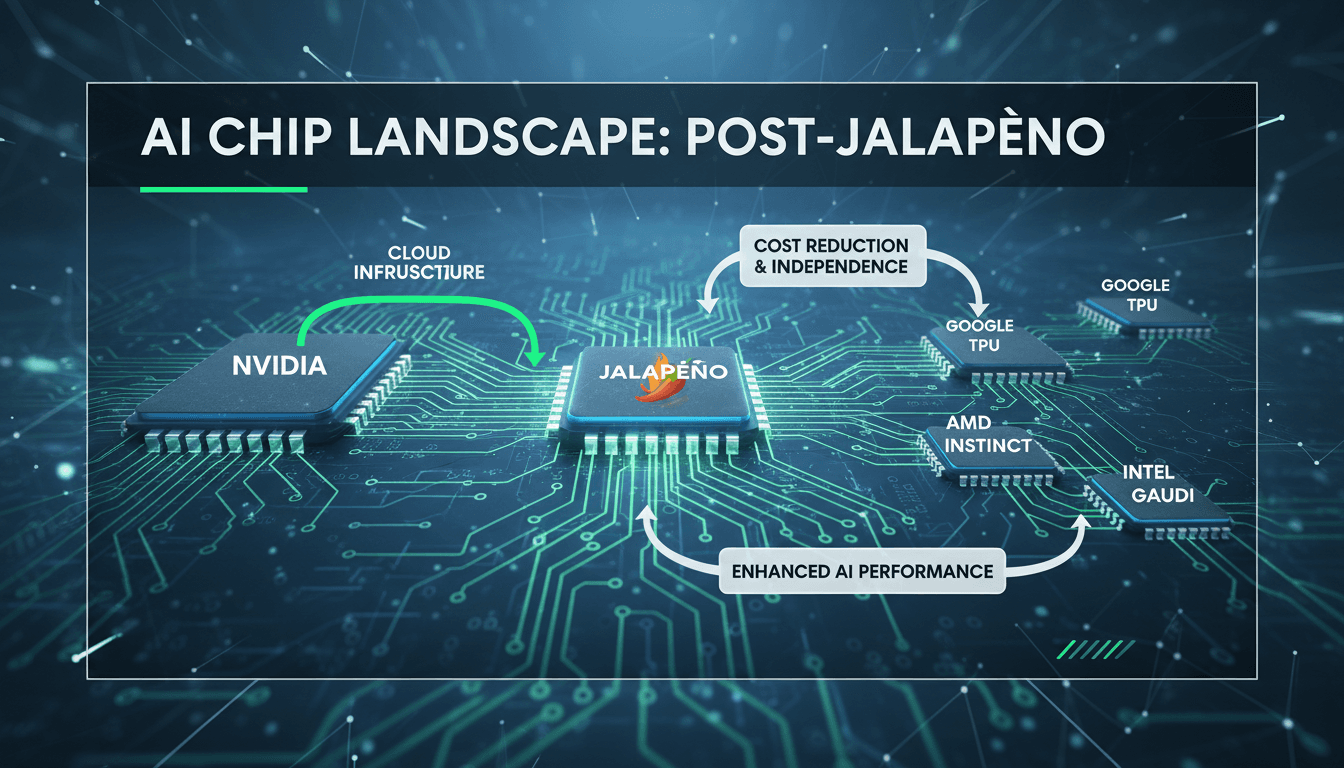
Here's what it means for you.
OpenAI's introduction of the Jalapeño chip signifies a pivotal shift in the AI hardware landscape, aiming to enhance performance while reducing costs. This strategic move not only positions OpenAI to gain greater control over its technology stack but also signals a potential decrease in reliance on Nvidia's offerings. As the competitive dynamics evolve, stakeholders in the AI sector will need to adapt to these changes. The launch of Jalapeño could influence market strategies and partnerships, prompting other companies to reassess their hardware dependencies. This development may also lead to increased innovation in AI infrastructure as firms seek to keep pace with OpenAI's advancements.
What happened
OpenAI has officially launched its first custom AI chip, named Jalapeño, designed to enhance AI performance and reduce costs associated with its flagship product, ChatGPT. This announcement was made on June 25, 2026, marking a significant milestone in OpenAI's strategy to optimize its AI infrastructure. The Jalapeño chip is specifically engineered to improve token movement in transformer architectures, which are crucial for AI inference.
This development is part of OpenAI's broader initiative to achieve independence from Nvidia's hardware, a move that could reshape the competitive landscape in AI technology. The operational efficiency and cost savings associated with the Jalapeño chip will largely depend on how effectively OpenAI scales its deployment.
The Context
The launch of the Jalapeño chip comes at a time when reliance on Nvidia's hardware has become a critical concern for many AI companies. OpenAI's decision to develop its own chip reflects a growing trend among tech firms to gain greater control over their hardware and reduce dependency on external suppliers. By focusing on the specific needs of its AI models, OpenAI aims to enhance both performance and operational control.
This strategic pivot is significant not only for OpenAI but also for the broader AI ecosystem. As the company seeks to optimize its technology stack, competitors will be closely monitoring its progress and may respond with their own innovations or partnerships. The timing of this announcement suggests that OpenAI is positioning itself for future growth in an increasingly competitive market.
Takeaway
The introduction of the Jalapeño chip is poised to have a lasting impact on AI cost structures and hardware independence. As OpenAI continues to develop and deploy this new technology, industry observers will be keen to monitor its scaling efforts and the resulting implications for operational efficiency. The response from Nvidia and other competitors will also be crucial in shaping the future of AI hardware.
In the coming months, the AI community will watch closely for updates on the Jalapeño chip's performance and its influence on the competitive landscape. This development could signal a shift in how AI companies approach their hardware strategies, potentially leading to new innovations and partnerships.
Stock market news, investing ideas, and trading analysis.
"TheStreet provides market news and retail-investor-focused analysis."
— A47 Editor
OpenAI just built a chip to cut Nvidia out of one job
OpenAI has developed a new chip aimed at reducing its reliance on Nvidia for specific tasks, marking a significant step in its strategy to enhance its artificial intelligence capabilities. This move highlights OpenAI's ambition to innovate within the...
Tech news, hardware, and AI tools coverage.
"PC/tech site increasingly covering AI hardware and apps."
— A47 Editor
OpenAI debuts Jalapeño, its first custom AI chip to cut ChatGPT costs and reduce Nvidia dependency
OpenAI has introduced Jalapeño, its first custom-designed AI chip, aimed at enhancing the performance and cost-efficiency of its AI products, including ChatGPT. This development marks a significant shift as OpenAI seeks to reduce its reliance on Nvid...