
Budget smartphone market faces 22% decline due to rising memory costs
Here's what it means for you.
The budget smartphone market is undergoing a significant transformation as rising memory costs challenge manufacturers. With shipments projected to decline by 22% year-over-year, companies must navigate a landscape where profit margins are increasingly squeezed. This shift could lead to fewer options for consumers, as manufacturers may be forced to either cut specifications or increase prices. As the market adjusts, stakeholders will need to monitor how these economic pressures influence product offerings and consumer choices. The implications extend beyond just pricing; they may also affect innovation and market strategies in the long term.
What happened
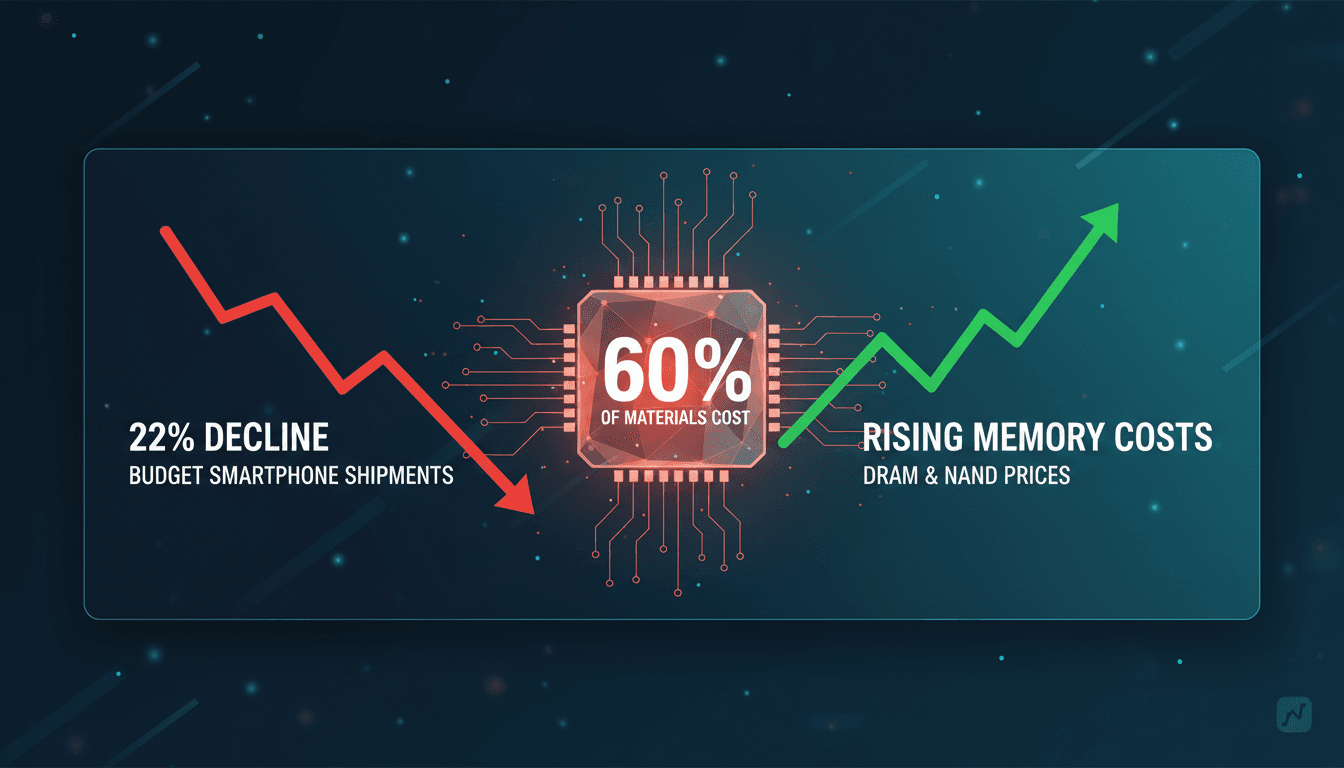
The budget smartphone segment is facing a notable decline, with Omdia predicting a 22% drop in shipments for devices priced below $400 in 2026. This downturn is primarily driven by rising costs of DRAM and NAND memory, which now account for approximately 60% of materials in the first quarter of 2026. Manufacturers are grappling with the challenge of maintaining profit margins while dealing with these escalating costs.
As a result, companies are rethinking their strategies for budget smartphones, leading to tough decisions regarding specifications and pricing. The current economic pressures are reshaping the smartphone landscape, forcing manufacturers to adapt quickly to survive.
The Context
The budget smartphone market has been operating on thin margins, making it particularly vulnerable to fluctuations in component costs. Rising prices for memory chips are not just a temporary issue; they reflect broader trends in the tech industry that are reshaping product economics. As manufacturers face these challenges, the implications for consumers could be significant, with fewer affordable options available in the market.
The timing of this shift is critical, as it coincides with a growing demand for budget-friendly devices among consumers. Stakeholders, including manufacturers and retailers, must navigate this evolving landscape to meet changing consumer expectations while managing costs effectively.
Takeaway
Looking ahead, the outlook for budget smartphones remains uncertain as manufacturers confront rising memory costs. It will be essential to monitor changes in memory pricing trends and their impact on smartphone manufacturing. Additionally, potential innovations or alternative strategies from manufacturers may emerge as they seek to cope with these economic pressures.
The landscape may shift dramatically, necessitating a reevaluation of how budget smartphones are positioned in the market. Consumers should be prepared for a potential reduction in choices as manufacturers adapt to these challenges.
Tech news, hardware, and AI tools coverage.
"PC/tech site increasingly covering AI hardware and apps."
— A47 Editor
Budget smartphones are the next victim of the memory crisis
Budget smartphones are facing significant challenges due to rising DRAM and NAND memory prices, leading to a projected 22% year-over-year decline in shipments for devices priced below $400 by 2026, as reported by Omdia.
Business and tech news excluding paywalled content.
"High-volume business/tech outlet with frequent AI coverage."
— A47 Editor
Budget smartphones are in trouble
A recent analysis indicates that the global market for budget smartphones is expected to decline this year due to rising costs of memory chips. This trend poses significant challenges for manufacturers and consumers alike, as affordability is a key f...
News and guidance for IT pros on AI adoption.
"Enterprise-focused tips, explainers, and news for professionals."
— A47 Editor
AI Boom Could Make Cheap Android Phones More Expensive
Rising prices of DRAM and NAND memory chips are prompting Android phone manufacturers to reconsider their budget smartphone strategies, leading to potential price increases and reduced specifications, as reported by Omdia.
Curated tech headlines including AI stories.
"Influential aggregator surfacing the day’s top tech/AI links."
— A47 Editor
Omdia expects a 22% YoY drop in global smartphone shipments priced below $400 for 2026 amid soaring DRAM and NAND costs; Q1 memory costs were ~60% of materials (Zaker Li/Omdia)
Omdia forecasts a significant 22% year-over-year decline in global smartphone shipments priced below $400 by 2026, attributing this downturn to escalating costs of DRAM and NAND memory, which accounted for approximately 60% of material expenses in Q1...