
Microsoft CEO warns of risks in AI data sharing practices
Here's what it means for you.
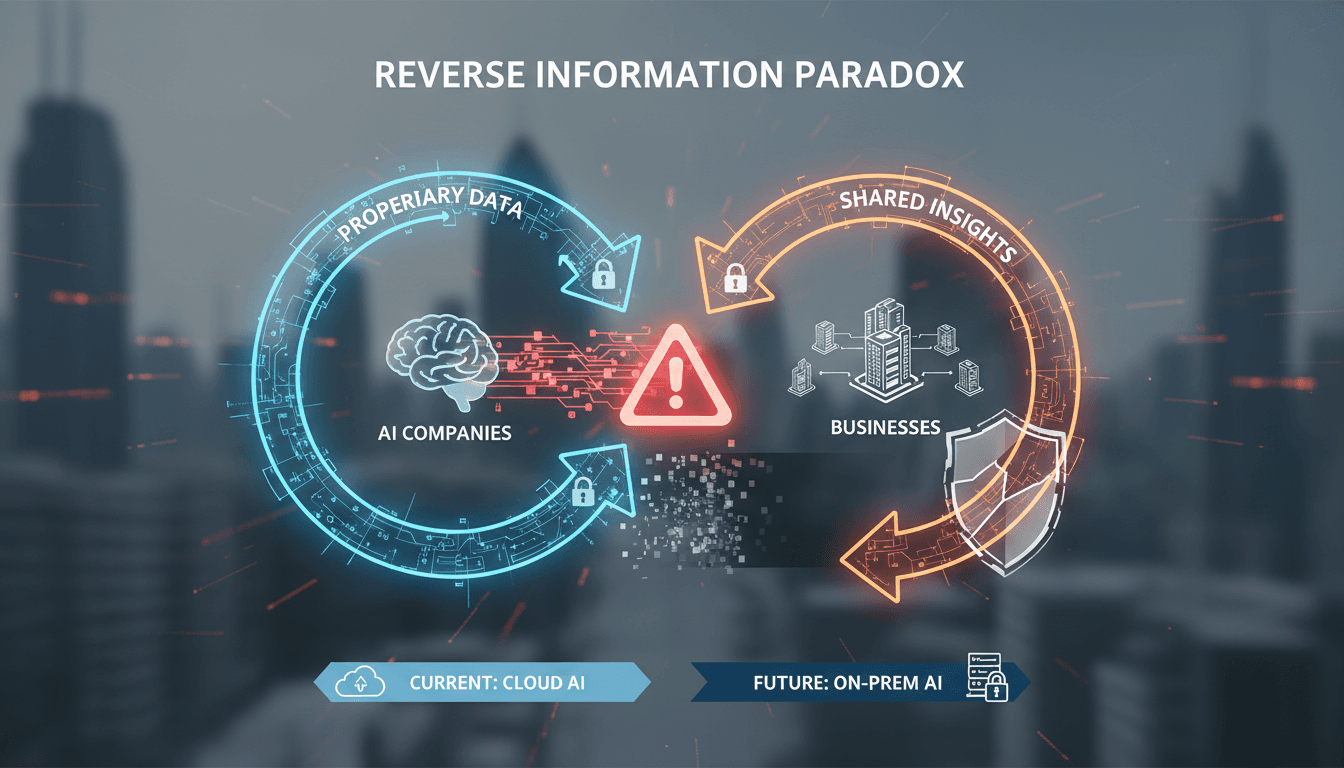
Satya Nadella's warnings about the sharing of sensitive data with AI companies highlight a critical issue for businesses navigating the evolving landscape of artificial intelligence. The introduction of the 'Reverse Information Paradox' suggests that companies may be paying a dual price for AI—both financially and through their proprietary information. This could lead to a significant shift in how organizations approach AI, particularly in terms of data privacy and control. As companies increasingly rely on AI technologies, the implications of Nadella's remarks may prompt a reevaluation of data-sharing practices. The call for on-premises AI solutions could reshape the market, emphasizing the need for businesses to safeguard their competitive edge.
What happened
Microsoft CEO Satya Nadella has raised concerns regarding the risks associated with businesses sharing sensitive data with AI companies. He introduced the concept of a 'Reverse Information Paradox,' which highlights the dual costs of AI—monetary and informational. Nadella specifically criticized AI labs such as OpenAI and Anthropic for their data usage practices and model training methods.
During his discussion, Nadella emphasized the importance of companies maintaining control over their own AI learning infrastructure. He warned that sharing proprietary information could jeopardize a company's competitive advantage in the market.
The Context
Nadella's remarks come at a time when businesses are increasingly integrating AI technologies into their operations. The growing reliance on AI raises significant questions about data privacy and ethical practices in the industry. By framing the issue as a paradox, Nadella urges companies to reconsider their engagement with AI technologies, particularly in relation to data sharing.
The criticism directed at leading AI labs underscores a broader concern about the ethical implications of AI development and deployment. As companies navigate these complexities, the conversation initiated by Nadella may lead to increased scrutiny of AI practices and a potential shift toward more secure AI solutions.
Takeaway
Looking ahead, businesses must remain vigilant about the data they share with AI providers to avoid compromising their competitive edge. The emphasis on on-premises AI models may gain traction as companies seek to protect their sensitive information.
As the dialogue around AI practices evolves, stakeholders will likely monitor developments in on-premises solutions and responses from AI companies regarding Nadella's criticisms. This ongoing conversation will shape the future landscape of AI adoption and data privacy.
Consumer tech news, reviews, and buying guides for gadgets and electronics.
"TechRadar is known for comprehensive buying advice, hardware reviews, and consumer tech news targeted at mainstream audiences."
— A47 Editor
'You essentially pay for intelligence twice, once with money, and again with something even more valuable': Microsoft CEO Satya Nadella warns AI users not to give away too much
Microsoft CEO Satya Nadella cautioned AI users against sharing excessive data, emphasizing the importance of on-premises models to protect business secrets from potential misuse by large AI companies. This warning comes amid rising concerns over data...
Opinionated AI coverage for general audiences.
"TNW’s AI vertical covering tools, ethics, and trends."
— A47 Editor
Nadella says you pay for AI twice, and Microsoft helped build the trap
Microsoft CEO Satya Nadella has warned that companies utilizing artificial intelligence (AI) are effectively paying twice: once in monetary costs and again by relinquishing valuable data to enhance AI functionality, a phenomenon he terms the Reverse ...
Daily AI news: models, tools, and policy.
"Independent outlet tracking the fast pace of AI."
— A47 Editor
Nadella calls out AI labs like OpenAI and Anthropic for banning distillation while training on everyone else's data
Microsoft CEO Satya Nadella has criticized AI labs, particularly OpenAI and Anthropic, for what he describes as a 'reverse information paradox,' where these companies utilize public data for training while prohibiting the distillation of their own mo...