
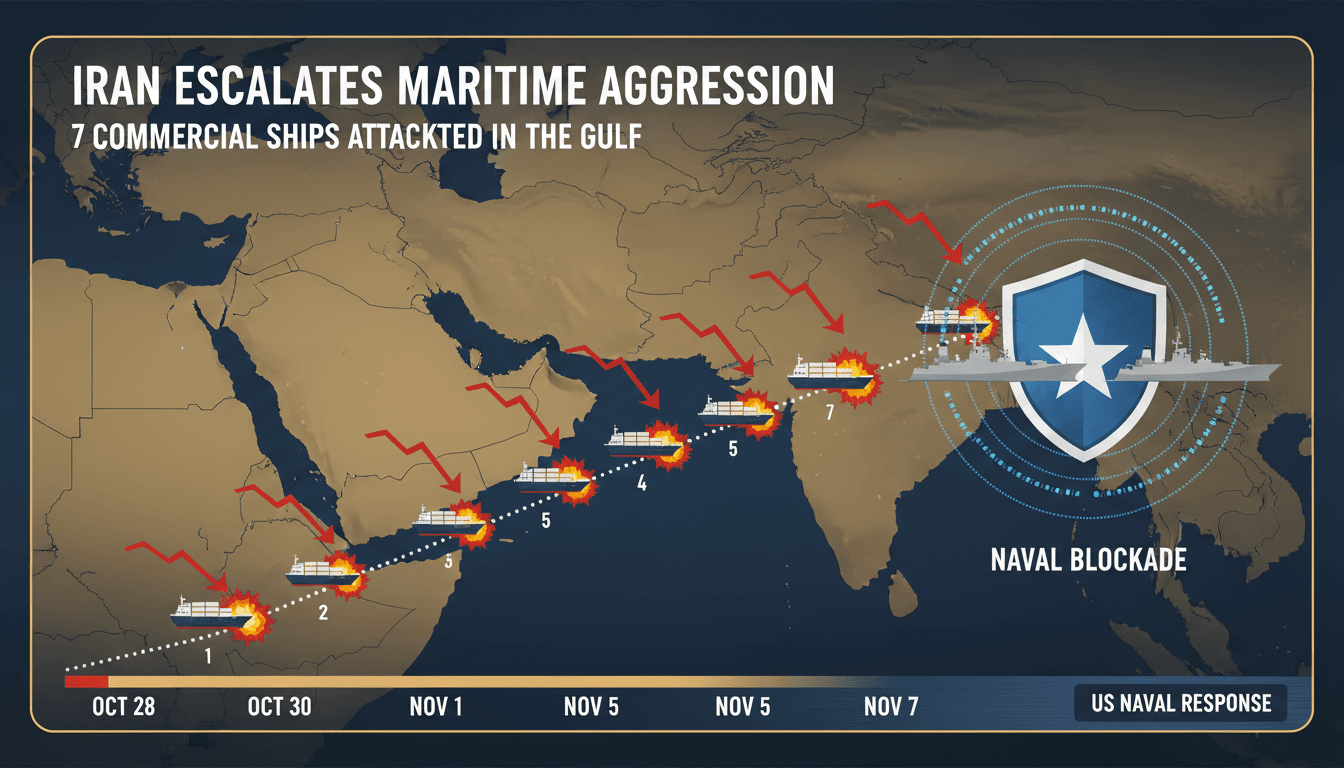
Iran escalates maritime aggression by attacking seven commercial ships in the Gulf
Here's what it means for you.
The recent attacks by Iran on commercial shipping in the Gulf have significant implications for global trade and regional stability. With the U.S. resuming its naval blockade, maritime operations may face increased risks, impacting shipping routes and insurance costs. Stakeholders in the shipping industry should prepare for potential disruptions and heightened security measures in the region. As tensions escalate, diplomatic efforts will be crucial to prevent further military engagement. The situation underscores the need for vigilance among businesses operating in or near the Gulf.
What happened
In a concerning escalation, Iran has attacked seven commercial ships in the Gulf over the past week, resulting in civilian casualties among crew members. These aggressive actions have included missile and drone strikes aimed at neighboring Gulf countries. The U.S. Central Command has reported these incidents, highlighting the severity of the situation.
The attacks have prompted the U.S. to resume a naval blockade in the region, reflecting a significant military response to Iran's provocations. The ongoing violence raises alarms about the safety of maritime operations in one of the world's busiest shipping lanes.
The Context
The recent maritime aggression by Iran has heightened tensions in the Gulf region, a critical area for global trade. U.S. forces are actively monitoring the situation, with over 20 Navy warships and hundreds of military aircraft deployed in the Middle East. Iran's actions not only threaten commercial shipping but also risk escalating conflicts with neighboring countries and the U.S.
The timeline of events indicates a rapid deterioration of relations, with attacks beginning on July 7, 2026, and the U.S. response following shortly after. This backdrop of military readiness and regional instability underscores the potential for further conflict.
Takeaway
As military tensions rise, the potential for conflict in the Gulf region increases, necessitating careful diplomatic engagement to prevent escalation. Stakeholders should closely monitor U.S. military responses to Iranian actions, as these will shape the security landscape in the Gulf. Additionally, diplomatic efforts aimed at de-escalating tensions will be critical in the coming weeks.
The situation remains volatile, and the international community will be watching closely for developments that could impact maritime safety and regional stability.
International news coverage curated for readers in the UAE and Gulf region.
"Emirates 24|7 world coverage presents global developments through a UAE-facing and Gulf-relevant editorial lens."
— A47 Editor
Iran attacked seven commercial ships, head of US Central Command says
The head of U.S. Central Command, Admiral Brad Cooper, reported that Iran has intentionally attacked seven commercial ships over the past week, resulting in casualties among civilian crew members. Additionally, Iranian forces have launched numerous m...
Arabic-language coverage of international news and geopolitics.
"RT Arabic is a Russian state-funded outlet often criticized for promoting Kremlin-aligned narratives."
— A47 Editor
قائد "سينتكوم": إيران استهدفت 7 سفن تجارية خلال الأسبوع الأخير
General Brad Cooper, the commander of U.S. Central Command (CENTCOM), has accused Iran of targeting seven commercial ships in the past week. This allegation highlights ongoing tensions in maritime security and the potential risks to international shi...
Jordanian news and regional updates.
"Roya News is a Jordanian outlet focused on breaking news and local affairs."
— A47 Editor
قائد القيادة المركزية الأمريكية: إيران استهدفت سفناً تجارية ودول الجوار بالصواريخ والمسيرات
The commander of the U.S. Central Command has reported that Iran has targeted commercial ships and neighboring countries using missiles and drones. This assertion highlights ongoing tensions in the region and raises concerns about maritime security a...