
U.S. Forces Intercept Iranian Drones Targeting Commercial Shipping in Strait of Hormuz
Here's what it means for you.
The interception of Iranian drones by U.S. forces highlights the escalating tensions in the Strait of Hormuz, a critical maritime route for global oil shipments. This incident raises significant concerns for international shipping and energy markets, as any disruption could lead to increased oil prices and heightened geopolitical instability. Stakeholders in the energy sector should closely monitor developments, as further military confrontations could impact supply chains and market dynamics. The ongoing conflict between the U.S. and Iran underscores the fragile security situation in the region, necessitating vigilance from policymakers and businesses alike. As military actions continue, the potential for broader regional instability remains a pressing issue.
What happened
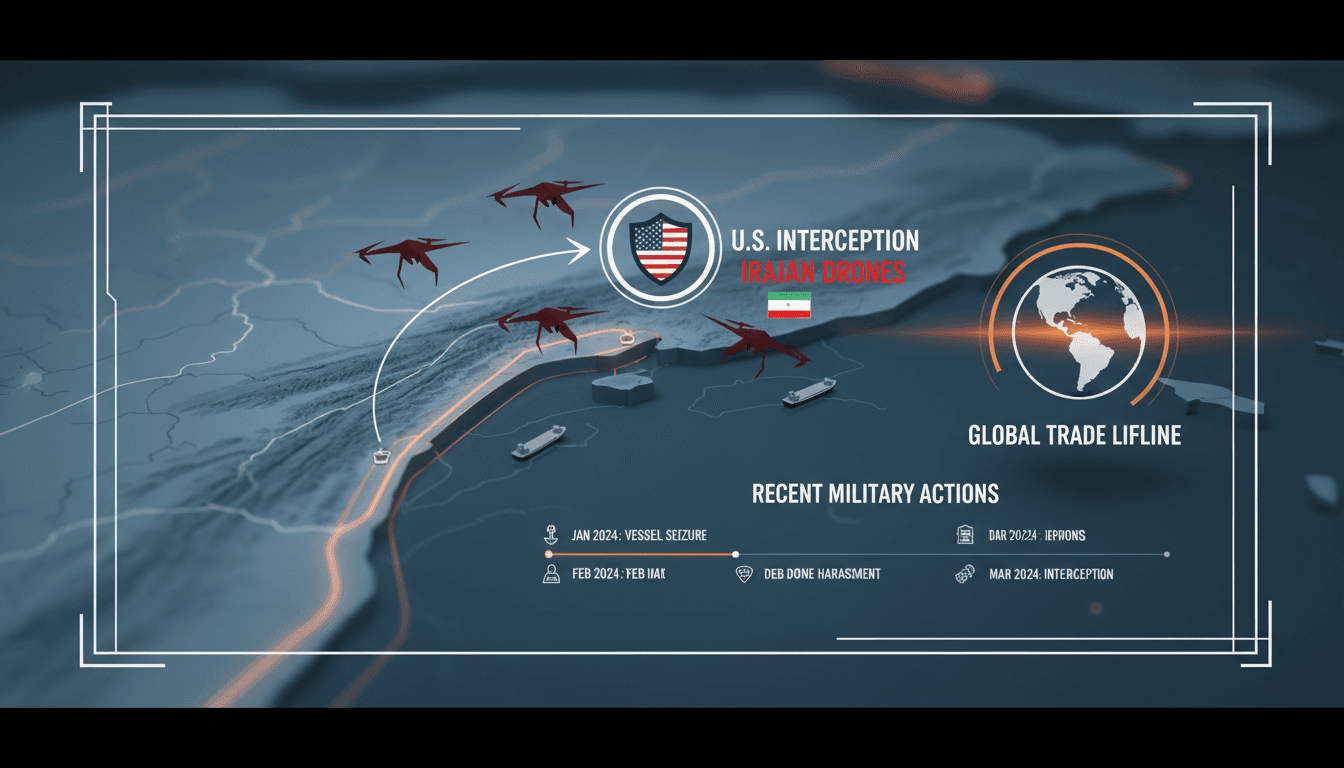
U.S. Central Command (CENTCOM) confirmed that U.S. forces successfully intercepted Iranian drones that were targeting commercial vessels in the Strait of Hormuz. This incident marks a significant escalation in the ongoing conflict between the U.S. and Iran, following a series of Iranian military actions against U.S. interests in the region. The interception occurred amid rising tensions, with both sides engaging in military provocations.
The Strait of Hormuz is a vital maritime route for global oil shipments, making the security of this area crucial for international trade. The U.S. response reflects its commitment to protecting commercial shipping and maintaining stability in a region that has seen increasing threats from Iran.
The Context
The Strait of Hormuz has long been a focal point of geopolitical tensions, particularly between the U.S. and Iran. Recent military actions, including Iranian attacks on U.S. military bases and vessels, have heightened the stakes in this critical area. Iran's broader geopolitical strategy has included threats to shipping, which further complicates the security landscape.
As military tensions escalate, the implications for global trade and energy markets become increasingly significant. The potential for conflict in the Strait of Hormuz could disrupt vital shipping routes, impacting not only regional stability but also the global economy.
Takeaway
The situation in the Strait of Hormuz remains volatile, with the potential for further military confrontations. Observers should monitor U.S. military responses to Iranian provocations, as these actions will likely shape the future dynamics of the region. Additionally, diplomatic efforts aimed at de-escalating tensions will be critical in determining the trajectory of U.S.-Iran relations.
As the conflict evolves, stakeholders in the energy sector and international shipping should remain alert to developments that could affect market stability and security in this key maritime corridor.
Arabic-language coverage of international news and geopolitics.
"RT Arabic is a Russian state-funded outlet often criticized for promoting Kremlin-aligned narratives."
— A47 Editor
القيادة المركزية الأمريكية تعلن إسقاط مسيرات إيرانية حاولت مهاجمة سفن تجارية أثناء عبورها مضيق هرمز
The U.S. Central Command announced the interception of Iranian drones that attempted to attack commercial vessels transiting the Strait of Hormuz, affirming that the strait remains open for navigation.
Jordanian news and regional updates.
"Roya News is a Jordanian outlet focused on breaking news and local affairs."
— A47 Editor
سنتكوم: أسقطنا مسيرات إيرانية حاولت استهداف سفن تجارية في مضيق هرمز
The U.S. Central Command (CENTCOM) announced that Iranian drones attempted to target commercial vessels in the Strait of Hormuz, but were intercepted and shot down. This incident highlights ongoing tensions in the region and the potential threats to ...
Arabic-language reporting on global and regional news.
"BBC Arabic is part of the BBC, generally regarded for editorial standards and broad international coverage."
— A47 Editor
إيران تقصف قواعد عسكرية أمريكية في دول المنطقة، والقيادة المركزية الأمريكية تعلن انتهاء جولة التصعيد الأخيرة
The U.S. Central Command (CENTCOM) announced the conclusion of a new wave of strikes against Iran, following warnings from the U.S. President that Iran would