
Escalation of U.S.-Iran Military Conflict in Gulf Region
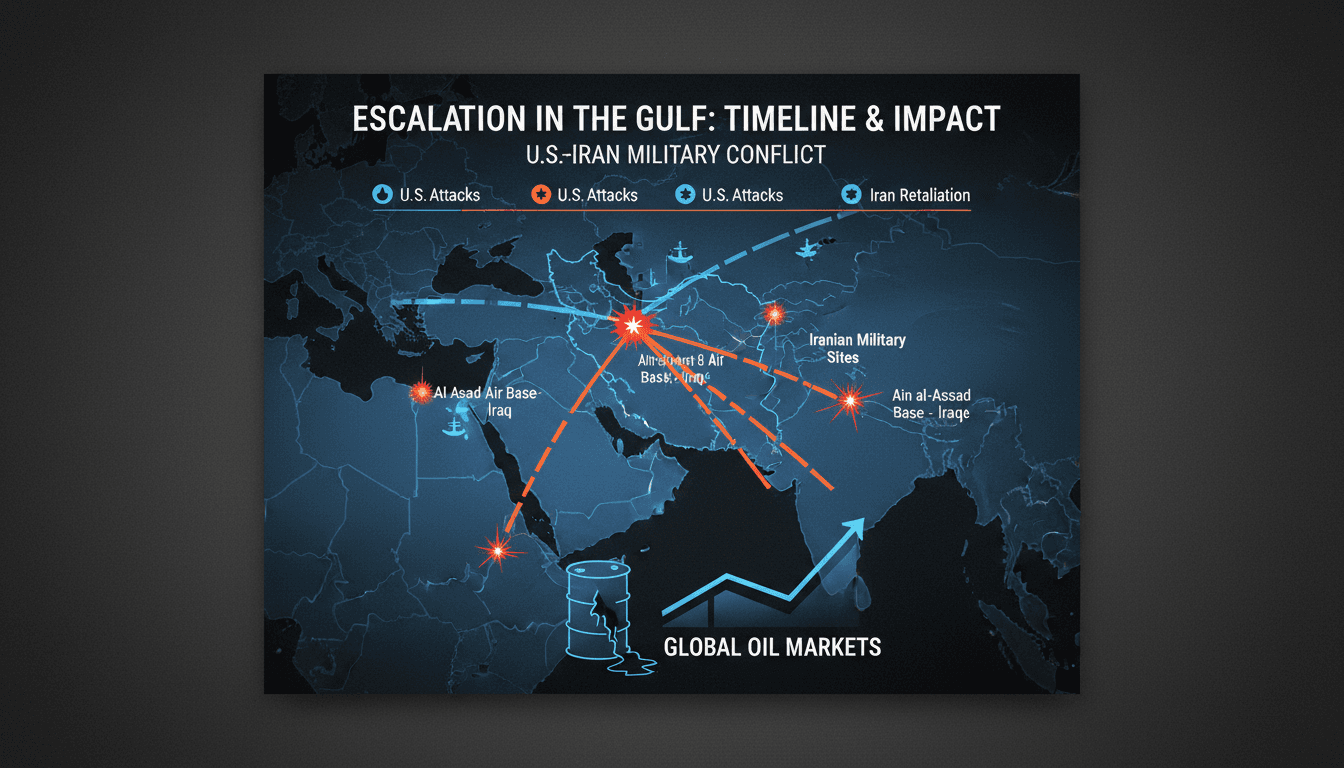
Here's what it means for you.
The recent military exchanges between the U.S. and Iran signal a significant escalation in tensions that could have far-reaching implications for regional stability and global oil markets. As both nations engage in retaliatory strikes, the potential for broader conflict increases, raising concerns among policymakers and investors alike. Stakeholders in the energy sector should closely monitor developments, as disruptions in the Gulf region could lead to fluctuations in oil prices.
What happened
Tensions between the U.S. and Iran have escalated significantly, with both sides launching retaliatory strikes against each other's military facilities. Iran has targeted U.S. bases in Bahrain and Kuwait in response to U.S. attacks on its military sites. The U.S. military has retaliated by striking Iranian infrastructure, including bridges and energy sites, marking a notable intensification of hostilities.
This cycle of military action has raised alarms about the potential for broader regional instability. Iran has warned civilians to avoid U.S. bases amid the escalating conflict, indicating the seriousness of the situation. The ongoing exchanges suggest a sustained period of military engagement, with U.S. strikes occurring over six consecutive nights.
The Context
The conflict is rooted in a long history of animosity between the U.S. and Iran, with both nations viewing each other as significant threats. The recent military actions are part of a broader strategy by the U.S. to counter Iranian influence in the region, while Iran seeks to assert its power and respond to perceived aggressions. The timing of these strikes coincides with heightened geopolitical tensions, making the situation particularly volatile.
Iran's missile and drone attacks on U.S. bases reflect its commitment to retaliate against U.S. military operations. The U.S. response, targeting key Iranian infrastructure, underscores its determination to maintain a strategic advantage. As both nations continue their military operations, the risk of a broader conflict remains high, necessitating close monitoring of developments in the region.
Takeaway
The ongoing military exchanges suggest a potential for further escalation, impacting regional security and energy markets. Observers should watch for any diplomatic efforts aimed at de-escalating tensions, as these could provide a pathway to stability. Additionally, the situation's impact on global oil prices warrants attention, given the strategic importance of the Gulf region.
As the conflict unfolds, the international community will be keenly interested in how both nations navigate this precarious situation. The potential for wider regional instability remains a critical concern, making it essential to stay informed about future developments.
Breaking news, politics, business, and entertainment from the U.S. and around the world.
"The New York Post is a tabloid-format newspaper known for its sensationalist headlines and conservative-leaning editorial tone."
— A47 Editor
Iran warns ‘people should stay away from US bases’ as Tehran escalates attacks
Iran has escalated military tensions by launching missile strikes targeting locations in Sulaymaniyah, Iraq, and Bahrain, in response to perceived U.S. aggression and threats from terrorist groups, as reported by Islamic Republic of Iran Broadcasting...
Capitol Hill news, legislation, and policy insight.
"The Hill specializes in U.S. politics and policy, with a focus on Capitol Hill developments and a reputation for insider reporting."
— A47 Editor
US targets Iranian bridges, energy sites in latest wave of strikes
The U.S. military has launched airstrikes targeting bridges and energy sites in Iran, marking a significant escalation in military tensions between the two nations. This operation follows a series of Iranian attacks on U.S. bases and commercial vesse...
Global news coverage with extensive reporting on Middle Eastern conflicts and geopolitics.
"Al Jazeera is a Qatar-based broadcaster known for wide regional coverage and alternative perspectives."
— A47 Editor
US attacks southern Iran, as Tehran hits Gulf countries: What’s the latest?
The United States has launched a series of airstrikes targeting southern Iran, prompting a significant military response from Tehran, which retaliated by striking Gulf countries including Bahrain, Qatar, Oman, Jordan, and Syria. This escalation follo...
English-language digital publication covering business, politics, technology, and current affairs.
"The Arabian Post mixes original and syndicated-style coverage with a broad regional and global business-news orientation."
— A47 Editor
Iran retaliates as US widens Gulf strikes
The United States has intensified its military operations in the Gulf region, conducting airstrikes against Iranian military targets. This escalation follows a series of Iranian missile and drone attacks on U.S. allies, including Kuwait and Bahrain, ...
Global news coverage with extensive reporting on Middle Eastern conflicts and geopolitics.
"Al Jazeera is a Qatar-based broadcaster known for wide regional coverage and alternative perspectives."
— A47 Editor
Iran claims strikes on US bases, warns of wider attacks on region
Iran has claimed responsibility for strikes on U.S. military bases, warning of potential wider attacks across the region as tensions escalate. This assertion follows a series of U.S. airstrikes targeting Iranian positions and the reimposition of a na...
International coverage of politics, culture, and current affairs.
"BBC News is widely regarded as a reputable international news organization, known for its impartial tone and public service mandate."
— A47 Editor
Iran targets military bases as US launches wave of strikes
Explosions were reported across Iran as the United States launched a series of airstrikes targeting Iranian military positions, escalating tensions in the region. This military action follows a pattern of retaliatory strikes, with Iran responding by ...