
Escalation of US-Iran conflict leads to missile interceptions and Gulf state condemnation
Here's what it means for you.
The intensifying conflict between the United States and Iran poses significant implications for regional stability and international relations. Gulf states are facing internal pressures as they navigate the dual challenges of military aggression and information control. The situation underscores the urgent need for diplomatic interventions to prevent a broader conflict that could disrupt markets and geopolitical alliances. As military operations escalate, stakeholders must remain vigilant about the potential for increased tensions and the impact on global oil supplies. The collective condemnation from Gulf nations indicates a united front, yet the internal challenges they face could complicate their response strategies.
What happened
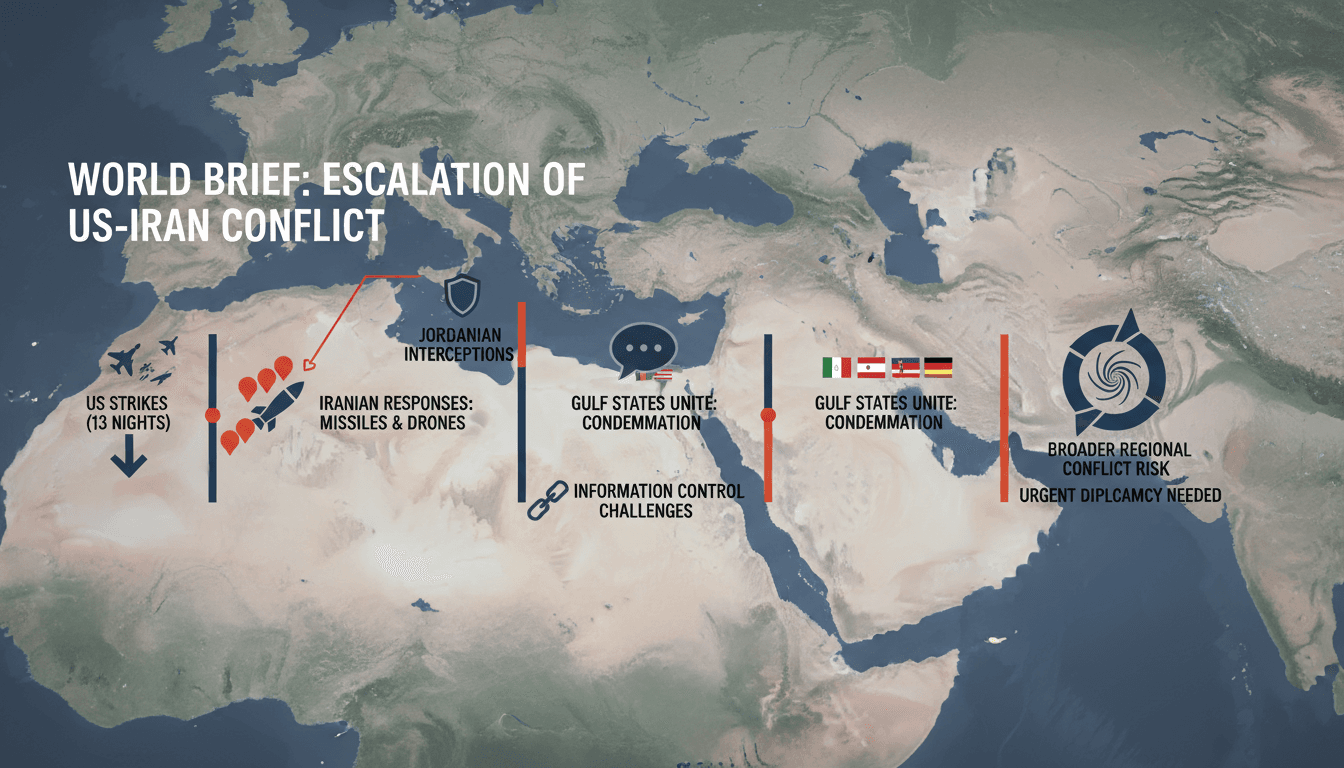
The ongoing conflict between the United States and Iran has escalated, marked by multiple missile and drone attacks across Gulf states, including Jordan, Bahrain, and Kuwait. In response to these threats, Jordan successfully intercepted seven missiles and six drones, showcasing its military readiness. Gulf nations have united in condemning Iran's actions, emphasizing their collective stance against aggression.
This escalation follows 13 consecutive nights of US strikes targeting Iranian military infrastructure. The situation has led to significant governmental actions, including the arrest of over 1,000 individuals in Gulf states for attempting to document these strikes, highlighting the extent of information control in the region.
The Context
The backdrop of this conflict is rooted in a series of military engagements initiated by the United States, which have drawn in Gulf states as key stakeholders. The recent US strikes against Iran have heightened tensions, prompting a swift military response from Jordan and a unified condemnation from neighboring nations. This collective stance reflects the Gulf states' desire to maintain a strong front against Iranian aggression while managing domestic narratives.
The internal challenges faced by Gulf states, particularly regarding information suppression, complicate their ability to respond effectively to the ongoing conflict. The arrests related to documenting the strikes illustrate the delicate balance these nations must maintain between public perception and military strategy. As the situation evolves, the potential for broader regional conflict looms, necessitating careful diplomatic navigation.
Takeaway
The current volatility in the US-Iran conflict suggests a heightened risk of further military engagement from both sides. Observers should monitor the potential for increased military operations by the US and its allies, as well as the impact of regional diplomatic efforts aimed at de-escalating tensions. The situation remains precarious, with the possibility of a wider regional war becoming more pronounced.
As Gulf states work to maintain unity against Iranian actions, the effectiveness of their internal information control will be critical. The coming days will be pivotal in determining whether diplomatic efforts can stabilize the situation or if military actions will escalate further.
European coverage of Middle East politics and security issues.
"France 24 offers international reporting with a European editorial perspective."
— A47 Editor
Arrests, denials and missing images: Gulf states’ response to Iranian strikes
Since the conflict between Iran and the United States escalated on February 28, over 1,000 individuals have been arrested in Jordan and Gulf states for attempting to document Iranian missile strikes. These governments are actively suppressing the dis...
Coverage of current events and conflicts in the Middle East.
"France 24 is viewed as a globally focused outlet with balanced coverage and a European perspective."
— A47 Editor
Arrests, denials and missing images: Gulf states’ response to Iranian strikes
Since the conflict between Iran and the United States escalated on February 28, over 1,000 individuals have been arrested in Jordan and Gulf states for attempting to document Iranian missile strikes. These governments are actively suppressing the dis...
Regional coverage and analysis focused on politics, diplomacy, and business across the Middle East.
"Al-Monitor is known for analytical reporting on Middle East politics and policy developments."
— A47 Editor
Jordan intercepts 7 missiles, 6 drones as Iran warns civilians near US bases
Jordan successfully intercepted seven missiles and six drones launched by Iran, amidst escalating tensions following 13 consecutive nights of U.S. airstrikes against Iranian targets. This military action highlights the ongoing conflict in the region,...
Pan-Arab news coverage spanning politics, business, sports, and regional affairs.
"Asharq Al-Awsat reflects a broad Arab editorial perspective with strong attention to regional geopolitics."
— A47 Editor
موقف خليجي أردني مشترك يدين عدوان إيران ووكلائها
Gulf countries and Jordan expressed a unified stance on Thursday condemning Iran and its proxies for their attacks on their territories, welcoming the Iraqi government's decision to restrict weapons to the state.
English-language digital publication covering business, politics, technology, and current affairs.
"The Arabian Post mixes original and syndicated-style coverage with a broad regional and global business-news orientation."
— A47 Editor
US-Iran strikes widen across Gulf states
The United States and Iran have escalated their military exchanges, with the U.S. conducting airstrikes against Iranian targets for the eleventh consecutive night. This operation has expanded to include Iranian military infrastructure across various ...