
Japan experiences first official 'cruelly hot day' with temperatures exceeding 40 degrees Celsius
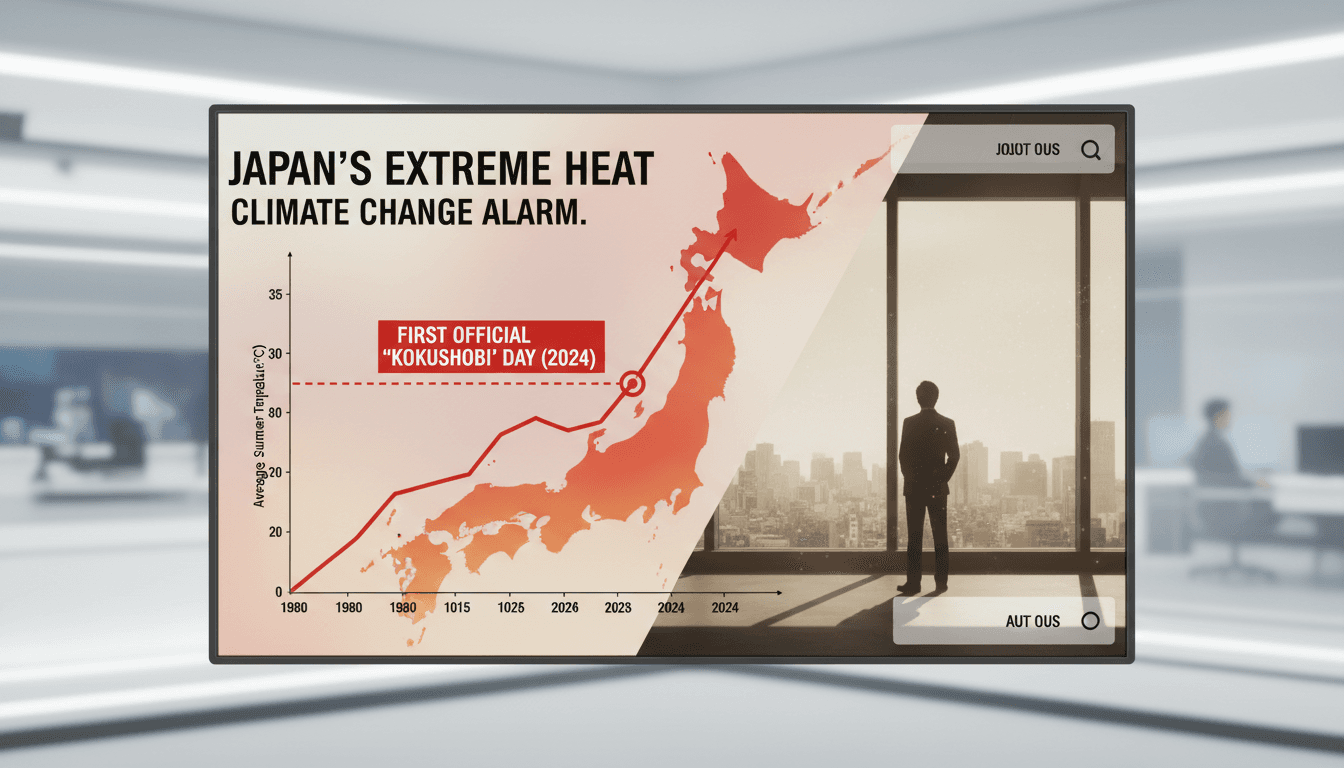
Here's what it means for you.
Japan's recent designation of a 'kokushobi' day signals a critical shift in climate patterns, with temperatures surpassing 40 degrees Celsius. This alarming trend necessitates immediate attention from public health officials and policymakers, as the risks of heat-related illnesses escalate. The implications extend beyond health, affecting agricultural productivity and food security in the region. As extreme heat events become more frequent, Japan must adapt its public health strategies and climate resilience measures to safeguard its population and economy. The introduction of new meteorological terms reflects a growing awareness of these challenges.
What happened
Japan has officially recorded its first 'kokushobi' day, with temperatures exceeding 40 degrees Celsius in several cities. Notable locations such as Gujo and Tajimi in Gifu prefecture, along with Toyota in Aichi prefecture, reached unprecedented heat levels. This event marks a significant milestone in the country's climate history, raising alarms about the potential health risks associated with such extreme temperatures.
The Japan Meteorological Agency introduced the term 'kokushobi' in April 2026 to describe days when temperatures surpass this critical threshold. Emergency officials are now warning the public about the dangers of heat-related illnesses, as these extreme conditions are expected to become more common.
The Context
The introduction of the term 'kokushobi' underscores the seriousness of Japan's escalating heat events. With cities like Gujo recording temperatures of 40 degrees Celsius and Toyota reaching 40.1 degrees Celsius, the nation faces unprecedented challenges. The increasing frequency of these extreme heat days is largely attributed to climate change, which is altering weather patterns and intensifying heat waves.
This situation is not just a meteorological concern; it has profound implications for public health and agricultural sustainability. As heatstroke deaths and crop yield impacts rise, stakeholders across various sectors must collaborate to address these emerging threats. The timing of this event is critical, as Japan prepares for a future where such extreme temperatures may become the norm.
Takeaway
Looking ahead, Japan must enhance its public health strategies to mitigate the impacts of heat-related illnesses. Monitoring the agricultural sector will also be crucial, as rising temperatures threaten crop yields and food security. The introduction of 'kokushobi' serves as a wake-up call for the nation to adapt to these new climate realities.
As the frequency of extreme heat events increases, Japan's response will be pivotal in shaping its resilience to climate change. Observing how public health officials and agricultural stakeholders react to these challenges will provide valuable insights into the country's future strategies.
International coverage of politics, culture, and current affairs.
"BBC News is widely regarded as a reputable international news organization, known for its impartial tone and public service mandate."
— A47 Editor
Japan temperatures soar over 40C, marking first 'cruelly hot day'
Japan has officially recorded its first 'cruelly hot day,' with temperatures soaring over 40 degrees Celsius in various cities, including Gujo and Toyota, as defined by the Japan Meteorological Agency. This term was introduced to describe extreme hea...
Top international stories selected by The Guardian editors.
"The Guardian is known for its progressive editorial stance and in-depth analysis."
— A47 Editor
Japan swelters through rising heat – in pictures
Japan has recorded its first official 'kokushobi' or 'cruelly hot day,' with temperatures exceeding 40 degrees Celsius in cities like Gujo and Toyota, highlighting a concerning trend of rising temperatures and increased heatstroke incidents across th...
Top international stories selected by The Guardian editors.
"The Guardian is known for its progressive editorial stance and in-depth analysis."
— A47 Editor
Japan records its first ‘cruelly hot day’ as cities swelter in 40-degree heat
Japan has recorded its first official 'kokushobi' or 'cruelly hot day,' with temperatures exceeding 40 degrees Celsius in cities such as Gujo and Toyota, marking a significant shift in weather patterns as these extreme temperatures become more freque...
English-language news from Qatar covering domestic and regional affairs.
"Gulf Times reflects Qatari perspectives on regional developments."
— A47 Editor
Japan suffers heat 'disaster' as cities hit by 'cruelly hot' days
Japan is currently grappling with extreme heat conditions, described as 'cruelly hot days,' with temperatures exceeding 40°C, prompting emergency officials to issue warnings to the public. This new meteorological term highlights the severity of the s...