
Oil tanker crossings in the Strait of Hormuz hit two-month low amid rising security tensions
What happened
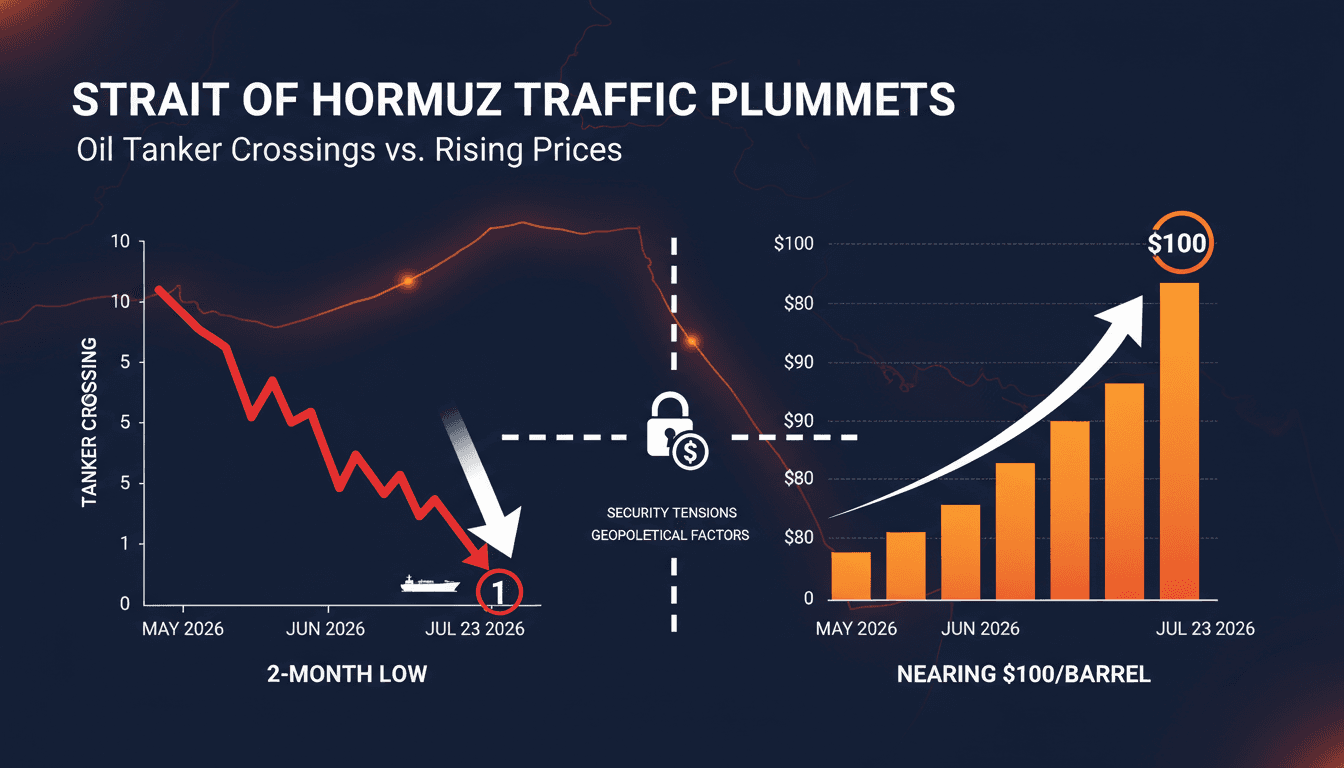
On July 23, 2026, only one oil tanker was reported crossing the Strait of Hormuz, marking the lowest level of crossings since May 7, 2026. This decline is attributed to escalating security concerns in the region, particularly amid rising geopolitical tensions. The previous day, three ships had successfully navigated the strait, highlighting a stark contrast in maritime activity.
The Strait of Hormuz is a vital chokepoint for global oil shipments, making this decrease in tanker traffic particularly alarming. The ongoing security risks are compounded by rising oil prices, which are approaching $100 per barrel, further complicating the situation for global markets.
The Context
The Strait of Hormuz is crucial for the transportation of oil, with a significant portion of the world's oil supply passing through this narrow passage. Recent tensions between the United States and Iran have escalated fears regarding the safety of maritime operations in the area. As these geopolitical dynamics evolve, the implications for global trade and energy prices become increasingly pronounced.
The current situation reflects a broader trend of instability in the region, which has historically affected shipping routes and oil markets. Stakeholders, including governments and energy companies, are closely monitoring developments to assess potential impacts on their operations and strategies.
Takeaway
As geopolitical tensions persist, the shipping industry may face ongoing challenges that could lead to further decreases in tanker traffic. This situation is likely to contribute to continued volatility in oil prices, affecting global markets. Stakeholders should keep a close watch on developments in U.S.-Iran relations, as any shifts could significantly impact shipping routes and oil supply.
Fluctuations in oil prices are expected as a direct result of changes in tanker traffic, making it essential for market participants to stay informed. The evolving landscape in the Strait of Hormuz will be critical to watch in the coming weeks.
Arabic-language coverage of Saudi, regional, and international affairs.
"Al Bilad offers mainstream Saudi newspaper coverage across domestic and broader Arab topics."
— A47 Editor
الناقلات العابرة لهرمز عند أدنى مستوى منذ أكثر من شهرين
Recent data indicates that the number of oil tankers transiting the Strait of Hormuz has dropped to just one vessel, marking the lowest level since May 7. This decline occurs amid ongoing risks to maritime navigation in the Middle East and a resurgen...
UAE-based English-language newspaper covering regional politics, economics, and global affairs.
"The National reflects Emirati policy perspectives while maintaining international editorial standards."
— A47 Editor
Strait of Hormuz tanker crossings fall to lowest level in more than two months, data shows
Recent data indicates that tanker crossings in the Strait of Hormuz have fallen to their lowest level in over two months, reflecting heightened security concerns amid escalating military tensions between the United States and Iran. This decline follo...
Pan-Arab political news and analysis.
"Al-Quds Al-Arabi is a London-based Arabic newspaper known for political coverage."
— A47 Editor
عدد السفن المبحرة عبر مضيق هرمز يتراجع أكثر مع استمرار الحرب
Recent shipping data indicates a further decline in the number of vessels transiting through the Strait of Hormuz, attributed to ongoing security concerns amid continuous hostilities between the United States and Iran.