
Russia Plans to Boost Diesel Exports Beyond Trump-Announced Levels by Year-End 2026
Why it matters
This agreement could reshape global diesel supply dynamics, affecting prices and availability amid ongoing geopolitical tensions.
What happened (in 30 seconds)
- On October 9, 2026, President Trump announced a deal for Russia to supply over 300,000 metric tons of diesel immediately, with increasing volumes in subsequent months.
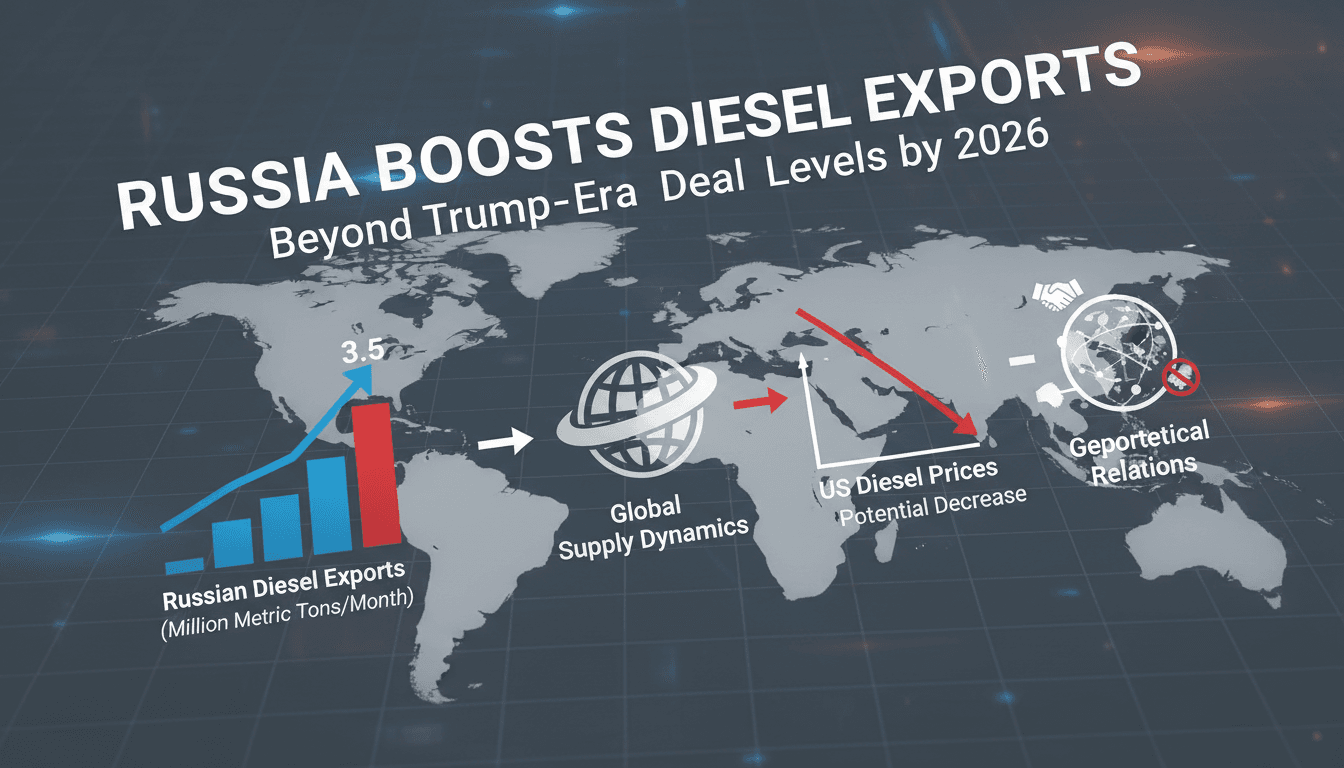
- On October 12, 2026, Russian Deputy Prime Minister Novak projected diesel exports could reach 3.0–3.5 million metric tons per month by year-end, potentially exceeding previous agreements.
- The deal has drawn criticism from Ukrainian officials and some U.S. lawmakers, who argue it undermines efforts to isolate Russia economically.
The context you actually need
- The Russia-Ukraine conflict has severely impacted energy infrastructure, leading to fluctuating diesel production and exports from Russia.
- U.S. diesel prices have surged, affecting industries reliant on this fuel, coinciding with political pressures ahead of the midterm elections.
- Prior to the conflict, Russian diesel exports regularly exceeded 3 million metric tons monthly, indicating a potential return to pre-crisis levels.
What's really happening
The recent agreement between the U.S. and Russia marks a significant shift in the global energy landscape, particularly concerning diesel exports. Following the escalation of the Russia-Ukraine conflict in 2022, both nations have faced severe repercussions in their energy sectors. Ukraine's drone strikes on Russian refineries have hampered production, leading Russia to impose self-restrictions on diesel exports to prioritize domestic needs. Concurrently, U.S. sanctions have targeted Russian energy revenues, creating a complex web of supply and demand dynamics.
President Trump's announcement of a deal to allow Russian diesel exports in exchange for temporary sanctions relief is a calculated move to alleviate rising diesel prices in the U.S. As diesel prices reached levels that threatened the livelihoods of truckers and farmers, the administration sought to stabilize the market ahead of the critical midterm elections. The immediate shipment of over 300,000 metric tons, followed by planned increases, aims to address the supply-demand imbalance exacerbated by the ongoing conflict.
Deputy Prime Minister Novak's projection of increasing export capacity to 3.0–3.5 million metric tons per month by year-end signals Russia's intent to return to pre-crisis export levels. This potential increase could lead to a 5–6% decline in global diesel prices, as indicated by market reactions following the announcements. However, the realization of these export volumes hinges on the recovery of Russian refinery operations and the logistics of tanker shipments under partial sanctions relief.
The deal's implications extend beyond immediate price adjustments. It raises questions about the sustainability of U.S. sanctions and the effectiveness of isolating Russia economically. Critics, including Ukrainian President Zelenskiy, argue that this agreement undermines efforts to weaken Russia's economy and could inadvertently provide Moscow with much-needed revenue without any concessions regarding the ongoing conflict.
As global markets adjust to these developments, the interplay between geopolitical tensions and energy supply will remain a critical factor influencing diesel prices and availability.
Who feels it first (and how)
- Truckers and farmers: Increased diesel supply could lower fuel costs, directly impacting operational expenses.
- Logistics companies: Changes in diesel prices will affect shipping and transportation costs, influencing overall supply chain expenses.
- Consumers: Fluctuations in diesel prices may lead to changes in retail prices for goods reliant on diesel transportation.
What to watch next
- Refinery recovery: Monitor the status of Russian refineries and their ability to ramp up production, as this will directly impact export volumes.
- U.S. diesel prices: Keep an eye on diesel price trends in the U.S. as the agreement unfolds, particularly leading up to the midterm elections.
- Geopolitical responses: Watch for reactions from Ukraine and U.S. lawmakers, as further sanctions or policy shifts could emerge in response to this deal.
Russia has announced its capacity to increase diesel exports significantly.
Global diesel prices may stabilize or decline as a result of increased supply.
The long-term implications of this deal on U.S.-Russia relations and the effectiveness of sanctions.
Frequently Asked Questions
- Why it matters?
- This agreement could reshape global diesel supply dynamics, affecting prices and availability amid ongoing geopolitical tensions.
- What happened (in 30 seconds)?
- On October 9, 2026, President Trump announced a deal for Russia to supply over 300,000 metric tons of diesel immediately, with increasing volumes in subsequent months. On October 12, 2026, Russian Deputy Prime Minister Novak projected diesel exports could reach 3.0–3.5 million metric tons per month by year-end, potentially exceeding previous agreements. The deal has drawn criticism from Ukrainian officials and some U.S. lawmakers, who argue it undermines efforts to isolate Russia economically.
- What's really happening?
- The recent agreement between the U.S. and Russia marks a significant shift in the global energy landscape, particularly concerning diesel exports. Following the escalation of the Russia-Ukraine conflict in 2022, both nations have faced severe repercussions in their energy sectors. Ukraine's drone strikes on Russian refineries have hampered production, leading Russia to impose self-restrictions on diesel exports to prioritize domestic needs. Concurrently, U.S. sanctions have targeted Russian ener
- Who feels it first (and how)?
- Truckers and farmers: Increased diesel supply could lower fuel costs, directly impacting operational expenses. Logistics companies: Changes in diesel prices will affect shipping and transportation costs, influencing overall supply chain expenses. Consumers: Fluctuations in diesel prices may lead to changes in retail prices for goods reliant on diesel transportation.
- What to watch next?
- Refinery recovery: Monitor the status of Russian refineries and their ability to ramp up production, as this will directly impact export volumes. U.S. diesel prices: Keep an eye on diesel price trends in the U.S. as the agreement unfolds, particularly leading up to the midterm elections. Geopolitical responses: Watch for reactions from Ukraine and U.S. lawmakers, as further sanctions or policy shifts could emerge in response to this deal.
Oil, metals, and agriculture: supply/demand headlines, OPEC chatter, inventories, and price action.
"Solid tape for energy and metals traders tracking macro and micro catalysts."
— A47 Editor
Russia says its diesel exports may exceed volumes announced by Trump
Russia has announced that its diesel exports may surpass the volumes previously disclosed by former U.S. President Donald Trump, who had arranged for the supply of over 300,000 tons of diesel to the U.S. and global markets to mitigate rising fuel pri...
Business, investment, entrepreneurship, leadership, and innovation.
"Forbes is known for its coverage of business leaders, market trends, and entrepreneurial ventures with a pro-business editorial stance."
— A47 Editor
Trump’s Diesel Deal With Russia Unlikely To Move Pump Prices By Much
Former U.S. President Donald Trump has announced a deal with Russia to import over 300,000 tons of diesel fuel, aiming to address rising fuel prices in the U.S. However, experts indicate that this shipment is unlikely to significantly impact pump pri...
Editor-curated FT homepage stories spanning markets, business, world, and opinion.
"The Financial Times is a globally respected business publication with a centrist/center-left tone and strong markets focus."
— A47 Editor
Can Russia meet Trump’s diesel demands?
Former U.S. President Donald Trump has announced a deal for Russia to supply over 300,000 tons of diesel to the United States, aiming to address rising fuel prices amidst severe petrol shortages triggered by Ukrainian strikes. This agreement is set t...
Corporate leadership, finance, technology, and market trends.
"Fortune covers financial trends, leadership, and innovation with a pragmatic editorial approach."
— A47 Editor
For the first time ever, 10-year bond yields track diesel prices more closely than crude, and Trump’s fuel deal with Putin may be too little too late
For the first time, 10-year bond yields are tracking diesel prices more closely than crude oil, highlighting a significant shift in market dynamics. This change comes amid rising diesel prices in the U.S., which have surpassed $6.50 per gallon, promp...
Policy, elections, and government reporting.
"NPR is an American public media organization known for thoughtful reporting and a slightly left-leaning editorial tone."
— A47 Editor
Politics chat: Trump announces fuel deal with Russia. What does it mean for sanctions?
President Trump announced a deal with Russia to import over 300,000 tons of diesel fuel to the United States, a significant shift in U.S. energy policy amid ongoing global sanctions against Russia. This agreement aims to address rising fuel prices an...
Global markets, investing, and macroeconomics from a premier financial newsroom.
"Bloomberg is respected for in-depth financial reporting and data-driven analysis."
— A47 Editor
Russian Diesel Deal Unlikely to Lower US Prices
President Donald Trump's recent agreement to import Russian diesel is unlikely to significantly reduce U.S. fuel prices, as the planned November shipment represents only a single day's worth of American consumption, according to Bloomberg Economics' ...
International stories from NPR’s global desk.
"NPR is an American public media organization known for thoughtful reporting and a slightly left-leaning editorial tone."
— A47 Editor
U.S. and Russia tout diesel deal to ease sanctions and reopen fuel flows
The U.S. and Russia have announced a diesel deal aimed at easing sanctions and reopening fuel flows, with Moscow set to supply over 300,000 tonnes of diesel to global markets. However, the announcement lacks specific details regarding pricing and U.S...