
Gaza Faces Severe Food Crisis Despite Ceasefire with Hamas
What happened
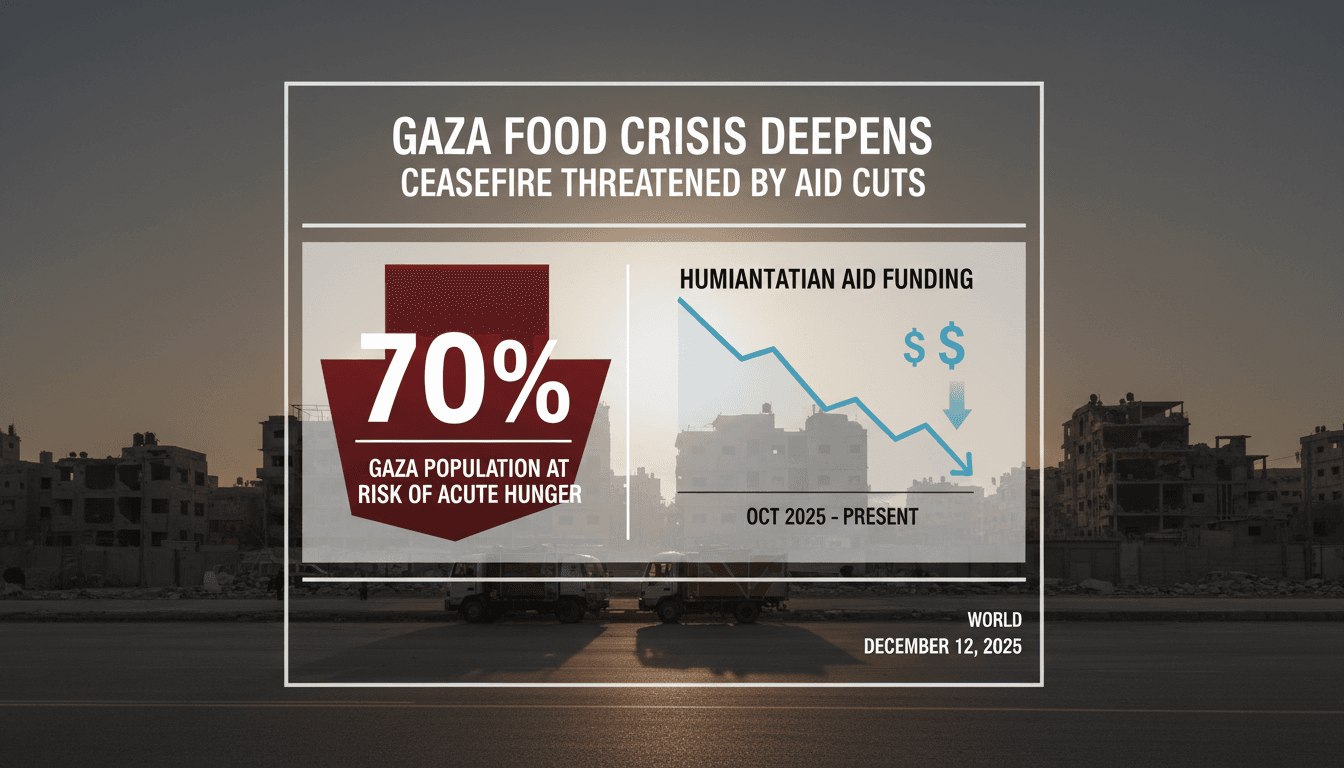
Despite a ceasefire between Israel and Hamas, Gaza is facing a severe food crisis, with a recent UN report indicating that over two-thirds of its population may experience acute hunger by the end of the year. Humanitarian agencies have noted significant declines in acute malnutrition levels among children since the ceasefire began in October 2025. However, reduced humanitarian aid due to funding shortages is jeopardizing these improvements.
The situation is dire, as the ongoing cuts in aid threaten to reverse the progress made in alleviating hunger and malnutrition. Without immediate action to address funding gaps, the humanitarian crisis in Gaza is likely to worsen.
The Context
The ceasefire between Israel and Hamas, which commenced in October 2025, initially led to improvements in food security within Gaza. Humanitarian agencies reported a decline in acute malnutrition levels among children, signaling a positive shift in the region's health outcomes. However, the recent decline in humanitarian aid funding has raised alarms about the sustainability of these improvements.
The current crisis underscores the critical role of international support in conflict zones. As funding shortages continue, the potential for increased hunger and malnutrition looms large, threatening the well-being of a significant portion of Gaza's population.
Takeaway
To prevent a reversal of progress in food security, sustained humanitarian access and funding are essential. Stakeholders must monitor developments in humanitarian aid funding closely, as any further cuts could exacerbate the already dire situation. Additionally, potential changes in the political landscape may impact the ceasefire and humanitarian efforts in the region.
The outlook remains concerning, as without adequate funding and sustained humanitarian efforts, the situation in Gaza could deteriorate further, reversing the gains made since the ceasefire.
European coverage of Middle East politics and security issues.
"France 24 offers international reporting with a European editorial perspective."
— A47 Editor
Gaza faces ongoing food crisis despite ceasefire
More than nine months into the ceasefire between Israel and Hamas, a recent UN report reveals that two-thirds of Gaza's population continues to experience crisis levels of food insecurity. The report emphasizes that without sustained humanitarian acc...
24/7 international news from a French perspective in multiple languages.
"France 24 is viewed as a globally focused outlet with balanced coverage and a European perspective."
— A47 Editor
Gaza faces ongoing food crisis despite ceasefire
More than nine months into the ceasefire between Israel and Hamas, a recent UN report reveals that two-thirds of Gaza's population continues to experience crisis levels of food insecurity. The report emphasizes that without sustained humanitarian acc...
Algerian and regional news coverage.
"Echorouk is a major Algerian outlet with broad national reporting."
— A47 Editor
ثلثا سكان غزة قد يتعرضون للجوع الشديد قبل نهاية السنة
The Global Food Security Monitoring Observatory (IPC) warned that more than two-thirds of Gaza's population may face severe hunger by the end of the year, attributing this dire situation to reduced humanitarian aid flows due to funding shortages. The...
Regional coverage and analysis focused on politics, diplomacy, and business across the Middle East.
"Al-Monitor is known for analytical reporting on Middle East politics and policy developments."
— A47 Editor
Two-thirds of Gaza may face acute hunger by year-end despite improvements, global food monitor says
A recent report from the Integrated Food Security Phase Classification indicates that over two-thirds of the population in Gaza may face acute hunger by the end of the year, primarily due to cuts in humanitarian aid amid funding shortages. While ther...