
Switzerland disputes US forced labor allegations amid new tariff imposition
Here's what it means for you.
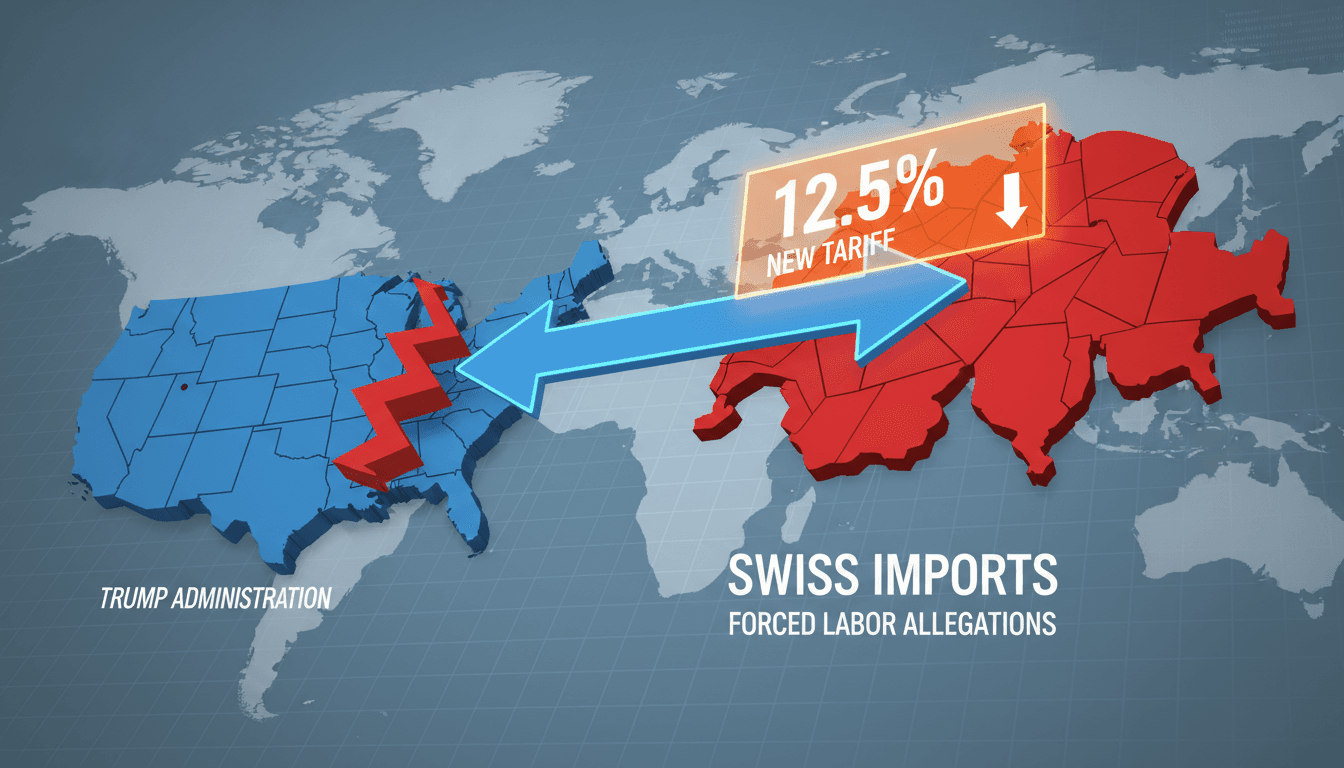
The recent imposition of a 12.5% tariff on Swiss imports by the U.S. raises significant concerns for international trade dynamics. This tariff, linked to allegations of forced labor, has been firmly rejected by Switzerland, which may lead to heightened tensions between the two nations. Stakeholders in both countries should prepare for potential shifts in trade negotiations and policies as this dispute unfolds. The implications of this tariff could extend beyond Switzerland, affecting U.S. relations with other trading partners as labor practices come under scrutiny. Businesses engaged in transatlantic trade may need to reassess their compliance strategies in light of these developments.
What happened
On July 24, 2026, the U.S. announced a 12.5% tariff on Swiss imports, citing concerns over forced labor practices. Switzerland has strongly disputed these allegations, asserting that they are unfounded and that adequate measures against forced labor have been implemented. The Swiss business association Economiesuisse has publicly articulated this stance, deeming the tariff unjustified.
This tariff marks a significant escalation in trade tensions between the U.S. and Switzerland, highlighting the complexities of international trade relations. The announcement comes from the Trump administration, indicating a broader focus on labor practices within global supply chains.
The Context
The imposition of tariffs is often a reflection of underlying trade disputes, and this case is no exception. The U.S. has raised concerns about labor practices in various countries, and Switzerland's response underscores its commitment to addressing these issues. Economiesuisse's rebuttal emphasizes that Switzerland has taken sufficient steps to combat forced labor, which is crucial for maintaining its reputation in global commerce.
The timing of this tariff is particularly notable, as it coincides with ongoing discussions about labor practices worldwide. The dispute not only affects Swiss exports but also signals a potential shift in U.S. trade policy that could influence other nations.
Takeaway
As the situation develops, both the U.S. and Switzerland may need to engage in dialogue to resolve these trade concerns. The outcome of this dispute could significantly influence future U.S.-Swiss trade negotiations and policies. Stakeholders should monitor potential responses from Swiss authorities regarding adjustments to trade policy and any further developments in U.S. trade relations with other countries over labor practices.
The implications of this tariff may extend beyond immediate trade impacts, potentially reshaping how labor practices are scrutinized in international commerce.
Social/economic commentary and analysis relevant to business and markets.
"WSJ blends data-driven economic insight with commentary on policy and society."
— A47 Editor
Switzerland Rejects Forced Labor Accusations After U.S. Imposes New Tariffs
Switzerland has officially rejected allegations from the United States regarding forced labor practices, coinciding with the imposition of a new 12.5% tariff on Swiss imports by the Trump administration. This tariff is part of a broader U.S. trade po...
Pan-Arab news coverage spanning politics, business, sports, and regional affairs.
"Asharq Al-Awsat reflects a broad Arab editorial perspective with strong attention to regional geopolitics."
— A47 Editor
سويسرا ترفض مزاعم واشنطن بشأن العمل القسري بعد إعلان رسوم جديدة
The Swiss business association Economiesuisse has criticized the recent decision by Washington to impose tariffs on Swiss imports, claiming that the move is unjustified and based on allegations of insufficient action against forced labor.
Key macro releases (CPI, jobs, PMIs), surprise indexes, and market implications.
"Great for data-print awareness and instant read-through to rates and risk assets."
— A47 Editor
Switzerland disputes US forced labour claims as new tariffs take effect
Switzerland has officially disputed claims made by the United States regarding forced labor practices as new tariffs imposed by the U.S. take effect. The U.S. has recently implemented tariffs on numerous trading partners, citing concerns over human r...