
Tunisia Faces Severe Heatwave and Widespread Power Outages
What happened
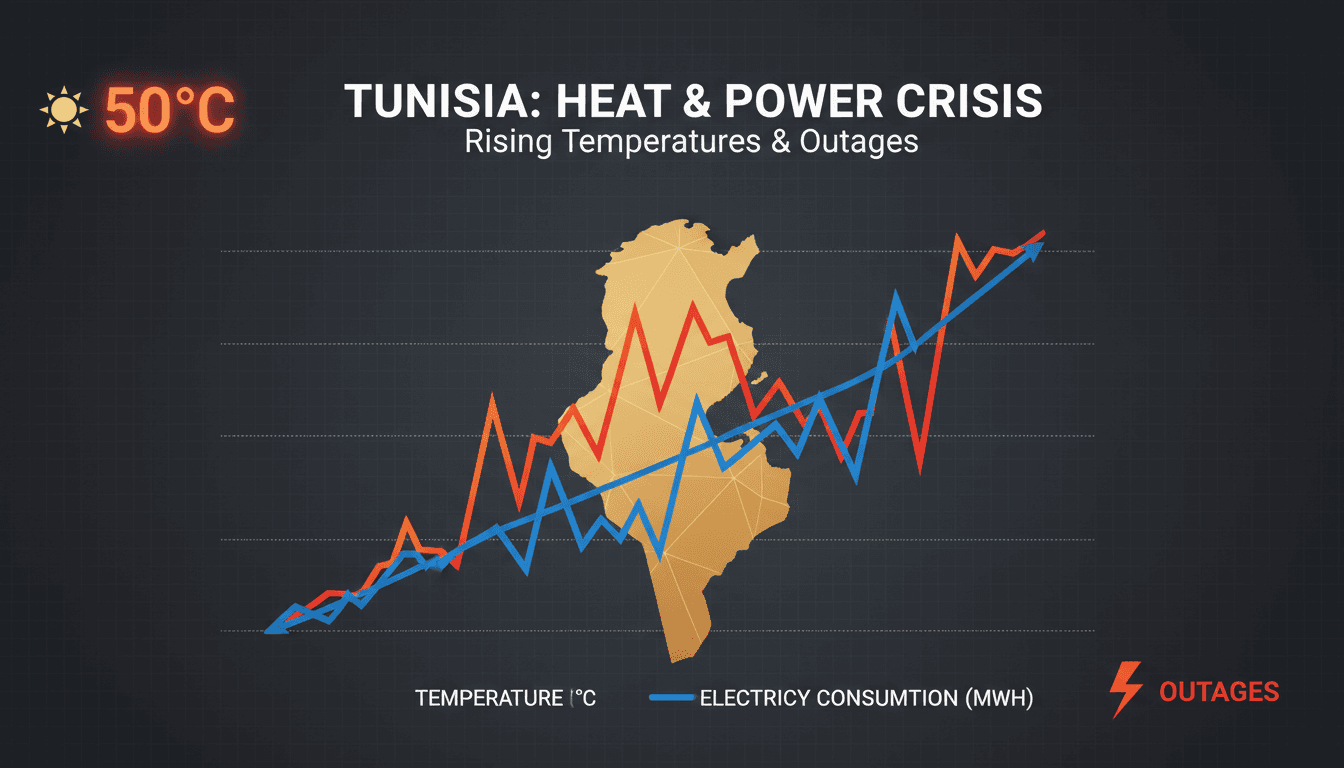
Tunisia is currently grappling with an intense heatwave that has resulted in widespread power cuts across the country. Reports indicate that temperatures have reached alarming levels, peaking at 50°C, which has led to unprecedented electricity consumption. The combination of soaring temperatures and electricity shortages has triggered significant public frustration and concern.
Power and water outages have affected many regions, worsening the overall situation. While previous summers have seen outages, this year's disruptions are notably more widespread, impacting daily life for countless citizens.
The Context
The ongoing heatwave in Tunisia is a critical event that highlights the vulnerabilities of the country's infrastructure to extreme weather conditions. With temperatures hitting 49-50°C, the situation has escalated quickly, prompting public outcry for government intervention. The combination of high temperatures and electricity shortages raises concerns about public health and safety.
As the crisis continues, various stakeholders, including local businesses and agricultural sectors, are likely to feel the strain. The timing of these outages coincides with peak summer months, when demand for electricity typically surges, further complicating the response efforts.
Takeaway
Looking ahead, the ongoing heatwave and associated power outages may lead to increased public unrest and demands for government action. Observers should monitor potential government responses to the crisis, as well as the impact on agriculture and local economies. The situation underscores the urgent need for reliable electricity and water supply, particularly during extreme weather events.
As the heatwave persists, the government may face mounting pressure to implement effective measures to mitigate the crisis and restore public confidence in essential services.
Arabic-language coverage of international news and geopolitics.
"RT Arabic is a Russian state-funded outlet often criticized for promoting Kremlin-aligned narratives."
— A47 Editor
موجة حر استثنائية تضرب تونس
Tunisia is currently experiencing an exceptional heatwave, with temperatures exceeding normal averages, leading to unprecedented electricity consumption and widespread power outages across various regions. This situation has raised significant concer...
Pan-Arab news coverage spanning politics, business, sports, and regional affairs.
"Asharq Al-Awsat reflects a broad Arab editorial perspective with strong attention to regional geopolitics."
— A47 Editor
قيظ شديد وانقطاع متواتر للكهرباء يفجّران غضب التونسيين
Tunisia is currently experiencing an intense heatwave, with temperatures nearing 50°C, coinciding with frequent power outages that have sparked public outrage among residents. The combination of extreme heat and unreliable electricity supply has crea...
Regional coverage and analysis focused on politics, diplomacy, and business across the Middle East.
"Al-Monitor is known for analytical reporting on Middle East politics and policy developments."
— A47 Editor
Extreme heatwave grips Tunisia as wide power cuts fuel frustration
Tunisia is currently experiencing an extreme heatwave, with temperatures soaring to 49°C, compounded by widespread power outages that have left many citizens frustrated and concerned for their livelihoods. These outages have become more prevalent thi...