
US Expands Military Operations Against Iran Amid Escalating Tensions
Here's what it means for you.
The recent escalation of U.S. military operations against Iran signals a significant shift in geopolitical dynamics, particularly in the Middle East. This development could lead to increased volatility in global oil markets, affecting prices and supply chains. Stakeholders in international trade and energy sectors should prepare for potential disruptions as the conflict unfolds. As military actions intensify, policymakers will need to navigate the complexities of U.S.-Iran relations, balancing national security interests with the need for diplomatic solutions. The implications of this conflict extend beyond regional stability, potentially impacting global economic conditions.
What happened
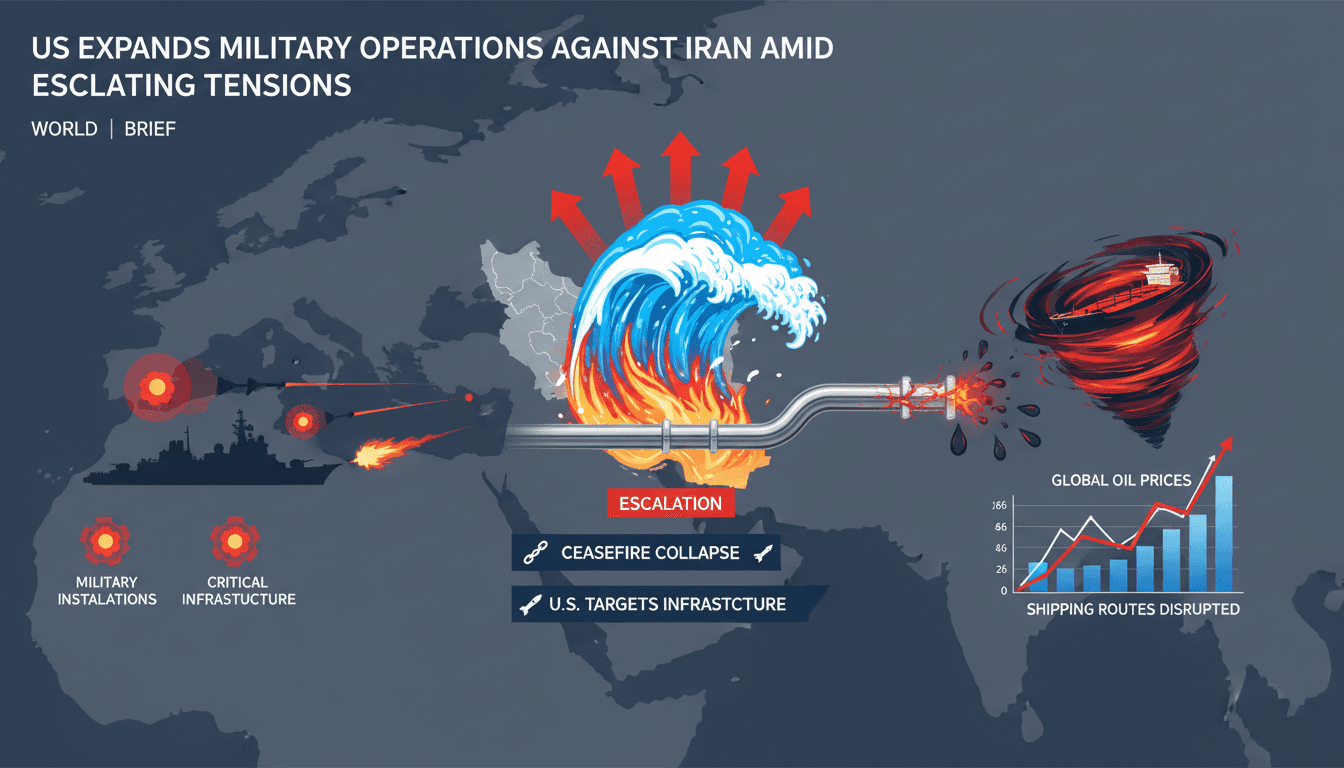
The United States has broadened its military campaign against Iran, expanding strikes to include critical infrastructure and military installations deeper within the country. This escalation follows renewed hostilities over the Strait of Hormuz, where Iran has attacked commercial shipping. The U.S. response aims to degrade Iran's military capabilities and deter further aggression.
U.S. strikes have targeted military assets and infrastructure across various provinces in Iran, marking a significant shift in the operational scope of American forces. Reports indicate that Iran's Health Ministry has documented over 3,400 casualties since the conflict began, underscoring the severe human cost of these military actions.
The Context
The conflict has seen a collapse of a brief ceasefire, with Iran resuming attacks on commercial shipping, which has heightened tensions in the region. The U.S. military operations are a direct response to these provocations, aiming to protect maritime trade routes critical to global commerce. The situation is further complicated by the strategic importance of the Strait of Hormuz, a vital passage for oil shipments.
As military operations continue, the potential for further escalation remains high, with significant implications for international relations and global economic stability. Stakeholders, including governments and businesses, must closely monitor developments in U.S.-Iran relations and the broader geopolitical landscape.
Takeaway
The ongoing military escalation suggests a prolonged conflict that could further destabilize the region and impact global markets. Observers should watch for developments in U.S.-Iran relations, particularly any potential diplomatic efforts that may arise in response to the escalating tensions. Additionally, the impact on global oil prices and shipping routes through the Strait of Hormuz will be critical to monitor as the situation evolves.
As the conflict unfolds, the international community will be watching closely to gauge the implications for regional security and economic stability. The stakes are high, and the outcomes will likely shape the geopolitical landscape for years to come.
Global news coverage with extensive reporting on Middle Eastern conflicts and geopolitics.
"Al Jazeera is a Qatar-based broadcaster known for wide regional coverage and alternative perspectives."
— A47 Editor
What lies ahead for Iran’s economy as scope of US war grows beyond Hormuz?
The ongoing military confrontations between the United States and Iran have intensified, particularly in the Gulf region, raising concerns about the stability of international waterways, especially the Strait of Hormuz. Mediation efforts are underway...
Comprehensive coverage of Middle Eastern and global issues.
"Al Jazeera is a prominent voice from the Global South, especially the Middle East, with an emphasis on underreported stories."
— A47 Editor
What lies ahead for Iran’s economy as scope of US war grows beyond Hormuz?
The ongoing military confrontations between the United States and Iran have intensified, particularly in the Gulf region, raising concerns about the stability of international waterways, especially the Strait of Hormuz. Mediation efforts are underway...
Arabic-language coverage of international news and geopolitics.
"RT Arabic is a Russian state-funded outlet often criticized for promoting Kremlin-aligned narratives."
— A47 Editor
الحرب ضد إيران ترتد على أسعار الطاقة
The specter of confrontation between the United States and Iran resurfaces, with military escalation extending beyond battlefields to maritime corridors and global energy markets. This situation raises concerns about stability in these critical areas...
English-language reporting on Saudi politics, policy, and society.
"Saudi Gazette reflects mainstream Saudi institutional perspectives."
— A47 Editor
US expands strikes across Iran as Hormuz conflict escalates
The United States has expanded its military operations against Iran, intensifying airstrikes targeting military installations and critical infrastructure deeper within the country. This escalation follows renewed hostilities over the Strait of Hormuz...
U.S. business news, corporate developments, and economy.
"The Wall Street Journal is respected for deep financial and economic reporting with a center-right editorial perspective."
— A47 Editor
America and Iran Are Locked in a Cycle of Escalation
Escalating tensions between America and Iran have resulted in a cycle of military and economic confrontations, with recent airstrikes by the U.S. in response to Iranian missile attacks on commercial vessels in the Strait of Hormuz. This ongoing confl...
English-language digital publication covering business, politics, technology, and current affairs.
"The Arabian Post mixes original and syndicated-style coverage with a broad regional and global business-news orientation."
— A47 Editor
What Iran war means for global bond market
The ongoing conflict between the United States and Iran has intensified, with U.S. airstrikes against Iranian targets continuing for the eleventh consecutive night. This escalation follows Iran's commitment to retaliate for attacks on its interests i...