
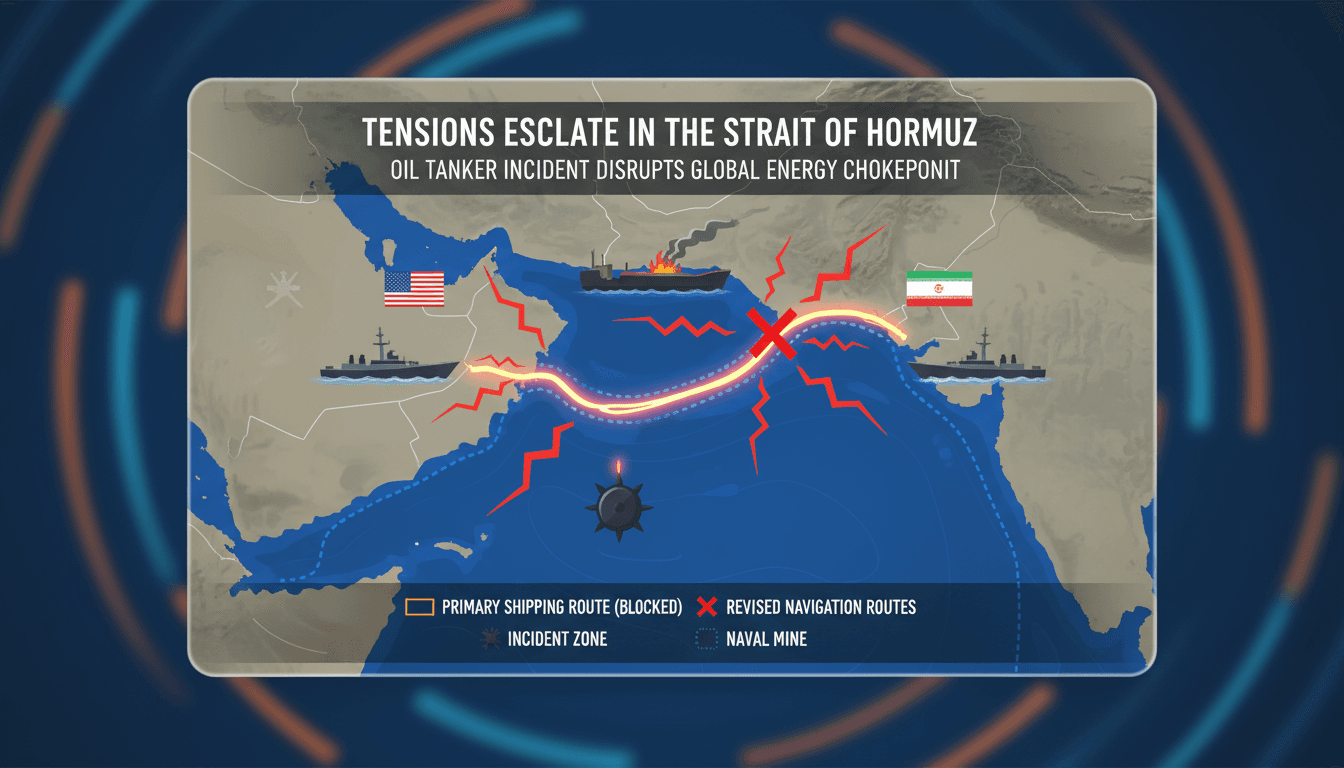
Tensions escalate in the Strait of Hormuz following oil tanker incident
Here's what it means for you.
The recent incident in the Strait of Hormuz underscores the fragile state of maritime security, which could have significant implications for global energy markets. As tensions rise between Iran and the U.S., the potential for conflict looms large, affecting shipping routes critical for oil supply. Stakeholders in the energy sector should remain vigilant as negotiations unfold, as any agreements or escalations could directly impact oil prices and availability.
What happened
An oil tanker was damaged by a naval mine in the Strait of Hormuz, marking a significant escalation in tensions between Iran and the United States. This incident has prompted Iran to issue warnings to vessels regarding adherence to designated navigation routes. The damage to the tanker highlights the precarious security situation in this vital maritime corridor.
The Strait of Hormuz is crucial for global energy trade, serving as the only maritime route for a substantial portion of the world's oil supply. The incident has raised alarms about the safety of navigation in the area, with both sides taking a hard stance on maritime security.
The Context
The Strait of Hormuz has long been a flashpoint for geopolitical tensions, particularly between Iran and the U.S. Iran has rejected proposals aimed at keeping the southern route open for navigation, complicating the situation further. U.S. officials have stated that any agreement with Iran will not include transit fees, indicating a firm stance in ongoing negotiations.
As discussions continue, the potential for either conflict or resolution remains uncertain. The outcome of these negotiations could significantly affect not only regional stability but also global energy markets, making the situation one to watch closely.
Takeaway
The ongoing negotiations and incidents in the Strait of Hormuz could lead to further escalations or a potential resolution in maritime security. Stakeholders should monitor developments closely, particularly any updates on maritime security agreements between Iran, the U.S., and regional partners. The situation is likely to remain tense as both sides navigate their demands and security concerns.
As the dialogue progresses, the implications for global energy markets and regional stability will become clearer. Observers should be prepared for potential shifts in policy and security measures that could arise from these discussions.
Pan-Arab news coverage spanning politics, business, sports, and regional affairs.
"Asharq Al-Awsat reflects a broad Arab editorial perspective with strong attention to regional geopolitics."
— A47 Editor
تقدم «مشاورات هرمز» وسط تشدد إيراني
Regional consultations regarding navigation arrangements in the Strait of Hormuz have made progress, despite Tehran's firm stance against keeping the southern route open and its warning of potential new American sanctions.
Pan-Arab political news and analysis.
"Al-Quds Al-Arabi is a London-based Arabic newspaper known for political coverage."
— A47 Editor
مسؤول أمريكي: الاتفاق مع إيران لن يتضمن أي رسوم للعبور من مضيق هرمز
A U.S. official announced that the ongoing agreement discussions with Iran will not include any tolls for passage through the Strait of Hormuz, a critical waterway affected by restrictions due to the Iranian conflict. The official noted that Iran has...
Arabic-language coverage of Saudi, regional, and international affairs.
"Al Bilad offers mainstream Saudi newspaper coverage across domestic and broader Arab topics."
— A47 Editor
طهران تحذر السفن من مخالفة المسارات.. انفجار ناقلة نفط في «هرمز» إثر لغم بحري
A new escalation has occurred in the Strait of Hormuz, a critical maritime route for global energy trade, following an explosion on an oil tanker caused by a naval mine. This incident highlights the ongoing security risks threatening navigation in th...