
Closure of the Strait of Hormuz Strands Over 1,500 Commercial Vessels
Here's what it means for you.
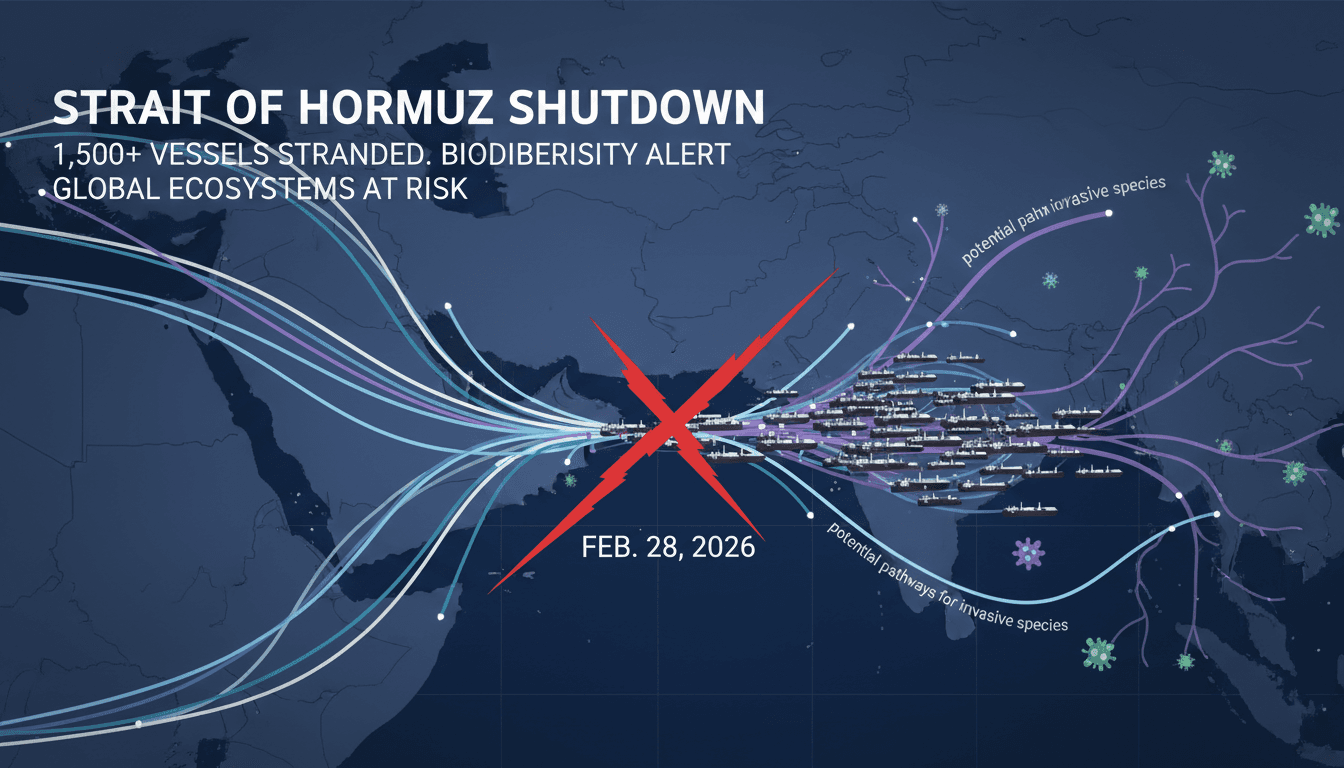
The closure of the Strait of Hormuz has significant implications for global trade and marine biodiversity. With over 1,500 commercial vessels stranded, the potential for invasive marine species to disrupt ecosystems is a growing concern. This situation highlights the urgent need for biosecurity measures as trade resumes. As the vessels remain idle, they risk becoming carriers of organisms that could have far-reaching ecological impacts. Stakeholders in maritime trade and environmental protection must closely monitor developments in this situation.
What happened
The Strait of Hormuz has been closed since February 28, 2026, leaving more than 1,500 commercial vessels stranded. This closure is a direct result of escalating geopolitical tensions in the region. As these ships sit idle, they are accumulating marine life on their hulls, raising alarms among scientists.
Marine biologists warn that the organisms encrusting the vessels could lead to a biological 'superspreader' event once trade resumes. The situation poses a significant threat to biodiversity and global ecosystems.
The Context
The Strait of Hormuz is a critical waterway for international trade, making its closure particularly impactful. The ongoing geopolitical tensions that began in early 2026 have created a bottleneck for maritime traffic. As a result, the stranded vessels are not only a logistical challenge but also a potential ecological hazard.
Scientists have expressed concerns about the economic and environmental ramifications of this situation. The interconnectedness of global trade and environmental health is underscored by the risks posed by invasive species.
Takeaway
Looking ahead, it will be essential to monitor the reopening of the Strait of Hormuz and its effects on global trade. The movement of the stranded vessels will need to be carefully managed to prevent the spread of invasive species. Urgent biosecurity measures will be necessary to mitigate the ecological risks associated with this unprecedented situation.
As studies on the ecological consequences of the stranded vessels emerge, stakeholders must remain vigilant in addressing the potential impacts on marine biodiversity.
Scientific discoveries, health, technology, and natural phenomena.
"Live Science reports on scientific discoveries, health, technology, and natural phenomena with a popular science tone."
— A47 Editor
Biological 'superspreader' event could be imminent as more than 1,000 ships idle in the Strait of Hormuz, scientists warn
Scientists have warned that the prolonged closure of the Strait of Hormuz, with over 1,000 ships idling, could lead to a biological 'superspreader' event, posing significant biosecurity hazards and economic impacts.
Pan-Arab news coverage spanning politics, business, sports, and regional affairs.
"Asharq Al-Awsat reflects a broad Arab editorial perspective with strong attention to regional geopolitics."
— A47 Editor
علماء يحذرون: السفن العالقة في هرمز تهدد التنوع البيولوجي عالمياً
A team of international marine biologists has warned that the ongoing detention of thousands of commercial ships in the Strait of Hormuz poses a serious global threat to biodiversity. The situation has raised concerns about the ecological impact on m...
Top international stories selected by The Guardian editors.
"The Guardian is known for its progressive editorial stance and in-depth analysis."
— A47 Editor
Ships stuck in strait of Hormuz pose ‘super-spreader’ biodiversity threat, scientists warn
The closure of the Strait of Hormuz has left over 1,500 commercial vessels stranded, creating a significant risk of spreading invasive marine species as trade resumes. Scientists warn that the hulls of these ships are becoming encrusted with various ...
News in science and technology, with a focus on consumer and innovation stories.
"Popular Science simplifies complex scientific topics for general audiences and celebrates innovation."
— A47 Editor
Strait of Hormuz ship bottleneck could fuel invasive species nightmare
A significant bottleneck of hundreds of ships in the Strait of Hormuz has raised concerns about the potential for invasive species to hitch rides on their hulls. This situation could lead to the introduction of non-native organisms into new ecosystem...