
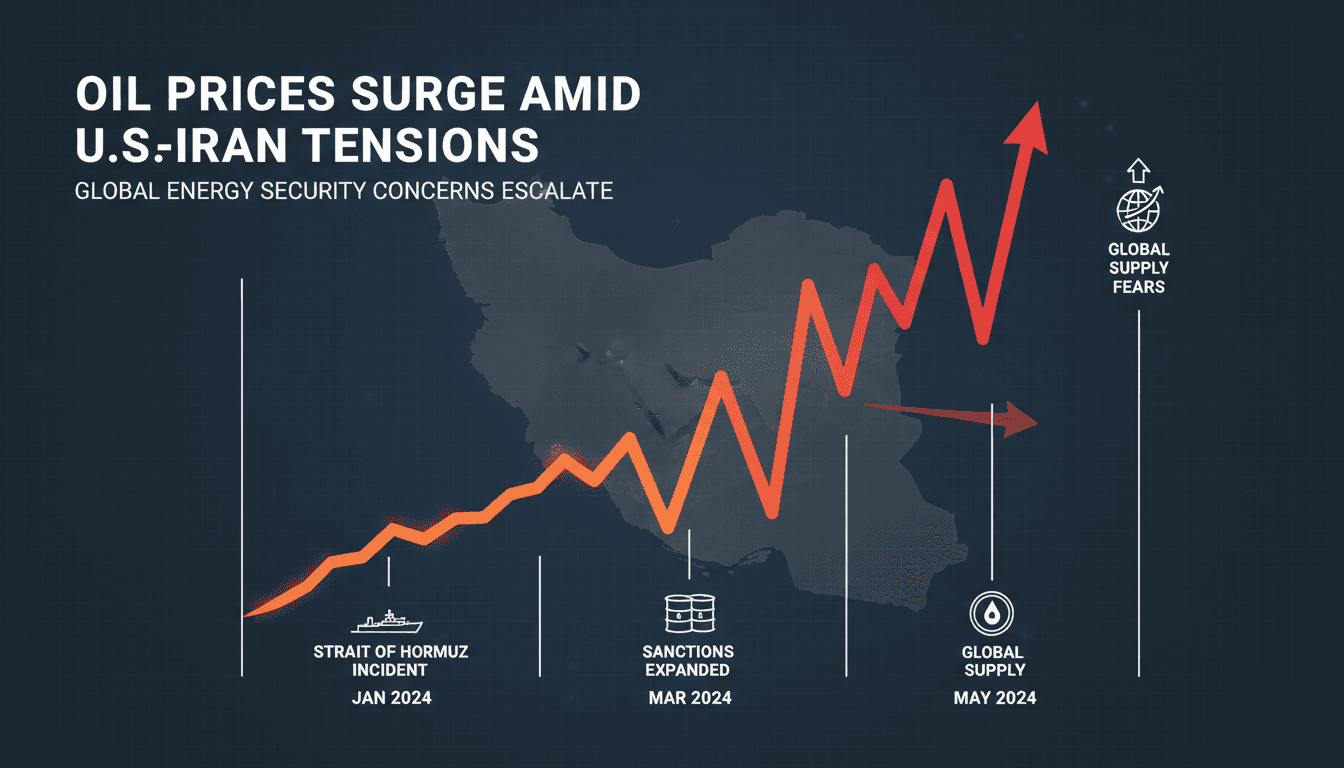
Oil prices surge amid escalating U.S.-Iran tensions in the Strait of Hormuz
What happened
Oil prices experienced a significant increase in July due to renewed military actions by Iran, particularly affecting the Strait of Hormuz. The month saw Iran stopping vessels, which raised alarms about potential disruptions in global energy supplies. As a result, Brent crude oil is projected to gain approximately 21% for July, reflecting market reactions to these geopolitical tensions.
The conflict has led to heightened concerns over energy security, with oil futures ending the month on a strong note. This surge in prices indicates a direct response to the escalating situation between the U.S. and Iran.
The Context
The Strait of Hormuz is a critical shipping route for global oil supplies, making any military action in the area particularly concerning. Iran's recent interventions, including stopping vessels, have intensified fears of supply disruptions, which could have far-reaching implications for energy markets worldwide. The ongoing conflict highlights the delicate balance of power in the region and the potential for further escalation.
As tensions persist, stakeholders in the energy sector are closely monitoring developments in U.S.-Iran relations. The situation is compounded by the fact that oil prices are already sensitive to geopolitical events, making the current climate particularly volatile.
Takeaway
Looking ahead, the ongoing conflict in the Middle East is likely to continue influencing oil prices and global energy security. Stakeholders should keep a close watch on further developments in U.S.-Iran relations, as any escalation could lead to additional price increases. Additionally, responses from other oil-producing nations may play a crucial role in stabilizing the market.
As the situation evolves, the potential for further disruptions in shipping routes remains a key concern for energy markets. Companies and consumers alike should prepare for continued volatility in oil prices.
Markets desk coverage, trading insights, and investor updates.
"WSJ’s markets reporting provides in-depth analysis and context for investors."
— A47 Editor
Oil Posts Big Monthly Gains on Resumption of Conflict
Oil futures experienced significant gains in July, driven by renewed Iranian attacks on shipping amid escalating tensions with the U.S. over the Strait of Hormuz, a critical maritime route for global oil transport. This resurgence in conflict has led...
Regional coverage and analysis focused on politics, diplomacy, and business across the Middle East.
"Al-Monitor is known for analytical reporting on Middle East politics and policy developments."
— A47 Editor
Oil price rises after Iran says it stops ships in Hormuz
Oil prices increased following Iran's announcement that it had halted two vessels attempting to exit the Strait of Hormuz, raising concerns about global energy supplies amid escalating tensions in the region. This incident comes on the heels of a dro...
English-language digital publication covering business, politics, technology, and current affairs.
"The Arabian Post mixes original and syndicated-style coverage with a broad regional and global business-news orientation."
— A47 Editor
Oil set for 21% gain as war disrupts flows
Oil prices are poised for a significant monthly increase, with Brent crude expected to rise approximately 21% in July due to disruptions in Middle Eastern supplies caused by the ongoing conflict between the United States and Iran. This situation has ...