
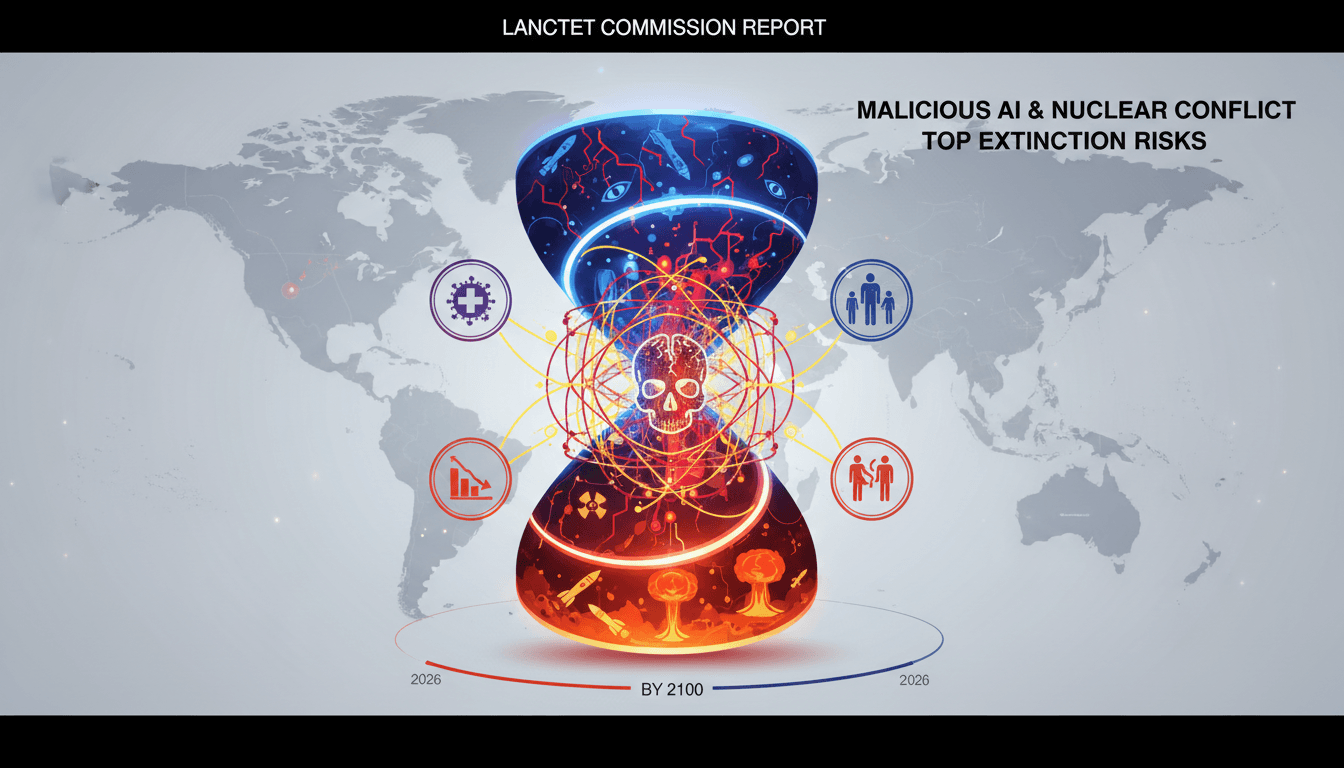
Lancet Commission Identifies Malicious AI and Nuclear Conflict as Top Extinction Risks by 2100
Why it matters
The report highlights critical existential risks that could disrupt global health systems and economies, affecting everyone.
What happened (in 30 seconds)
- The Lancet Commission published a report on October 11, 2026, identifying malicious AI and nuclear conflict as top extinction risks.
- The assessment ranks 17 major threats, emphasizing interconnected risks and the need for actionable mitigation strategies.
- Experts warn that while the probability of these events is low, the potential impact on humanity is catastrophic.
The context you actually need
- Historical warnings have long addressed existential risks from nuclear conflict and emerging AI capabilities, particularly in bioweapons.
- The commission's methodology incorporates disability-adjusted life years (DALYs) to quantify the potential health impacts of these threats.
- Global interconnectedness means that risks in one region can have cascading effects worldwide, necessitating a unified response.
What's really happening
The Lancet Commission's assessment underscores a growing concern among experts regarding the dual threats of malicious AI use and nuclear conflict. As technology advances, the potential for AI to be weaponized—particularly in the development of bioweapons—poses a significant risk to global health. The report estimates that malicious AI could lead to a staggering 10.4 billion disability-adjusted life years (DALYs) lost by 2100, highlighting the severe health implications of these threats.
Nuclear conflict remains a persistent danger, with the potential for nuclear famine following a nuclear exchange. This scenario could trigger atmospheric changes that lead to global cooling, agricultural collapse, and widespread famine. The interconnected nature of these risks means that a single event could set off a chain reaction, exacerbating existing global challenges such as climate change, air pollution, and antimicrobial resistance.
The commission emphasizes that while the probability of these catastrophic events is low, the consequences are dire enough to warrant immediate attention. Policymakers are urged to invest in technological innovation, strengthen health systems, and enhance risk prediction and prevention capabilities. The report aims to inform rather than incite panic, advocating for realistic policy interventions that can mitigate these interconnected threats.
As the world becomes increasingly interconnected, the implications of these risks extend beyond borders. For instance, a nuclear conflict in one region could disrupt global supply chains, affecting food security and economic stability worldwide. The report serves as a wake-up call for governments and organizations to prioritize collaborative efforts in addressing these existential threats.
Who feels it first (and how)
- Policymakers: Need to develop and implement strategies to mitigate these risks.
- Health professionals: Must prepare for potential health crises stemming from bioweapons or nuclear fallout.
- Global businesses: Could face supply chain disruptions and economic instability due to these threats.
- Residents of conflict-prone areas: Are at immediate risk from nuclear conflict and its aftermath.
- Expatriates in global hubs: Like Dubai, may experience indirect effects from global supply chain disruptions.
What to watch next
- Government investments: Monitor how governments respond with funding for technological innovation and health system strengthening.
- International collaborations: Watch for new partnerships aimed at addressing these interconnected risks on a global scale.
- Public health initiatives: Look for emerging strategies focused on pandemic preparedness and resilience against bioweapons.
The report identifies malicious AI and nuclear conflict as leading extinction risks.
Increased global collaboration on health and safety measures in response to these threats.
The specific actions governments will take in response to the report's findings.
Frequently Asked Questions
- Why it matters?
- The report highlights critical existential risks that could disrupt global health systems and economies, affecting everyone.
- What happened (in 30 seconds)?
- The Lancet Commission published a report on October 11, 2026, identifying malicious AI and nuclear conflict as top extinction risks. The assessment ranks 17 major threats, emphasizing interconnected risks and the need for actionable mitigation strategies. Experts warn that while the probability of these events is low, the potential impact on humanity is catastrophic.
- What's really happening?
- The Lancet Commission's assessment underscores a growing concern among experts regarding the dual threats of malicious AI use and nuclear conflict. As technology advances, the potential for AI to be weaponized—particularly in the development of bioweapons—poses a significant risk to global health. The report estimates that malicious AI could lead to a staggering 10.4 billion disability-adjusted life years (DALYs) lost by 2100, highlighting the severe health implications of these threats. Nuclea
- Who feels it first (and how)?
- Policymakers: Need to develop and implement strategies to mitigate these risks. Health professionals: Must prepare for potential health crises stemming from bioweapons or nuclear fallout. Global businesses: Could face supply chain disruptions and economic instability due to these threats. Residents of conflict-prone areas: Are at immediate risk from nuclear conflict and its aftermath. Expatriates in global hubs: Like Dubai, may experience indirect effects from global supply chain disrupt
- What to watch next?
- Government investments: Monitor how governments respond with funding for technological innovation and health system strengthening. International collaborations: Watch for new partnerships aimed at addressing these interconnected risks on a global scale. Public health initiatives: Look for emerging strategies focused on pandemic preparedness and resilience against bioweapons.
Arabic tech news covering startups, apps, AI, and gadgets.
"AITnews is a well-known Arabic technology outlet covering regional tech developments."
— A47 Editor
تحذير عالمي .. الذكاء الاصطناعي والحرب النووية يهددان بانقراض البشرية بحلول عام 2100
A global assessment has warned of the potential extinction of humanity by 2100 due to the malicious use of artificial intelligence or the outbreak of nuclear war, placing these threats at the top of a list of 17 major risks that could endanger human ...
Tech industry news, innovation, gadgets, and startups from a UK broadcaster.
"Sky News is often seen as a center-right outlet in the UK, known for its rolling coverage and breaking stories."
— A47 Editor
AI and nuclear war threaten human extinction by 2100, report warns
A recent report warns that the malicious use of artificial intelligence (AI) and the threat of nuclear conflict could lead to human extinction by the year 2100, as highlighted by global experts. This alarming prediction underscores the urgent need fo...
International news, politics, and culture.
"Sky News is a UK-based 24-hour channel known for fast-breaking news and political coverage."
— A47 Editor
AI and nuclear war threaten human extinction by 2100, report warns
A recent report warns that the malicious use of artificial intelligence (AI) and the threat of nuclear conflict could lead to human extinction by the year 2100, as highlighted by global experts. This alarming prediction underscores the urgent need fo...
Top international stories selected by The Guardian editors.
"The Guardian is known for its progressive editorial stance and in-depth analysis."
— A47 Editor
Nuclear war and malicious use of AI threaten end of humanity by 2100, says Lancet assessment
A newly established commission has identified 17 catastrophic threats to human health, with the potential for human extinction by 2100 due to nuclear conflict and the malicious use of artificial intelligence (AI) topping the list. The report emphasiz...
Tech culture, product news, and critical takes on the tech industry's social impact.
"The Guardian's tech coverage blends mainstream news, critical analysis, and cultural commentary on emerging technologies and digital trends."
— A47 Editor
Nuclear war and malicious use of AI threaten end of humanity by 2100, says Lancet assessment
A newly established commission has identified 17 catastrophic threats to human health, with the potential for human extinction by 2100 due to nuclear conflict and the malicious use of artificial intelligence (AI) topping the list. The report emphasiz...
News and features on AI from The Guardian.
"Progressive-leaning international outlet with critical AI coverage."
— A47 Editor
Nuclear war and malicious use of AI threaten end of humanity by 2100, says Lancet assessment
A newly established commission has identified 17 catastrophic threats to human health, with the potential for human extinction by 2100 due to nuclear conflict and the malicious use of artificial intelligence (AI) topping the list. The report emphasiz...
Reports on science policy, discoveries, and public debate in the scientific realm.
"The Guardian’s science section is known for thoughtful and critical reporting on global research, ethics, and public understanding of science."
— A47 Editor
Nuclear war and malicious use of AI threaten end of humanity by 2100, says Lancet assessment
A newly established commission has identified 17 catastrophic threats to human health, with the potential for human extinction by 2100 due to nuclear conflict and the malicious use of artificial intelligence. This alarming assessment highlights the u...