
China imposes new sanctions on US firms and drone exports
Here's what it means for you.
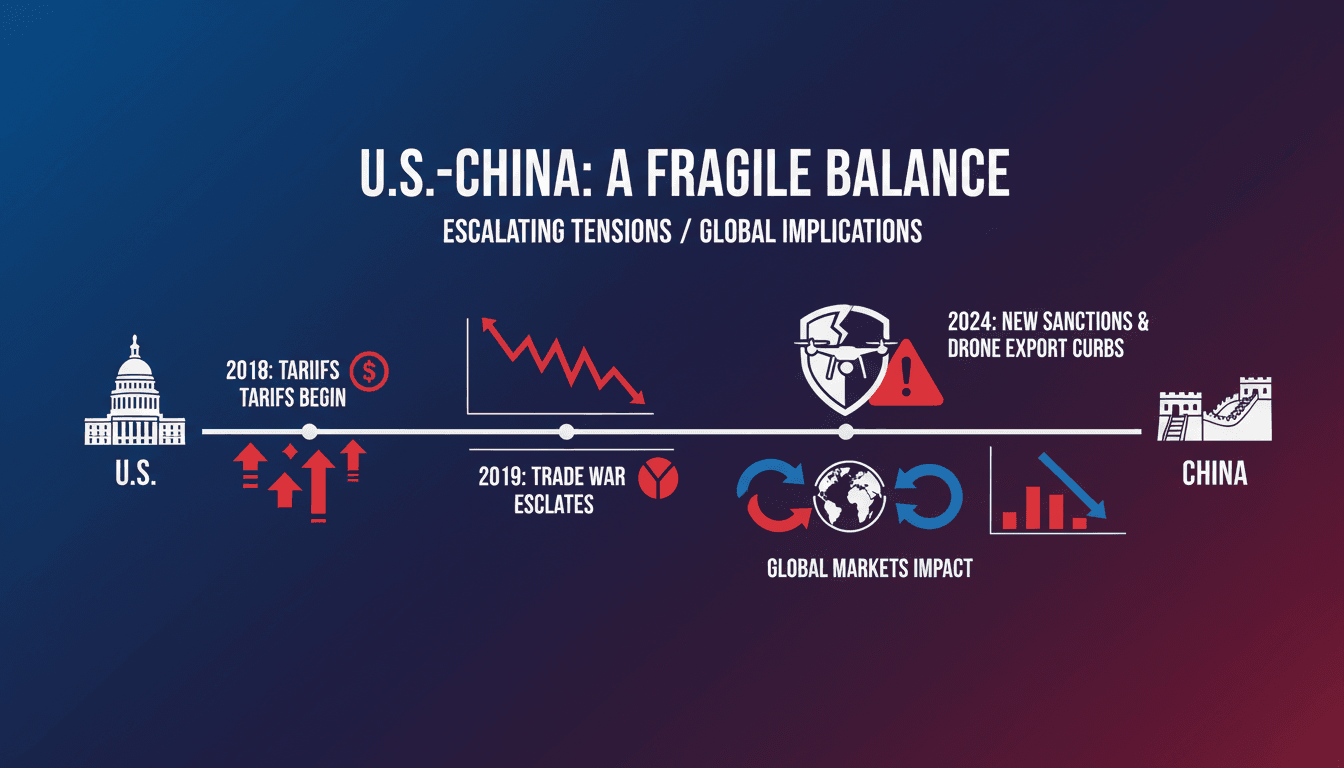
The recent sanctions imposed by China on six American firms and drone exports signal a significant escalation in trade tensions between the two nations. This move could have far-reaching implications for global markets, particularly in sectors reliant on technology and defense. As diplomatic relations become strained, businesses and policymakers must prepare for potential disruptions in trade and investment flows. The timing of these sanctions, just ahead of a scheduled meeting between President Xi Jinping and President Trump, underscores the seriousness of the situation. Stakeholders across various industries should closely monitor developments, as the fallout from these actions may influence market stability and international relations.
What happened
On August 5, 2026, China announced new sanctions against the United States, which include restrictions on drone exports and a ban on dealings with six specific American firms. This decision is a direct response to recent actions taken by U.S. agencies targeting China, reflecting the ongoing trade conflict between the two nations. The sanctions highlight China's targeted approach in retaliating against U.S. measures.
These actions come at a critical juncture, as President Xi Jinping is set to meet with President Trump in the near future. The sanctions not only affect the listed firms but also signal a broader shift in U.S.-China relations, which have been increasingly fraught with tension.
The Context
The sanctions are part of a larger pattern of escalating tensions between the U.S. and China, which have been marked by a series of trade disputes and diplomatic challenges. The six American entities targeted by these sanctions represent key players in various sectors, indicating China's strategic focus on specific industries.
As both nations navigate these complex dynamics, the implications for global markets and international diplomacy are significant. The upcoming diplomatic meeting between Xi and Trump will be crucial in determining whether these tensions can be eased or if they will continue to escalate.
Takeaway
Looking ahead, the potential responses from the U.S. government to China's sanctions will be critical in shaping the future of U.S.-China trade relations. Observers should watch for any retaliatory measures or diplomatic overtures that may arise in the wake of these sanctions.
The ongoing trade tensions suggest that future diplomatic engagements may be strained, impacting not only bilateral relations but also global economic stability. Stakeholders must remain vigilant as the situation develops, as further economic measures could be on the horizon.
Capitol Hill news, legislation, and policy insight.
"The Hill specializes in U.S. politics and policy, with a focus on Capitol Hill developments and a reputation for insider reporting."
— A47 Editor
China targets US firms, drone exports ahead of Xi visit
China's Commerce Ministry has announced new sanctions against the United States, including a ban on drone exports and restrictions on transactions with six American firms, in retaliation for recent actions taken by U.S. agencies targeting Chinese int...
Conservative-leaning political and national coverage.
"The Washington Times is a conservative-leaning newspaper known for its political coverage and advocacy of right-of-center viewpoints."
— A47 Editor
China announces countermeasures against Washington, including controls on drone exports to the U.S.
China has announced a series of countermeasures against the United States, including controls on drone exports and a ban on transactions with six American entities, in response to recent restrictions imposed by Washington.
Macro commentary, policy analysis, growth/inflation themes, and global outlooks.
"Contextual macro coverage that complements day-to-day market headlines."
— A47 Editor
China targets US firms and drone exports after FCC, Xinjiang actions
China has intensified its scrutiny of U.S. firms and drone exports following actions by the Federal Communications Commission (FCC) and ongoing tensions related to Xinjiang. This move is seen as a direct response to U.S. sanctions and restrictions ta...