
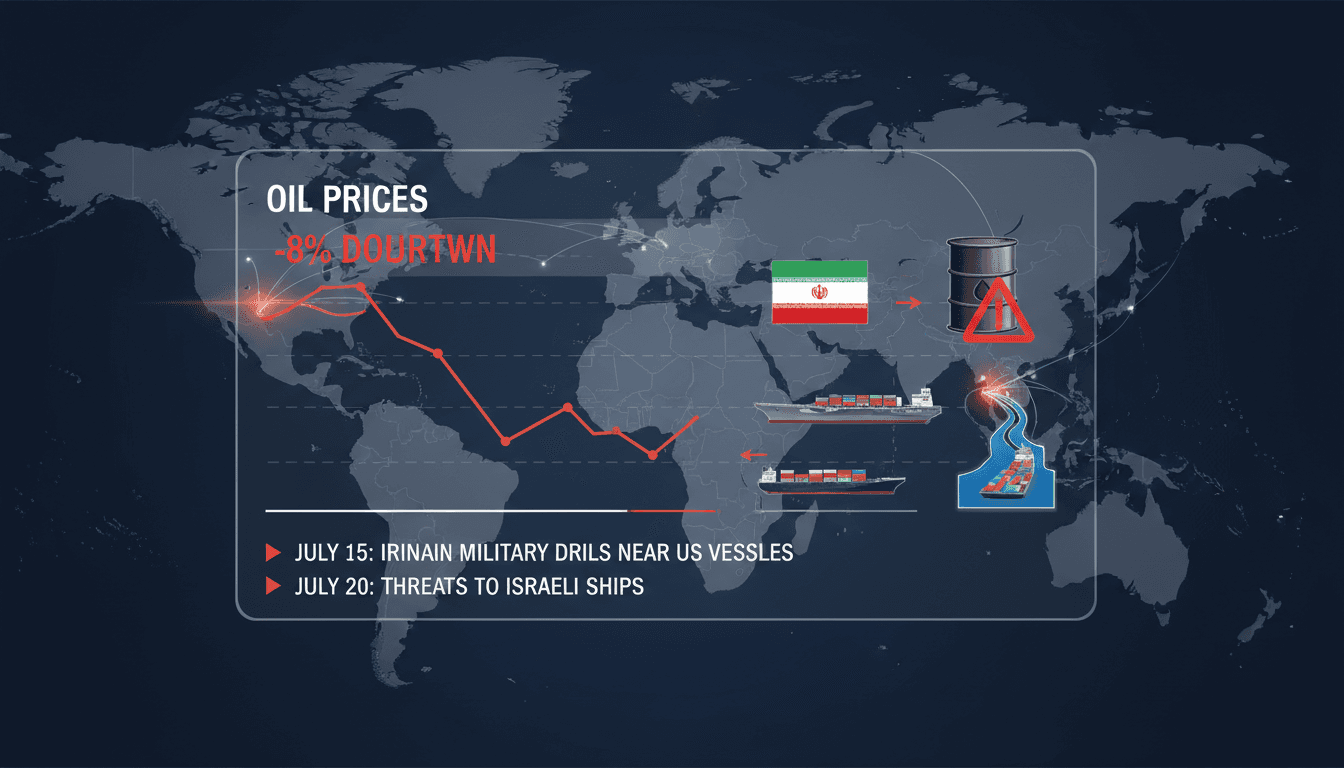
Oil prices decline over 8% amid escalating tensions in the Strait of Hormuz
Here's what it means for you.
The recent decline in oil prices signals heightened volatility in the market, driven by geopolitical tensions in the Strait of Hormuz. As Iran escalates its aggressive stance towards US and Israeli vessels, traders are left grappling with uncertainty regarding future supply routes. This situation could lead to fluctuating prices, impacting both consumers and businesses reliant on stable oil markets. The potential for diplomatic resolutions, particularly involving Oman, may offer some hope for stabilization. However, the ongoing military actions and threats from Iran suggest that the situation remains precarious.
What happened
Oil prices have slid more than 8% over the past week due to escalating tensions in the Strait of Hormuz. This decline follows Iran's recent military actions and threats against foreign ships, particularly targeting US and Israeli vessels. The market reacted sharply as traders assessed the implications of these developments on global oil supply.
Reports indicate that Iran has attacked "hostile targets" in the region, further intensifying concerns among traders. The immediate impact has been a significant drop in oil prices, reflecting the market's sensitivity to geopolitical events.
The Context
The Strait of Hormuz is a critical waterway through which a substantial portion of the world's oil supply passes. Iran's aggressive posture towards US and Israeli ships is part of a broader strategy to assert control over this vital maritime route. The situation is compounded by ongoing negotiations involving Oman, which could play a role in stabilizing the region.
As tensions rise, traders are closely monitoring the developments, hoping for a diplomatic resolution that could alleviate the current volatility. The stakes are high, as continued instability could have far-reaching implications for global oil prices and supply chains.
Takeaway
Looking ahead, the situation in the Strait of Hormuz remains fluid, with potential for further volatility in oil prices. Traders should keep an eye on Iran's negotiations with Oman regarding maritime security, as these discussions could influence market stability. Additionally, any US responses to Iran's actions will be crucial in shaping the future landscape of oil pricing.
As geopolitical tensions evolve, the oil market is likely to remain sensitive to developments in the region. Stakeholders must remain vigilant as they navigate this uncertain environment.
Oil, metals, and agriculture: supply/demand headlines, OPEC chatter, inventories, and price action.
"Solid tape for energy and metals traders tracking macro and micro catalysts."
— A47 Editor
Oil slides more than 8% for the week as traders hope for Hormuz reopening deal
Oil prices have dropped more than 8% for the week, driven by traders' hopes for a potential reopening deal concerning the Strait of Hormuz, a vital shipping route for global oil transport. This decline reflects ongoing volatility in the market amid g...
Global markets, investing, and macroeconomics from a premier financial newsroom.
"Bloomberg is respected for in-depth financial reporting and data-driven analysis."
— A47 Editor
Bloomberg News Now
Iran is advancing a proposal to restrict the passage of U.S. and Israeli ships through the strategically vital Strait of Hormuz, a move that is expected to enhance its control over this critical maritime route for global oil transport. This developme...
Global markets, investing, and macroeconomics from a premier financial newsroom.
"Bloomberg is respected for in-depth financial reporting and data-driven analysis."
— A47 Editor
Latest Oil Market News and Analysis for Aug. 7
Oil prices have seen an uptick following reports of Iranian attacks on 'hostile targets' in the Strait of Hormuz, as Tehran aims to restrict U.S. naval access to this crucial shipping route in a deal with Oman.
Regional and international reporting focused on Middle Eastern politics, diplomacy, and economics.
"Asharq Al-Awsat is a Saudi-owned international newspaper reflecting mainstream Gulf political perspectives."
— A47 Editor
Oil Jumps $3 as Iran Reviews Bill to Ban US, Israeli Vessels from Hormuz
Oil prices surged by $3 as Iran considers a legislative bill aimed at banning U.S. and Israeli vessels from transiting the Strait of Hormuz, a critical waterway for global oil shipments. This move reflects Iran's ongoing efforts to assert control ove...