
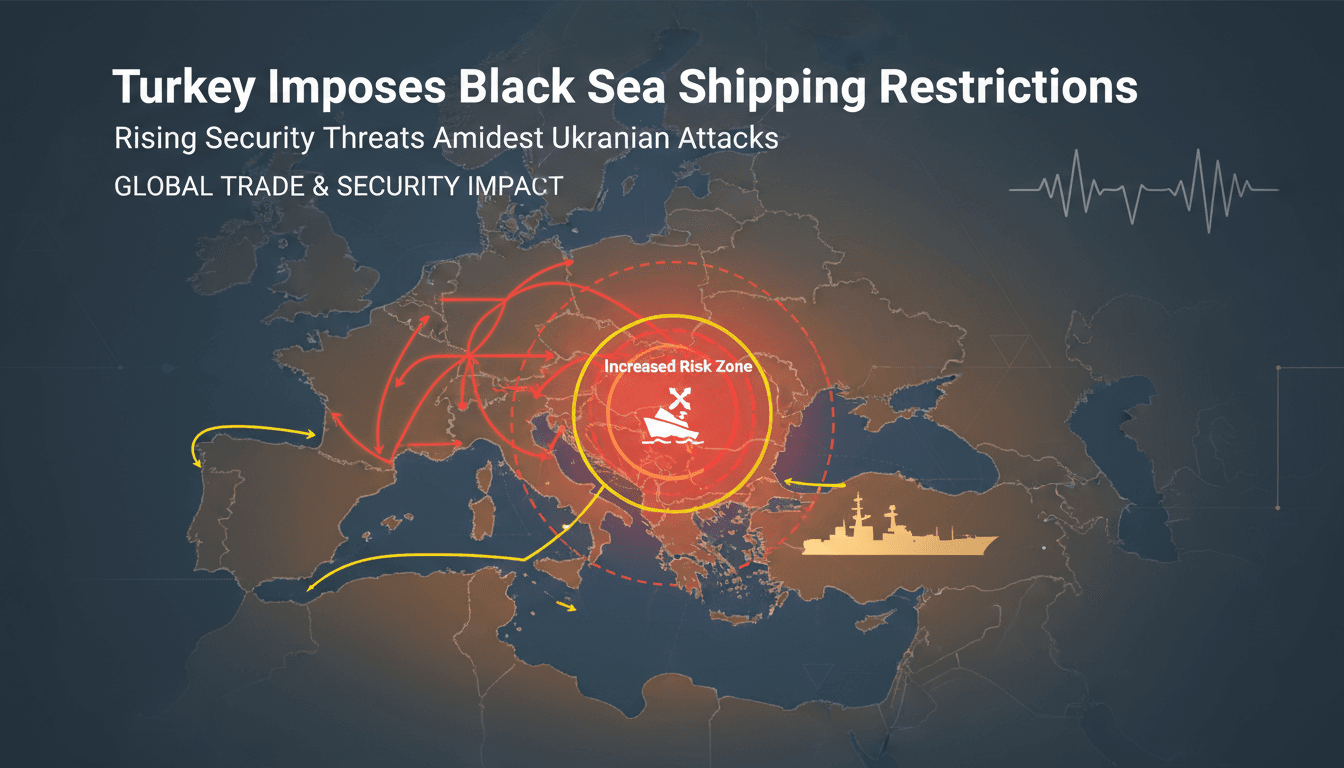
Turkey imposes shipping restrictions in the Black Sea amid rising security threats
What happened
Turkey has officially imposed restrictions on the movement of ships in the Black Sea. This decision follows a notable increase in Ukrainian attacks on vessels operating in the region, reflecting heightened security concerns. Reports from multiple sources, including Bloomberg, confirm the seriousness of the situation and Turkey's proactive measures to enhance maritime safety.
The restrictions aim to safeguard shipping operations amid escalating tensions. As a result, commercial shipping activities in the Black Sea will face new limitations, impacting trade routes and logistics.
The Context
The backdrop to Turkey's shipping restrictions is a rapidly evolving security environment in the Black Sea. Recent months have seen a marked increase in Ukrainian military actions targeting vessels, raising alarms about the safety of maritime operations. This situation has drawn significant media attention, with at least three articles reporting on Turkey's decision.
Turkey's actions reflect broader geopolitical tensions in the region, where various stakeholders are navigating complex relationships. The timing of these restrictions underscores the urgency of addressing security risks that threaten not only shipping but also regional stability.
Takeaway
As the situation in the Black Sea continues to evolve, stakeholders should closely monitor developments regarding maritime security. The potential for further Ukrainian military responses and reactions from other regional players could shape the future of shipping in the area.
Turkey's restrictions may lead to additional diplomatic and military developments, impacting trade dynamics and security protocols. Observers should remain vigilant as the implications of these restrictions unfold.
Pan-Arab news coverage spanning politics, business, sports, and regional affairs.
"Asharq Al-Awsat reflects a broad Arab editorial perspective with strong attention to regional geopolitics."
— A47 Editor
تركيا تقيّد الملاحة في البحر الأسود
Turkey has decided to impose restrictions on the movement of commercial vessels entering the Black Sea due to increasing security concerns, as reported by Bloomberg citing official sources.
Arabic-language coverage of international news and geopolitics.
"RT Arabic is a Russian state-funded outlet often criticized for promoting Kremlin-aligned narratives."
— A47 Editor
تركيا تقيد حركة السفن بالبحر الأسود
Turkish authorities have restricted ship movements in the Black Sea following an increase in Ukrainian attacks on vessels in the region, as reported by Bloomberg. This decision reflects heightened tensions and security concerns in the maritime area.
Arabic-language coverage of international news and geopolitics.
"RT Arabic is a Russian state-funded outlet often criticized for promoting Kremlin-aligned narratives."
— A47 Editor
"بلومبيرغ": تركيا تبدأ بتقييد عبور السفن في البحر الأسود
According to sources familiar with the matter, Turkey has begun to restrict the movement of ships in the Black Sea. This development marks a significant change in maritime operations in the region, potentially affecting trade routes and shipping logi...