
Ebola Bundibugyo outbreak expands in DRC with fatal case confirmed in Kenya
Why it matters
The outbreak poses significant public health risks, potentially affecting global travel and trade dynamics.
What happened (in 30 seconds)
- Ebola Bundibugyo virus outbreak confirmed in eastern Democratic Republic of the Congo (DRC) with new cases in North Kivu province.
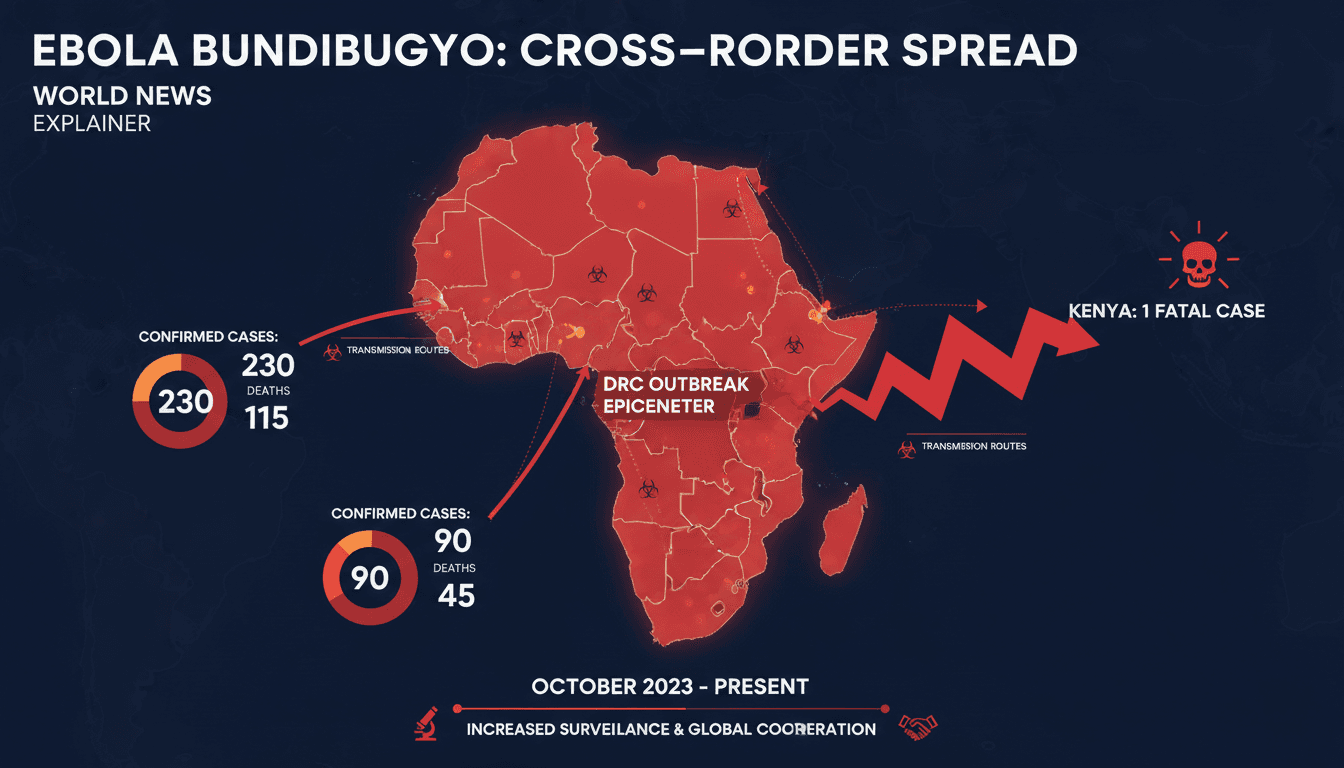
- Kenya reported its first imported fatal case on October 6, 2026, raising concerns about cross-border transmission.
- WHO data indicates 8,728 confirmed cases and 4,205 deaths in DRC, with ongoing transmission and limited treatment capacity.
The context you actually need
- Ebola outbreaks are not new in the DRC, with a history of severe incidents, including a previous outbreak that killed nearly 2,300 people from 2018 to 2020.
- The current outbreak began in May 2026 and is complicated by a lack of approved vaccines or treatments, alongside community mistrust and misinformation.
- Regional mobility across borders with Uganda and Kenya exacerbates the situation, making containment efforts more challenging.
What's really happening
As of October 6, 2026, the Ebola Bundibugyo outbreak in the DRC has escalated, with the World Health Organization (WHO) reporting a staggering 8,728 confirmed cases and 4,205 deaths across 64 health zones in seven provinces. The Alimbongo health zone in North Kivu has seen a surge in cases, accounting for nearly 40% of new infections. The situation is dire, with healthcare facilities overwhelmed and only 34% of patients receiving specialized care.
The outbreak's complexity is heightened by the recent importation of a fatal case into Kenya. A Kenyan citizen, who had been living in DRC for seven years, traveled from Beni to Kampala, Uganda, before flying to Nairobi. After falling ill, he was isolated and tested positive for the virus, dying shortly thereafter. This incident has triggered a swift response from Kenyan authorities, who have activated the National Incident Management System and intensified surveillance at borders and health facilities. They have designated 241 isolation beds and initiated contact tracing for 28-57 individuals linked to the case.
Despite these efforts, the DRC's response is hampered by limited treatment capacity, insecurity, and community mistrust. Contact tracing efforts have reached only 80.4% of identified contacts, falling short of the 85% target necessary for effective containment. The Africa CDC has emphasized the need for community-centered responses to improve cooperation and trust among residents.
The outbreak's implications extend beyond the DRC and Kenya, as international travelers are advised to monitor health advisories due to potential global health vigilance. The interconnectedness of today's world means that a health crisis in one region can quickly ripple across borders, affecting travel, trade, and public health policies worldwide.
Who feels it first (and how)
- Healthcare workers in DRC and Kenya facing increased workloads and risks of exposure.
- Travelers to and from affected regions needing to stay informed about health advisories.
- Local communities in DRC experiencing heightened fear and mistrust towards health interventions.
- Governments in neighboring countries implementing stricter border controls and health screenings.
What to watch next
- Contact tracing effectiveness: Monitoring the percentage of successfully traced contacts will indicate the outbreak's containment potential.
- International travel advisories: Changes in travel restrictions or health advisories from WHO and local health authorities could impact global travel patterns.
- Community engagement initiatives: The success of programs aimed at building trust and cooperation within affected communities will be crucial for effective outbreak management.
The outbreak is ongoing with confirmed cases and deaths in DRC and an imported case in Kenya.
Increased surveillance and health measures will be implemented in neighboring countries to prevent further spread.
The long-term impact on regional health systems and international travel dynamics remains uncertain.
Frequently Asked Questions
- Why it matters?
- The outbreak poses significant public health risks, potentially affecting global travel and trade dynamics.
- What happened (in 30 seconds)?
- Ebola Bundibugyo virus outbreak confirmed in eastern Democratic Republic of the Congo (DRC) with new cases in North Kivu province. Kenya reported its first imported fatal case on October 6, 2026, raising concerns about cross-border transmission. WHO data indicates 8,728 confirmed cases and 4,205 deaths in DRC, with ongoing transmission and limited treatment capacity.
- What's really happening?
- As of October 6, 2026, the Ebola Bundibugyo outbreak in the DRC has escalated, with the World Health Organization (WHO) reporting a staggering 8,728 confirmed cases and 4,205 deaths across 64 health zones in seven provinces. The Alimbongo health zone in North Kivu has seen a surge in cases, accounting for nearly 40% of new infections. The situation is dire, with healthcare facilities overwhelmed and only 34% of patients receiving specialized care. The outbreak's complexity is heightened by the
- Who feels it first (and how)?
- Healthcare workers in DRC and Kenya facing increased workloads and risks of exposure. Travelers to and from affected regions needing to stay informed about health advisories. Local communities in DRC experiencing heightened fear and mistrust towards health interventions. Governments in neighboring countries implementing stricter border controls and health screenings.
- What to watch next?
- Contact tracing effectiveness: Monitoring the percentage of successfully traced contacts will indicate the outbreak's containment potential. International travel advisories: Changes in travel restrictions or health advisories from WHO and local health authorities could impact global travel patterns. Community engagement initiatives: The success of programs aimed at building trust and cooperation within affected communities will be crucial for effective outbreak management.
Global news coverage with extensive reporting on Middle Eastern conflicts and geopolitics.
"Al Jazeera is a Qatar-based broadcaster known for wide regional coverage and alternative perspectives."
— A47 Editor
Ebola spreads in eastern DRC as Kenya confirms imported case
The Ebola outbreak in eastern Democratic Republic of Congo (DRC) has intensified, with new cases reported and the death toll exceeding 4,000 this year. Meanwhile, Kenya has confirmed its first-ever Ebola case, linked to a patient who traveled from th...
Comprehensive coverage of Middle Eastern and global issues.
"Al Jazeera is a prominent voice from the Global South, especially the Middle East, with an emphasis on underreported stories."
— A47 Editor
Ebola spreads in eastern DRC as Kenya confirms imported case
The Ebola outbreak in eastern Democratic Republic of Congo (DRC) has intensified, with new cases reported and the death toll exceeding 4,000 this year. Meanwhile, Kenya has confirmed its first-ever Ebola case, linked to a patient who traveled from th...
24/7 international news from a French perspective in multiple languages.
"France 24 is viewed as a globally focused outlet with balanced coverage and a European perspective."
— A47 Editor
Kenya: Ebola tests negative as contact tracing continues
Tests for a Kenyan patient suspected of having contracted Ebola have returned negative, alleviating fears of a potential second case in the country following its first confirmed death from the virus earlier this week. Authorities are actively tracing...
Global news coverage with extensive reporting on Middle Eastern conflicts and geopolitics.
"Al Jazeera is a Qatar-based broadcaster known for wide regional coverage and alternative perspectives."
— A47 Editor
Kenyan patient suspected of Ebola infection tests negative
Preliminary lab results indicate that a Kenyan patient suspected of having contracted Ebola has tested negative, alleviating concerns of a potential second case in the country following its first-ever confirmed case earlier this week.
Comprehensive coverage of Middle Eastern and global issues.
"Al Jazeera is a prominent voice from the Global South, especially the Middle East, with an emphasis on underreported stories."
— A47 Editor
Kenyan patient suspected of Ebola infection tests negative
Preliminary lab results indicate that a Kenyan patient suspected of having contracted Ebola has tested negative, alleviating concerns of a potential second case in the country following its first-ever confirmed case earlier this week.