
Escalating U.S.-Iran tensions over Strait of Hormuz demands impact global oil markets
Here's what it means for you.
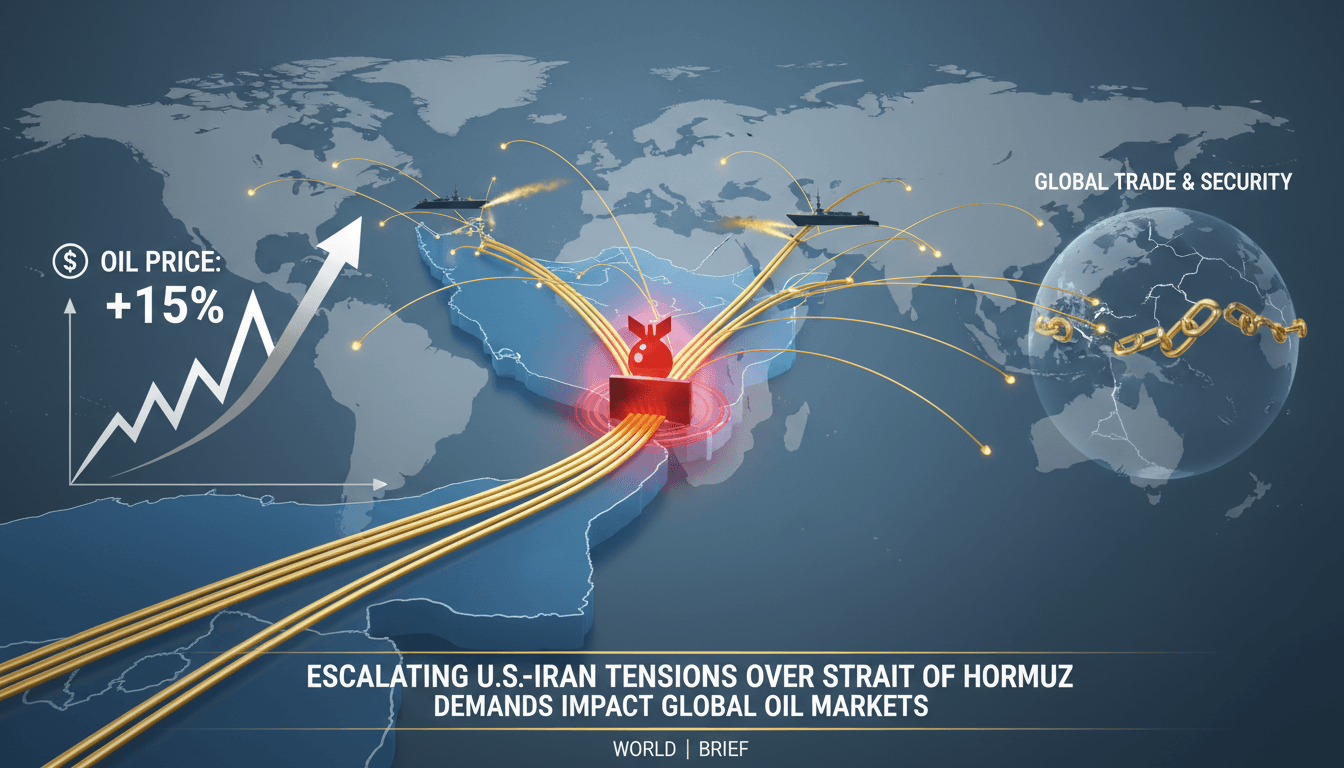
The recent escalation in U.S.-Iran tensions over the Strait of Hormuz has significant implications for global oil markets. As President Trump demands compensation from Iran amidst rising oil prices, stakeholders in the energy sector should prepare for potential volatility. The situation underscores the fragility of international trade and security in a region critical for oil transport. The ongoing negotiations may further complicate U.S.-Iran relations, impacting not only oil prices but also broader geopolitical stability. Businesses and investors should closely monitor developments as they could influence market dynamics.
What happened
Tensions between the U.S. and Iran have intensified following new demands issued by Iran regarding its military activities in the Strait of Hormuz. President Trump responded to these demands by calling for compensation, reflecting the deteriorating prospects for a diplomatic resolution. This exchange occurred against the backdrop of recent attacks on commercial vessels, which have heightened geopolitical tensions in the region.
The situation escalated on August 9, 2026, when Iran articulated its demands, prompting an immediate response from Trump the following day. The ongoing conflict has contributed to rising Brent crude oil prices, signaling the potential for further market disruptions.
The Context
The Strait of Hormuz is a vital shipping lane for global oil transport, making the current tensions particularly concerning for international trade. Recent attacks on commercial vessels have exacerbated the situation, leading to increased scrutiny of military activities in the area. As the U.S. and Iran navigate this complex landscape, the implications for global oil prices and security are profound.
The stakeholders involved include not only the U.S. and Iran but also countries reliant on oil transported through this critical corridor. The timing of these developments is crucial, as they coincide with broader geopolitical shifts and economic uncertainties that could affect global markets.
Takeaway
As negotiations between the U.S. and Iran continue, the potential for further escalation remains high. Observers should watch for developments regarding U.S.-Iran negotiations, as these could significantly impact oil prices and international trade. The situation in the Strait of Hormuz is likely to remain a focal point for geopolitical tensions, with implications that extend beyond the immediate region.
The ongoing demands from Iran and the U.S. response will shape the future of their relations and the stability of global oil markets. Stakeholders must remain vigilant as the situation evolves.
Focused political reporting and governmental affairs.
"NBC News is a mainstream media outlet known for comprehensive national and international news coverage with a centrist to slightly left-leaning editorial tone."
— A47 Editor
Trump responds to Iran’s new demands
President Trump has responded to Iran's new demands regarding the cessation of attacks on commercial ships in the Strait of Hormuz, a critical maritime route for global oil shipments. This response comes amid ongoing tensions and negotiations between...
Business and economy coverage focused on Dubai, the UAE, Saudi Arabia, and the wider Middle East.
"Arabian Business is a well-known regional business outlet with strong focus on Gulf markets, leadership, and investment stories."
— A47 Editor
Trump demands compensation from Iran as Strait of Hormuz deal hopes fade and oil jumps
U.S. President Donald Trump has demanded compensation from Iran as negotiations for reopening the strategically vital Strait of Hormuz face significant challenges, with Brent crude oil prices continuing to rise. This demand comes amid Iran's insisten...
Regional and international reporting focused on Middle Eastern politics, diplomacy, and economics.
"Asharq Al-Awsat is a Saudi-owned international newspaper reflecting mainstream Gulf political perspectives."
— A47 Editor
Iran Makes New Strait of Hormuz Demands
Iran has made new demands regarding the reopening of the strategically vital Strait of Hormuz, insisting on compensation for war damages and control over shipping routes. This development complicates ongoing negotiations, as the strait has been effec...