
Shipping traffic in the Strait of Hormuz hits near three-month low amid regional hostilities
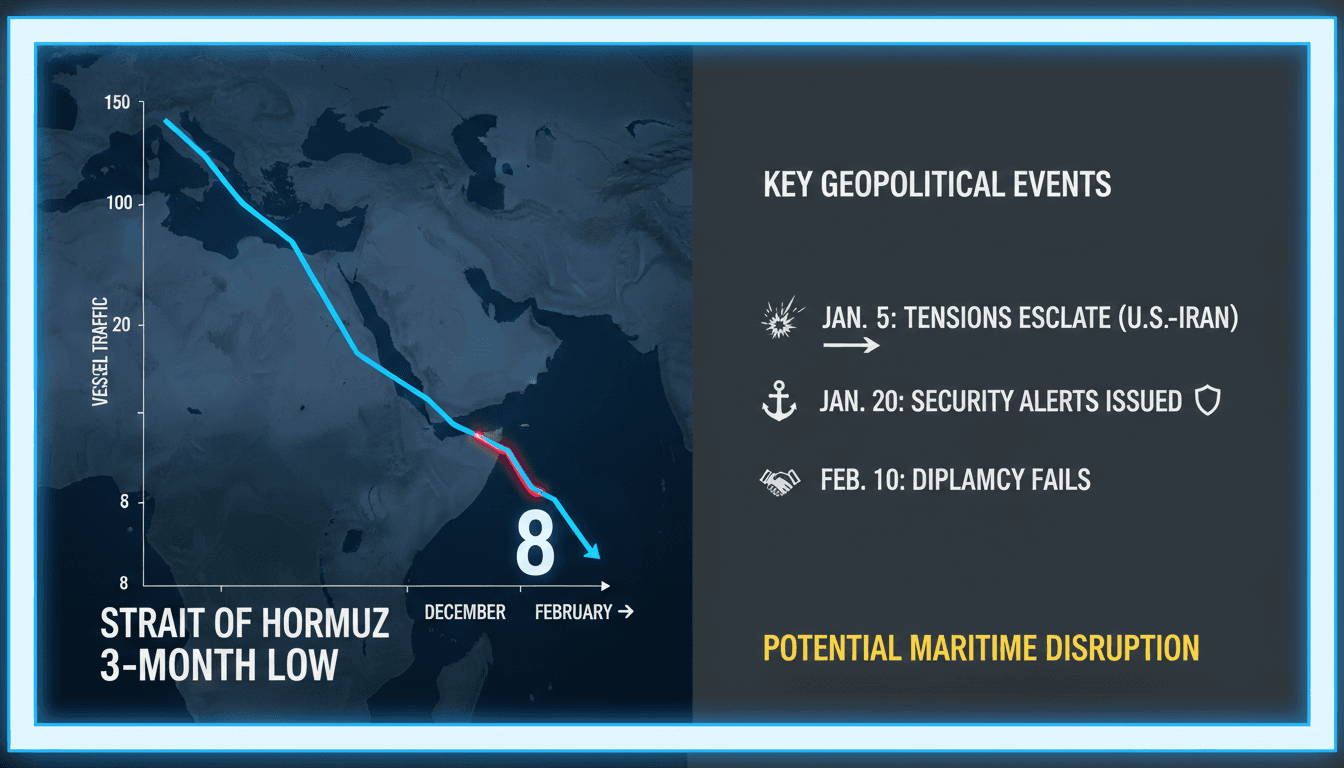
Here's what it means for you.
The recent decline in shipping traffic through the Strait of Hormuz signals heightened risks for global oil supply chains. With only eight vessels reported on August 12, shipping companies are increasingly cautious about navigating this critical waterway. The ongoing hostilities in the Middle East could lead to further disruptions, impacting market stability and energy prices. As tensions escalate, stakeholders must closely monitor developments in U.S.-Iran relations, which are pivotal for maritime security. The potential for increased shipping traffic hinges on diplomatic resolutions that could alleviate current fears.
What happened
On August 12, shipping traffic in the Strait of Hormuz fell to a mere eight vessels, marking the lowest count in a week. This significant drop is attributed to escalating hostilities in the region, prompting shipping owners to avoid the vital waterway. The situation reflects a growing concern among maritime operators regarding safety and security in the area.
The decline in vessel numbers underscores the impact of ongoing conflicts in the Middle East, which have raised alarms for shipping companies. Reports indicate that both the U.S. and Iran-aligned Houthis have engaged in attacks, further complicating the maritime landscape.
The Context
The Strait of Hormuz is a crucial maritime route for global oil supplies, making its security paramount for international trade. Recent hostilities have intensified security concerns, leading to a cautious approach from shipping companies. Iran's threats to keep the strait closed unless certain conditions are met by the U.S. add another layer of complexity to the situation.
As tensions rise, the implications for global oil markets are significant. The potential for continued disruptions in shipping traffic could lead to increased prices and volatility in energy markets, affecting economies worldwide.
Takeaway
The ongoing conflict in the Middle East poses a substantial risk to maritime operations in the Strait of Hormuz. Unless diplomatic resolutions are achieved, shipping traffic may continue to be adversely affected, leading to further instability in global oil supply chains. Stakeholders should monitor developments in U.S.-Iran relations closely, as any shifts could influence maritime security and shipping activities.
In the coming weeks, watch for potential increases in shipping traffic if hostilities de-escalate. The situation remains fluid, and the maritime industry must remain vigilant in navigating these challenges.
Macro commentary, policy analysis, growth/inflation themes, and global outlooks.
"Contextual macro coverage that complements day-to-day market headlines."
— A47 Editor
Ship traffic through Strait of Hormuz near three-month low
Ship traffic through the Strait of Hormuz has reached a near three-month low, reflecting a significant decline in commercial shipping activity in this vital maritime route for global oil shipments. This downturn is attributed to ongoing geopolitical ...
Pan-Arab news coverage spanning politics, business, sports, and regional affairs.
"Asharq Al-Awsat reflects a broad Arab editorial perspective with strong attention to regional geopolitics."
— A47 Editor
الملاحة بمضيق هرمز عند أدنى مستوى في أسبوع
Shipping data indicates that the number of vessels observed in the Strait of Hormuz dropped to its lowest level in a week, with only eight ships recorded on Tuesday. This decline highlights fluctuations in maritime traffic in this critical waterway.
Regional coverage and analysis focused on politics, diplomacy, and business across the Middle East.
"Al-Monitor is known for analytical reporting on Middle East politics and policy developments."
— A47 Editor
Hormuz shipping traffic falls to one-week low amid hostilities
Shipping traffic in the Strait of Hormuz has dropped to a one-week low, with only eight vessels recorded, as shipping owners are increasingly avoiding the area due to ongoing hostilities in the Middle East. This decline follows reports of separate at...