
Escalation of Attacks on Commercial Shipping in Gulf of Oman and Red Sea
Here's what it means for you.
The recent escalation of attacks on commercial shipping in the Gulf of Oman and the Red Sea signals a troubling trend for global oil markets and shipping security. With fatalities reported and oil prices rising, stakeholders must prepare for potential disruptions. The ongoing conflict between the U.S. military and Yemen's Houthi rebels complicates an already volatile situation, emphasizing the need for strategic responses. As military actions intensify, the implications for international trade and energy supplies could be significant. Companies reliant on these shipping routes may face increased costs and logistical challenges, impacting their bottom lines.
What happened
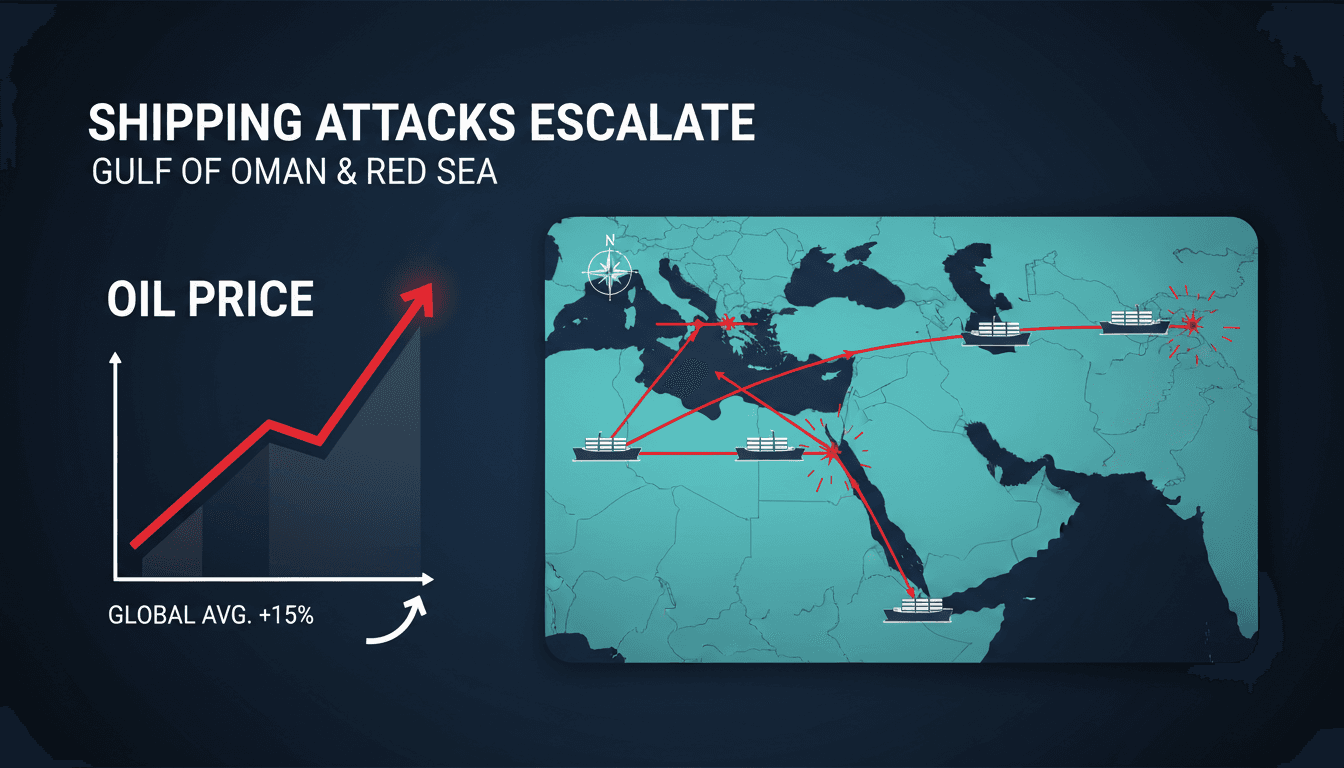
The U.S. military and Yemen's Houthi rebels have both launched attacks on commercial shipping in the Gulf of Oman and the Red Sea. On August 12, 2026, the U.S. military targeted a Panama-flagged cargo ship that was violating a naval blockade. In a separate incident on the same day, Houthi rebels attacked a cargo vessel in the Bab el-Mandeb Strait, resulting in the deaths of four crew members.
These incidents mark a significant escalation in hostilities, with the fatalities representing the first deaths on shipping since the onset of the Iran conflict. The attacks have led to an increase in oil prices, with Brent crude rising to $88.91 per barrel, reflecting market concerns over the security of critical shipping lanes.
The Context
The Strait of Hormuz is a vital chokepoint for global oil supplies, making the recent attacks particularly concerning. The U.S. military's engagement in the region is part of a broader strategy to maintain security and stability amid stalled negotiations with Iran regarding the ongoing conflict. The involvement of Houthi rebels adds another layer of complexity, as they continue to assert their influence in the region.
As military actions unfold, the potential for further confrontations looms large. The deteriorating security situation raises questions about the effectiveness of diplomatic efforts to resolve the Iran conflict, leaving stakeholders to navigate an increasingly precarious environment.
Takeaway
The ongoing conflict and recent attacks suggest that tensions in the region are likely to escalate further. Stakeholders should closely monitor potential responses from the U.S. military to Houthi aggression, as well as developments in U.S.-Iran negotiations concerning the Strait of Hormuz. The likelihood of additional military confrontations remains high, which could have profound implications for global oil markets and shipping security.
As the situation evolves, the need for strategic planning and risk assessment becomes paramount for businesses and governments alike.
Regional coverage and analysis focused on politics, diplomacy, and business across the Middle East.
"Al-Monitor is known for analytical reporting on Middle East politics and policy developments."
— A47 Editor
Hormuz traffic sinks to one-week low as ships attacked, talks stagnate
Recent attacks on commercial ships in the Gulf of Oman and the Red Sea by the United States and Yemen's Houthi rebels have led to a significant decline in shipping traffic, reaching a one-week low. This escalation in hostilities coincides with stalle...
UAE-based English-language newspaper covering regional politics, economics, and global affairs.
"The National reflects Emirati policy perspectives while maintaining international editorial standards."
— A47 Editor
Houthi double-tap attack on Red Sea ship: How it unfolded
A recent Houthi double-tap attack on a ship in the Red Sea has escalated tensions in the region, following a series of strikes on Saudi oil tankers. The Houthis claimed responsibility for these attacks, asserting that the vessels violated their marit...
International news coverage curated for readers in the UAE and Gulf region.
"Emirates 24|7 world coverage presents global developments through a UAE-facing and Gulf-relevant editorial lens."
— A47 Editor
New attacks on ships as Iran war talks hit fresh impasse
Recent attacks on shipping in the Gulf of Oman and the Red Sea have been reported, coinciding with stalled negotiations to end the Iran war. The U.S. and Yemen's Iran-aligned Houthis each reported separate incidents, with Iran asserting that the Stra...