
Sudan's Rapid Support Forces escalate conflict with attacks in Khartoum and Kurmuk
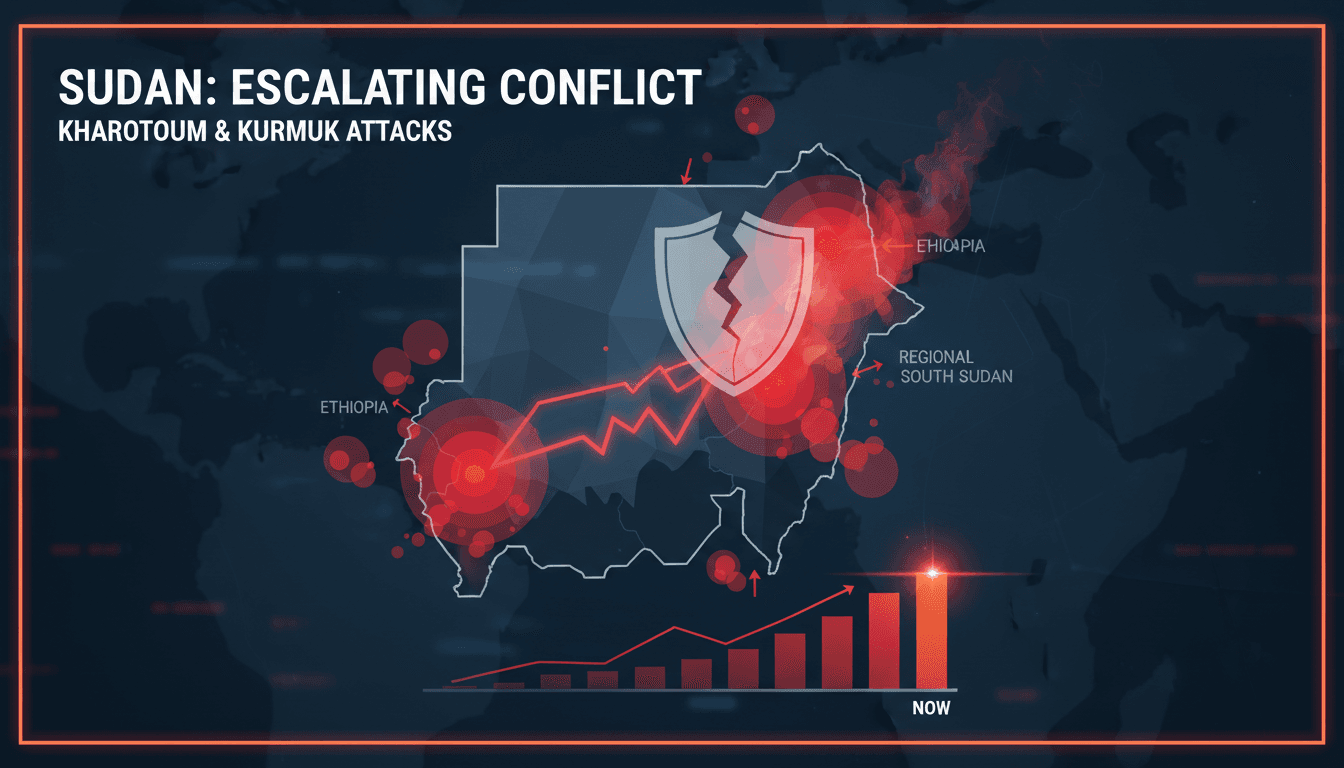
Here's what it means for you.
The recent escalation of conflict in Sudan, particularly through the actions of the Rapid Support Forces (RSF), signals a significant deterioration in regional stability. This situation is likely to exacerbate the humanitarian crisis, affecting not only Sudan but also neighboring countries like Ethiopia. Stakeholders in international policy and humanitarian aid must prepare for increased challenges as the conflict unfolds. The RSF's renewed offensive indicates a shift in the dynamics of the ongoing civil war, which has persisted for over three years. As violence escalates, the implications for market stability and public safety in the region become increasingly concerning.
What happened
The Rapid Support Forces have launched significant attacks in Sudan, particularly in Khartoum and the border town of Kurmuk. This military escalation follows a series of setbacks for the RSF, marking a notable increase in hostilities across multiple fronts. Reports indicate that the RSF has seized control of Kurmuk, intensifying fighting in both Khartoum and South Kordofan.
Recent drone attacks represent the largest escalation in fighting since the civil war began, highlighting the RSF's aggressive military strategy. The situation is evolving rapidly, with fighting now reported on three fronts, indicating a widespread escalation of conflict.
The Context
The RSF has been engaged in a civil war in Sudan for over three years, with the current escalation reflecting their attempts to regain momentum. The conflict has significant implications for regional stability, particularly along the border with Ethiopia, where tensions are already high. The RSF's actions are not only a response to previous setbacks but also a strategic move to consolidate power in key areas.
As the fighting intensifies, the humanitarian impact is expected to worsen, with increased displacement and suffering among civilians. The international community is closely monitoring the situation, as the potential for broader regional instability looms.
Takeaway
The ongoing conflict in Sudan is likely to worsen as both the RSF and opposing forces continue to engage in heavy fighting. Observers should monitor the humanitarian impact of this escalation, as the situation could lead to a significant crisis for civilians caught in the crossfire. Additionally, potential international responses to the violence will be crucial in shaping the future of the conflict.
As the RSF employs aggressive tactics, the likelihood of prolonged conflict increases, raising concerns about the stability of the region and the humanitarian conditions for those affected.
Global news coverage with extensive reporting on Middle Eastern conflicts and geopolitics.
"Al Jazeera is a Qatar-based broadcaster known for wide regional coverage and alternative perspectives."
— A47 Editor
Sudan army says RSF advance on key town bordering Ethiopia
The Sudanese army has reported that the Rapid Support Forces (RSF) and their allies have advanced into the town of Kurmuk, located in the Blue Nile state, raising concerns about escalating violence in the region. This development comes amid ongoing c...
Comprehensive coverage of Middle Eastern and global issues.
"Al Jazeera is a prominent voice from the Global South, especially the Middle East, with an emphasis on underreported stories."
— A47 Editor
Sudan army says RSF advance on key town bordering Ethiopia
The Sudanese army has reported that the Rapid Support Forces (RSF) and their allies have advanced into the town of Kurmuk, located in the Blue Nile state, raising concerns about escalating violence in the region. This development comes amid ongoing c...
Pan-Arab news coverage spanning politics, business, sports, and regional affairs.
"Asharq Al-Awsat reflects a broad Arab editorial perspective with strong attention to regional geopolitics."
— A47 Editor
هجمات المسيّرات تشعل 3 جبهات في السودان
Intense fighting erupted on Thursday between the Sudanese army and the Rapid Support Forces on the fronts of Kordofan, Blue Nile, and Khartoum, marking the largest drone attacks since the onset of the war.
Regional coverage and analysis focused on politics, diplomacy, and business across the Middle East.
"Al-Monitor is known for analytical reporting on Middle East politics and policy developments."
— A47 Editor
Sudan’s RSF attacks Khartoum, seizes border town: What to know
The Rapid Support Forces (RSF) in Sudan have intensified their military operations, attacking Khartoum and seizing a border town, marking a significant escalation in the ongoing civil war that has persisted for over three years. This surge in violenc...