
U.S.-Iran Standoff Over Strait of Hormuz Intensifies Impacting Global Oil Markets
What happened
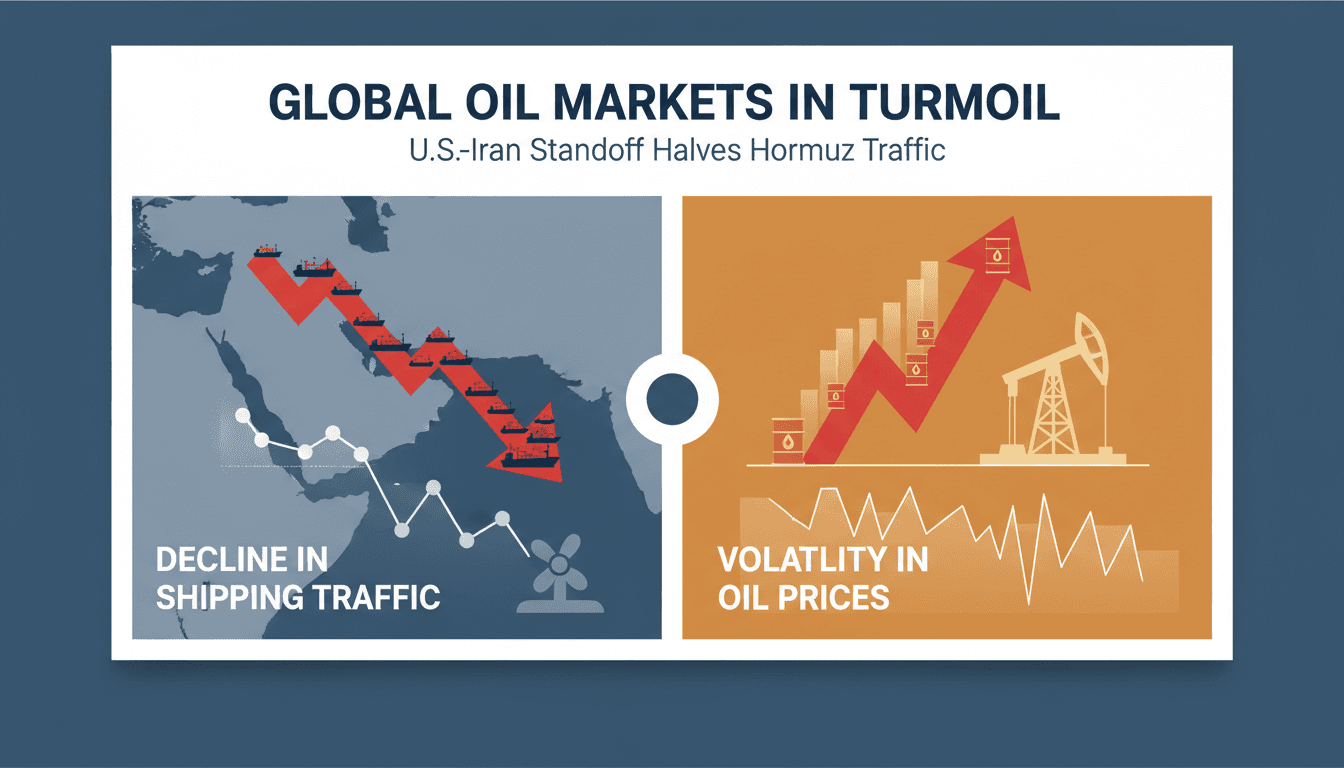
The U.S. and Iran are currently in a stalemate over control of the Strait of Hormuz, a vital shipping route for global oil. This ongoing conflict has led to a significant decline in shipping traffic and increased volatility in oil futures. Recent weeks have seen fluctuations in oil prices, reflecting the uncertainty stemming from the unresolved situation.
Despite attempts at diplomatic resolution, no significant progress has been made, leaving both nations publicly asserting their claims over the waterway. The situation remains precarious, with stakeholders closely watching for any developments that could impact oil supply and pricing.
The Context
The Strait of Hormuz is a critical chokepoint for global oil shipments, making the current standoff particularly concerning for international markets. Since the onset of the conflict earlier this year, traffic through the strait has decreased significantly, highlighting its strategic importance. The lack of diplomatic breakthroughs has only intensified concerns regarding future oil supply disruptions.
As tensions persist, both the U.S. and Iran are likely to continue their posturing, which could lead to further complications in the region. The implications of this standoff extend beyond the immediate area, affecting global energy markets and economic stability.
Takeaway
Looking ahead, the situation in the Strait of Hormuz is expected to remain tense, with potential implications for global oil supply and prices. Stakeholders should monitor oil price fluctuations closely as the standoff continues, as these could signal broader market trends. Additionally, any developments regarding diplomatic breakthroughs or escalations in military presence will be crucial to watch.
The ongoing volatility in oil markets necessitates a keen eye on the evolving dynamics in the region, as they could have significant repercussions for energy policies and economic conditions worldwide.
Markets desk coverage, trading insights, and investor updates.
"WSJ’s markets reporting provides in-depth analysis and context for investors."
— A47 Editor
Oil Futures Post Weekly Gains As Hormuz Standoff Drags On
Oil futures concluded the week on a positive note as tensions in the Strait of Hormuz persisted, with both the U.S. and Iran asserting control over this critical maritime route. The unresolved standoff has contributed to fluctuations in oil prices, r...
U.S. political news and right-leaning commentary.
"Fox News is a highly influential conservative news outlet known for right-leaning political commentary and coverage."
— A47 Editor
Who controls the Strait of Hormuz right now? Here's what the ship traffic actually shows
Recent traffic through the Strait of Hormuz has significantly declined compared to pre-war levels, reflecting ongoing tensions and instability in the region following the onset of conflict with Iran earlier this year.
Pan-Arab news coverage spanning politics, business, sports, and regional affairs.
"Asharq Al-Awsat reflects a broad Arab editorial perspective with strong attention to regional geopolitics."
— A47 Editor
طهران وواشنطن تتنازعان السيطرة على مضيق هرمز
Tehran and Washington continue to dispute control over the Strait of Hormuz, with diplomatic efforts remaining stalled despite the involvement of mediators. This ongoing tension highlights the strategic significance of the strait, a crucial passage f...
Markets desk coverage, trading insights, and investor updates.
"WSJ’s markets reporting provides in-depth analysis and context for investors."
— A47 Editor
Oil Snaps Winning Streak Amid Middle East Stalemate
Crude oil futures have ended their recent winning streak, settling lower as both the U.S. and Iran assert control over the strategically vital Strait of Hormuz, a key passage for global oil transport. This development comes amid ongoing geopolitical ...
Global business headlines with AI angles.
"General business outlet that frequently covers AI."
— A47 Editor
The U.S.-Iran Stalemate Over The Strait Of Hormuz Continues. Oil Prices Are Edging Down Anyway.
Oil prices are experiencing a decline as the stalemate between the U.S. and Iran over the Strait of Hormuz continues, with tensions remaining high despite the drop in prices.