
7.7-Magnitude Earthquake Hits Southern Panama Causing Structural Damage and Tsunami Alerts
Why it matters
This seismic event highlights the vulnerabilities of infrastructure and economies in tectonically active regions, affecting international trade routes.
What happened (in 30 seconds)
- A 7.7-magnitude earthquake struck southern Panama on October 9, 2026, causing strong shaking and localized damage.
- Tsunami warnings were issued for several Central and South American coastal areas but were later lifted.
- Aftershocks followed, including a significant 6.6-magnitude tremor, with ongoing assessments of structural damage.
The context you actually need
- Panama's location along the Caribbean and Nazca tectonic plates makes it prone to earthquakes, with the Azuero Sona Fault System being particularly active.
- The region's economy relies heavily on the Panama Canal and mining operations, which are critical for international trade.
- Previous seismic events have shown that infrastructure can be severely impacted, leading to economic losses and disruptions in services.
What's really happening
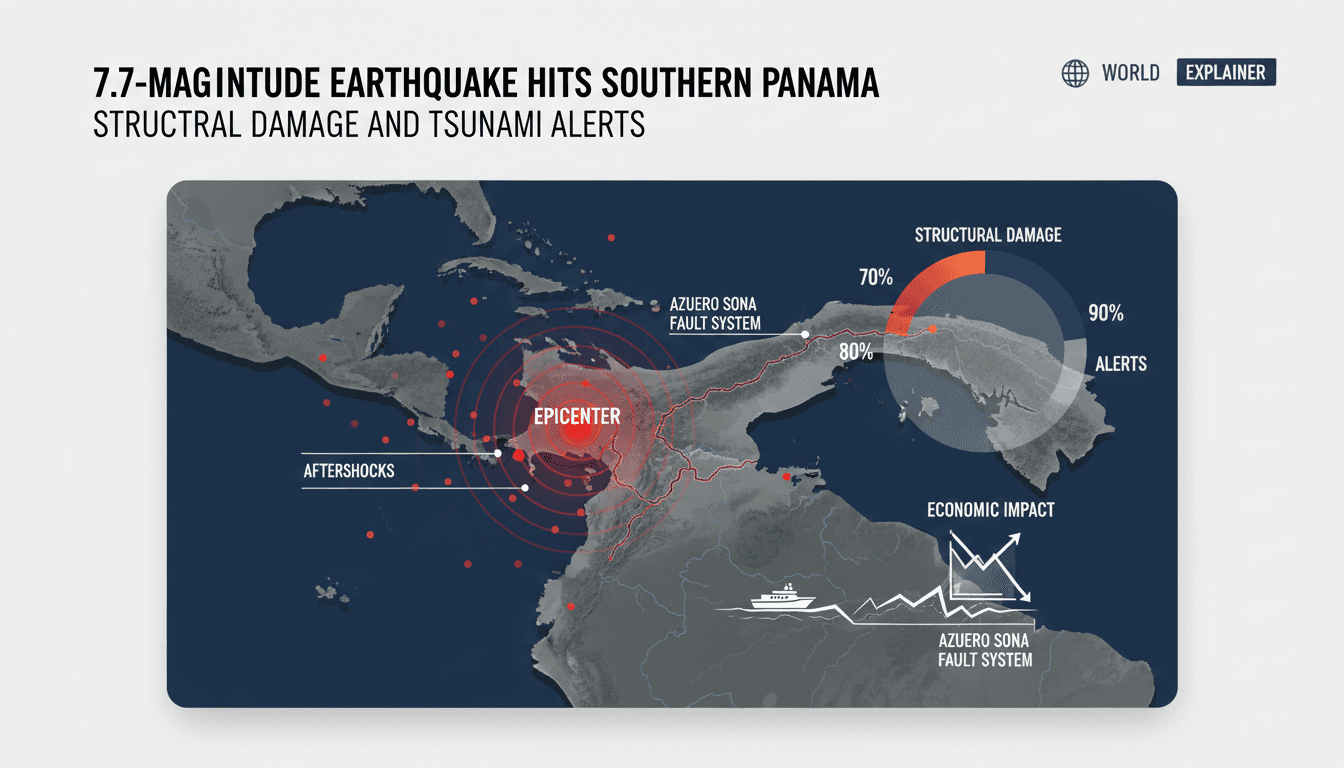
On October 9, 2026, at approximately 12:56 p.m. local time, a 7.7-magnitude earthquake struck near Pitaloza Arriba in Herrera province, Panama. This event was characterized by its shallow depth of 10-12.6 km, which intensified the shaking felt across the nation. The earthquake's epicenter was situated in a region known for its geological instability due to the interaction of the Caribbean and Nazca tectonic plates, part of the Pacific Ring of Fire.
The immediate aftermath saw widespread evacuations in Panama City and significant structural damage reported in central provinces, particularly in Penonomé, where buildings such as the cathedral and governor's palace suffered collapses. The earthquake was followed by a series of aftershocks, including a notable 6.6-magnitude tremor, which further complicated rescue and recovery efforts.
Tsunami warnings were issued for coastal areas in Ecuador, Colombia, Costa Rica, and Mexico, reflecting the potential for broader regional impacts. However, these warnings were lifted shortly after, indicating that the immediate threat had subsided. Despite the chaos, critical infrastructure such as the Panama Canal and major airports reported normal operations after initial inspections, which is crucial for maintaining trade flows.
The economic implications of this earthquake are significant. Preliminary assessments by the US Geological Survey estimate potential economic losses in affected areas could range from 1-10% of GDP. This could have ripple effects on regional economies, particularly those reliant on trade through the Panama Canal. The government, led by President José Raúl Mulino, has declared a major disaster and is coordinating recovery efforts, emphasizing the need for calm among the populace.
As the situation evolves, ongoing assessments will determine the full extent of the damage and the necessary steps for recovery. The earthquake serves as a stark reminder of the vulnerabilities faced by nations situated along tectonic boundaries, where the balance between economic activity and natural disaster risk is a constant challenge.
Who feels it first (and how)
- Local residents in affected provinces face immediate risks to safety and property.
- Businesses reliant on infrastructure, such as the Panama Canal, may experience disruptions in operations.
- International shipping companies could see delays and increased costs due to potential rerouting or damage assessments.
What to watch next
- Infrastructure assessments: Monitoring the speed and effectiveness of damage evaluations will indicate how quickly normal operations can resume.
- Economic recovery plans: The government's response and investment in rebuilding efforts will be crucial for long-term stability in the region.
- Aftershock activity: Continued seismic activity could pose additional risks, affecting recovery efforts and public safety.
The earthquake caused significant structural damage and prompted evacuations.
Economic impacts will be felt in the short term, particularly in trade and local businesses.
The full extent of aftershocks and their implications for ongoing safety and recovery efforts.
Frequently Asked Questions
- Why it matters?
- This seismic event highlights the vulnerabilities of infrastructure and economies in tectonically active regions, affecting international trade routes.
- What happened (in 30 seconds)?
- A 7.7-magnitude earthquake struck southern Panama on October 9, 2026, causing strong shaking and localized damage. Tsunami warnings were issued for several Central and South American coastal areas but were later lifted. Aftershocks followed, including a significant 6.6-magnitude tremor, with ongoing assessments of structural damage.
- What's really happening?
- On October 9, 2026, at approximately 12:56 p.m. local time, a 7.7-magnitude earthquake struck near Pitaloza Arriba in Herrera province, Panama. This event was characterized by its shallow depth of 10-12.6 km, which intensified the shaking felt across the nation. The earthquake's epicenter was situated in a region known for its geological instability due to the interaction of the Caribbean and Nazca tectonic plates, part of the Pacific Ring of Fire. The immediate aftermath saw widespread evacua
- Who feels it first (and how)?
- Local residents in affected provinces face immediate risks to safety and property. Businesses reliant on infrastructure, such as the Panama Canal, may experience disruptions in operations. International shipping companies could see delays and increased costs due to potential rerouting or damage assessments.
- What to watch next?
- Infrastructure assessments: Monitoring the speed and effectiveness of damage evaluations will indicate how quickly normal operations can resume. Economic recovery plans: The government's response and investment in rebuilding efforts will be crucial for long-term stability in the region. Aftershock activity: Continued seismic activity could pose additional risks, affecting recovery efforts and public safety.
International coverage from The Guardian's global desks.
"The Guardian is known for its progressive editorial stance and in-depth analysis."
— A47 Editor
Powerful 7.7-magnitude earthquake strikes Panama and triggers panic in capital
A powerful 7.7-magnitude earthquake struck southern Panama on October 9, 2026, causing damage to buildings and prompting thousands to evacuate into the streets. The quake, which lasted about a minute, was centered approximately 200 km from Panama Cit...
International coverage of politics, culture, and current affairs.
"BBC News is widely regarded as a reputable international news organization, known for its impartial tone and public service mandate."
— A47 Editor
Powerful magnitude 7.7 earthquake hits Panama, damaging buildings
A powerful magnitude 7.7 earthquake struck the central coast of Panama, causing significant damage to buildings and prompting tsunami warnings for neighboring countries. Videos circulating online depict the destruction, raising concerns among residen...
Global news coverage with extensive reporting on Middle Eastern conflicts and geopolitics.
"Al Jazeera is a Qatar-based broadcaster known for wide regional coverage and alternative perspectives."
— A47 Editor
Panama earthquake: Tsunami warnings issued after magnitude 7.7 quake
A powerful 7.7-magnitude earthquake struck southern Panama on October 9, 2026, prompting tsunami warnings for several neighboring countries, including Colombia, Ecuador, Nicaragua, Guatemala, and Chile. The quake caused significant panic, leading to ...
Comprehensive coverage of Middle Eastern and global issues.
"Al Jazeera is a prominent voice from the Global South, especially the Middle East, with an emphasis on underreported stories."
— A47 Editor
Panama earthquake: Tsunami warnings issued after magnitude 7.7 quake
A powerful 7.7-magnitude earthquake struck southern Panama on October 9, 2026, prompting tsunami warnings for several neighboring countries, including Colombia, Ecuador, Nicaragua, Guatemala, and Chile. The quake caused significant panic, leading to ...
24/7 international news from a French perspective in multiple languages.
"France 24 is viewed as a globally focused outlet with balanced coverage and a European perspective."
— A47 Editor
Powerful 7.6 magnitude quake shakes Panama, triggering tsunami warnings
A powerful 7.6 magnitude earthquake struck near the southern coast of Panama on Friday, occurring at a depth of 10 km. The quake was felt in the capital and prompted evacuations, while the US Tsunami Warning System issued alerts for potential tsunami...