
Strait of Hormuz Shipping Traffic Hits Multi-Day Low Amid Iran Conflict
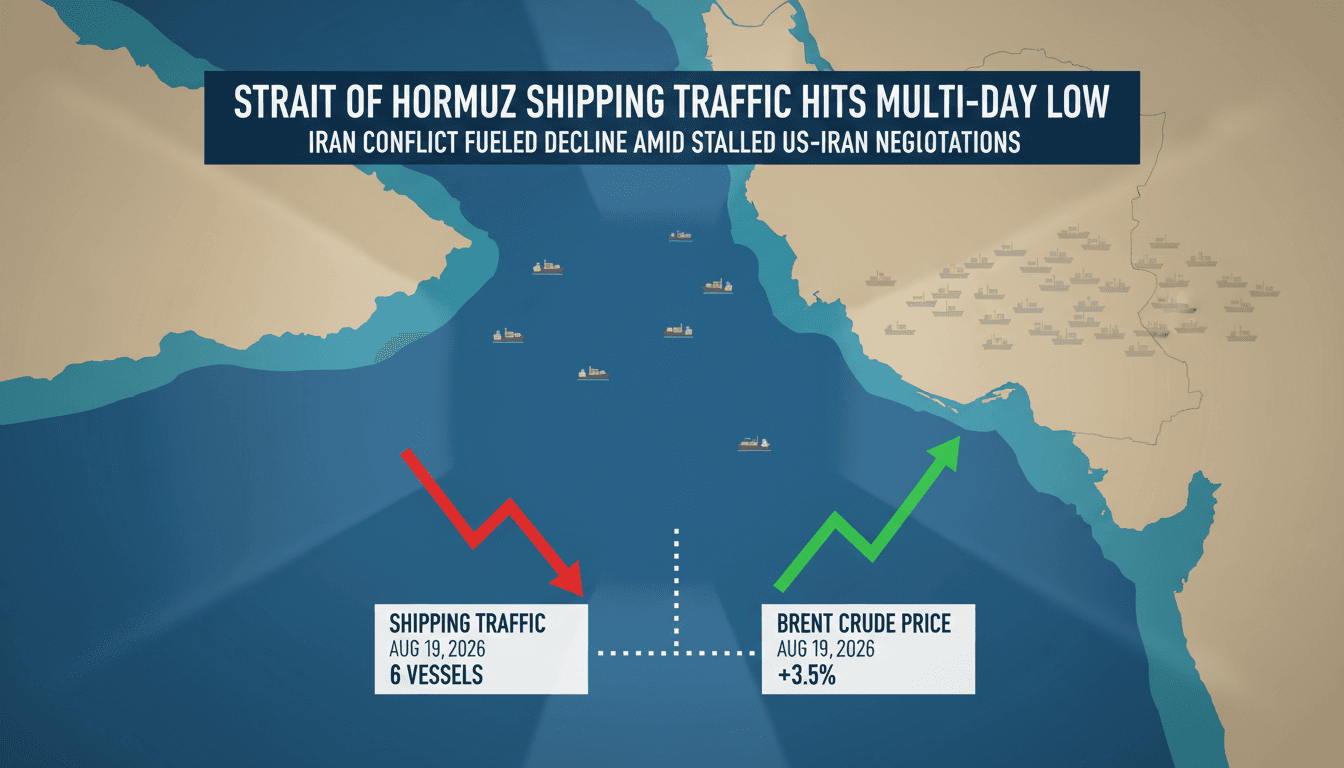
Here's what it means for you.
If you rely on global energy markets, the slowdown in shipping traffic through the Strait of Hormuz could lead to higher prices at the pump and increased costs for goods.
Why it matters
The Strait of Hormuz is a critical chokepoint for global oil and LNG shipments, and disruptions here can ripple through energy markets worldwide.
What happened (in 30 seconds)
- Shipping traffic declined: Only six commodity vessels transited the Strait of Hormuz on August 19, 2026, down from nine the previous day.
- Geopolitical tensions escalated: U.S. and Iranian officials remain at an impasse, with no active peace talks and Iranian demands unmet.
- Energy prices rose: Brent crude futures increased to $91.30 per barrel amid concerns over supply disruptions.
The context you actually need
- Conflict origins: The ongoing Iran conflict began with U.S. and Israeli military strikes on Iran in February 2026, leading to Iranian countermeasures affecting the Strait.
- Ceasefire expiration: An interim ceasefire expired on August 18, 2026, following failed negotiations, exacerbating tensions in the region.
- Economic implications: The decline in shipping traffic is expected to elevate global energy prices, impacting inflation and economic stability.
What's really happening
The Strait of Hormuz is a vital maritime corridor through which approximately one-fifth of the world's oil and liquefied natural gas (LNG) flows. On August 19, 2026, shipping traffic through this critical passageway fell to a multi-day low, with only six vessels transiting, according to Kpler data. This decline is symptomatic of the broader geopolitical tensions stemming from the ongoing conflict between the U.S. and Iran, which escalated following military strikes in February 2026.
The U.S. has maintained a naval blockade on Iranian ports while asserting that the Strait remains open for navigation, following mine clearance operations. However, Iranian officials, including Parliament Speaker Mohammad Bagher Ghalibaf, have stated that the strait will remain effectively closed until U.S. conditions for sanctions relief and blockade removal are met. This standoff has led to a significant reduction in shipping volumes, which have plummeted from pre-conflict norms of over 100 daily transits to just six.
The implications of this decline are far-reaching. As shipping traffic slows, global energy prices are likely to rise, with Brent crude futures already advancing to $91.30 per barrel. This increase can contribute to inflationary pressures, affecting consumers and businesses alike. The uncertainty surrounding the Strait of Hormuz also raises concerns about the stability of energy supplies, which can lead to further volatility in global markets.
Moreover, the lack of active peace talks and the expiration of the ceasefire agreement signal a prolonged period of instability in the region. The U.S. and its allies, including the United Arab Emirates, are prioritizing discussions on Gulf security to safeguard maritime routes critical to regional commerce and energy exports. However, without a resolution to the underlying tensions, the situation is likely to remain precarious.
As the conflict continues, the shipping industry is exhibiting caution, with operators wary of potential disruptions. This hesitance can lead to further declines in shipping volumes, creating a feedback loop that exacerbates the economic impact of the conflict.
Who feels it first (and how)
- Energy consumers: Higher oil prices will lead to increased costs at the gas pump and for heating.
- Shipping companies: Reduced traffic means lower revenues and potential layoffs in the maritime sector.
- Global markets: Investors in energy stocks and commodities may experience volatility and increased risk.
- Businesses reliant on oil: Industries such as transportation and manufacturing may face rising operational costs.
What to watch next
- Shipping volume trends: Monitor daily transits through the Strait of Hormuz for signs of recovery or further decline.
- Diplomatic engagements: Watch for any new negotiations or agreements between the U.S. and Iran that could impact sanctions and blockades.
- Energy price fluctuations: Keep an eye on Brent crude prices as they respond to geopolitical developments and shipping traffic changes.
Shipping traffic through the Strait of Hormuz has significantly declined.
Energy prices will continue to rise as uncertainty persists in the region.
The timeline for potential diplomatic resolutions or changes in Iranian policy remains uncertain.
Frequently Asked Questions
- Why it matters?
- The Strait of Hormuz is a critical chokepoint for global oil and LNG shipments, and disruptions here can ripple through energy markets worldwide.
- What happened (in 30 seconds)?
- Shipping traffic declined: Only six commodity vessels transited the Strait of Hormuz on August 19, 2026, down from nine the previous day. Geopolitical tensions escalated: U.S. and Iranian officials remain at an impasse, with no active peace talks and Iranian demands unmet. Energy prices rose: Brent crude futures increased to $91.30 per barrel amid concerns over supply disruptions.
- What's really happening?
- The Strait of Hormuz is a vital maritime corridor through which approximately one-fifth of the world's oil and liquefied natural gas (LNG) flows. On August 19, 2026, shipping traffic through this critical passageway fell to a multi-day low, with only six vessels transiting, according to Kpler data. This decline is symptomatic of the broader geopolitical tensions stemming from the ongoing conflict between the U.S. and Iran, which escalated following military strikes in February 2026. The U.S. ha
- Who feels it first (and how)?
- Energy consumers: Higher oil prices will lead to increased costs at the gas pump and for heating. Shipping companies: Reduced traffic means lower revenues and potential layoffs in the maritime sector. Global markets: Investors in energy stocks and commodities may experience volatility and increased risk. Businesses reliant on oil: Industries such as transportation and manufacturing may face rising operational costs.
- What to watch next?
- Shipping volume trends: Monitor daily transits through the Strait of Hormuz for signs of recovery or further decline. Diplomatic engagements: Watch for any new negotiations or agreements between the U.S. and Iran that could impact sanctions and blockades. Energy price fluctuations: Keep an eye on Brent crude prices as they respond to geopolitical developments and shipping traffic changes.
Macro commentary, policy analysis, growth/inflation themes, and global outlooks.
"Contextual macro coverage that complements day-to-day market headlines."
— A47 Editor
Hormuz shipping traffic slows as Iran war uncertainty persists - Reuters
Shipping traffic through the Strait of Hormuz has slowed significantly due to ongoing uncertainties surrounding the conflict in Iran, reflecting a broader decline in maritime activity. This situation has raised concerns about the stability of oil sup...
International news coverage curated for readers in the UAE and Gulf region.
"Emirates 24|7 world coverage presents global developments through a UAE-facing and Gulf-relevant editorial lens."
— A47 Editor
Hormuz traffic slows as uncertainty over waterway persists
Shipping traffic through the Strait of Hormuz has significantly slowed, with only six vessels crossing on Tuesday, a decrease from nine the previous day and below the 10-day average of 11, amid ongoing uncertainty regarding the waterway's reopening f...
Regional coverage and analysis focused on politics, diplomacy, and business across the Middle East.
"Al-Monitor is known for analytical reporting on Middle East politics and policy developments."
— A47 Editor
Hormuz traffic slows as uncertainty over waterway persists
Shipping traffic through the Strait of Hormuz has significantly slowed, with only six vessels crossing on Tuesday, down from nine the previous day and below the 10-day average of 11, as uncertainty persists regarding the waterway's reopening followin...
English-language digital publication covering business, politics, technology, and current affairs.
"The Arabian Post mixes original and syndicated-style coverage with a broad regional and global business-news orientation."
— A47 Editor
Hormuz shipping remains severely curtailed amid tensions
<p>Shipping through the Strait of Hormuz remained severely restricted on Tuesday as vessel movements stayed in single digits, while another ship was struck by an unidentified projectile and diplomatic efforts to ease the US-Iran confrontation remaine...