
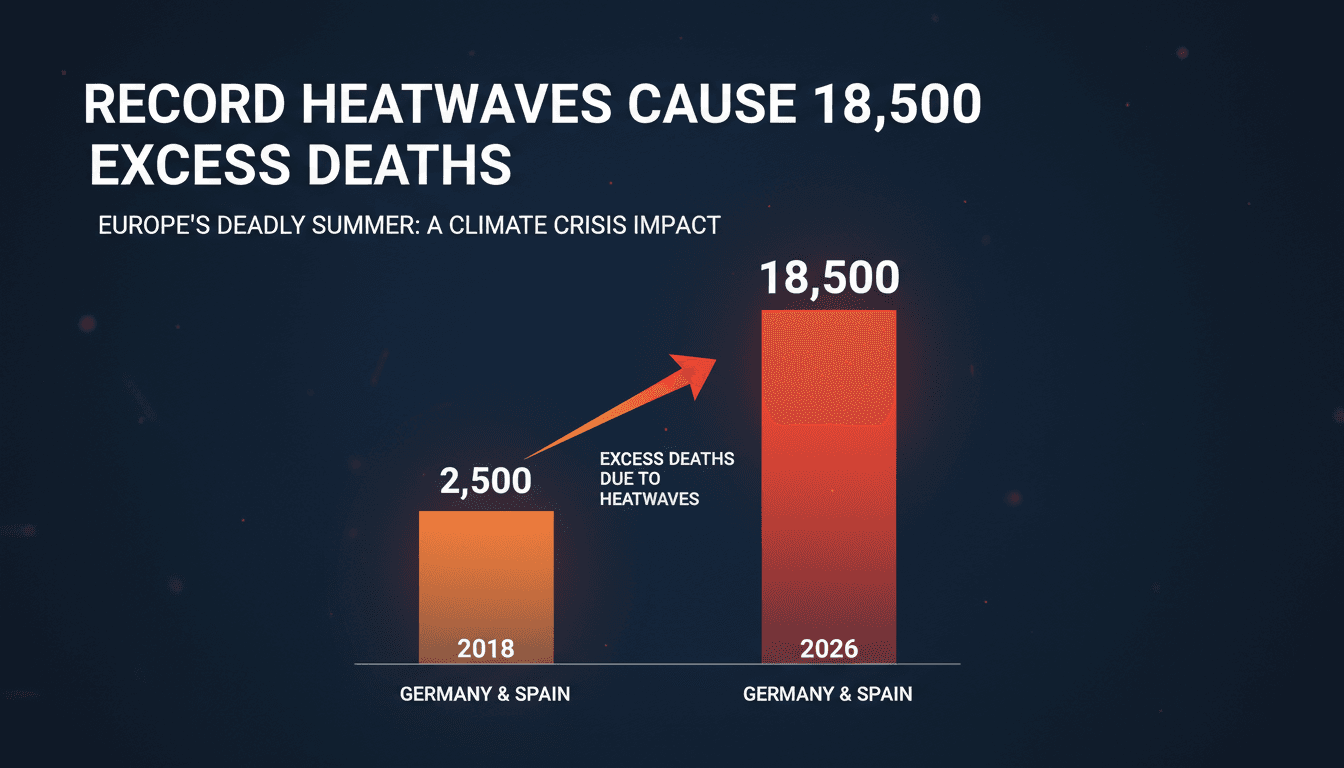
Record Heatwaves Cause 18,500 Excess Deaths in Germany and Spain
Why it matters
The unprecedented heat-related mortality rates signal a critical public health crisis that could reshape healthcare systems and energy demands across Europe.
What happened (in 30 seconds)
- Germany reported approximately 14,000 heat-related deaths during the summer of 2026, surpassing its previous record of 8,900 in 2018.
- Spain documented 4,458 deaths from June 1 to August 19, marking the highest mid-summer toll since 2022.
- Health authorities utilized excess mortality analysis to confirm the impact of extreme heat events, revealing a cumulative toll on vulnerable populations.
The context you actually need
- Heatwaves have intensified across Europe due to climate change, with notable events in 2018 and 2022 establishing baselines for mortality tracking.
- The summer of 2026 featured multiple prolonged high-temperature periods, with record highs exceeding 40°C in parts of Germany, exacerbating risks for the elderly and those with pre-existing conditions.
- Official estimates released on August 20, 2026, confirmed that the heat-related deaths exceeded recent historical peaks, highlighting the urgent need for enhanced public health measures.
What's really happening
The summer of 2026 marked a turning point in Europe’s battle against extreme heat, with health authorities in Germany and Spain reporting approximately 18,500 excess deaths attributed to heatwaves. This staggering figure is not just a number; it reflects a growing public health crisis exacerbated by climate change. The Robert Koch Institute and Carlos III Health Institute utilized excess mortality analysis to quantify the impact of these heat events, revealing that Germany alone recorded around 14,000 deaths, a significant increase from the previous record of 8,900 in 2018.
The heatwaves began intensifying in early June, culminating in a severe episode in late June that accounted for 9,600 deaths in just one week. This spike in mortality is indicative of the vulnerabilities faced by certain demographics, particularly the elderly and those with pre-existing health conditions. As temperatures soared, so did the risks associated with heat exposure, leading to a cascading effect on public health systems already strained by other factors.
Spain's figures, with 4,458 deaths reported from June to mid-August, also highlight the severity of the situation. This marked the highest mid-summer mortality since 2022, coinciding with concurrent wildfires and drought conditions that further stressed the population. The cumulative impact of these extreme heat events is a wake-up call for European nations, emphasizing the need for robust climate resilience measures.
In response to these alarming statistics, German and Spanish authorities have begun to enhance heat-warning systems and public health advisories aimed at protecting vulnerable groups. This proactive approach is crucial as Europe grapples with the implications of climate change on public health and energy demands. The discussions surrounding climate resilience are likely to influence policy decisions, particularly in urban planning and healthcare preparedness, as nations strive to mitigate the impacts of future heat events.
Who feels it first (and how)
- Elderly populations: Increased vulnerability to heat-related illnesses and mortality.
- Healthcare providers: Strain on resources and capacity to manage heat-related health crises.
- Urban planners: Need for adaptive strategies in city design to mitigate heat exposure.
- Energy sectors: Increased demand for cooling solutions and energy supply during heatwaves.
What to watch next
- Policy changes in public health: Look for new regulations aimed at protecting vulnerable populations during heat events.
- Investment in climate resilience: Monitor funding and initiatives aimed at enhancing infrastructure to cope with extreme temperatures.
- Public health advisories: Watch for updates on heat-warning systems and their effectiveness in reducing mortality rates.
Heat-related mortality rates are rising due to climate change.
Increased public health initiatives and climate resilience measures will be implemented across Europe.
The long-term effectiveness of these measures in reducing future heat-related deaths.
Frequently Asked Questions
- Why it matters?
- The unprecedented heat-related mortality rates signal a critical public health crisis that could reshape healthcare systems and energy demands across Europe.
- What happened (in 30 seconds)?
- Germany reported approximately 14,000 heat-related deaths during the summer of 2026, surpassing its previous record of 8,900 in 2018. Spain documented 4,458 deaths from June 1 to August 19, marking the highest mid-summer toll since 2022. Health authorities utilized excess mortality analysis to confirm the impact of extreme heat events, revealing a cumulative toll on vulnerable populations.
- What's really happening?
- The summer of 2026 marked a turning point in Europe’s battle against extreme heat, with health authorities in Germany and Spain reporting approximately 18,500 excess deaths attributed to heatwaves. This staggering figure is not just a number; it reflects a growing public health crisis exacerbated by climate change. The Robert Koch Institute and Carlos III Health Institute utilized excess mortality analysis to quantify the impact of these heat events, revealing that Germany alone recorded around
- Who feels it first (and how)?
- Elderly populations: Increased vulnerability to heat-related illnesses and mortality. Healthcare providers: Strain on resources and capacity to manage heat-related health crises. Urban planners: Need for adaptive strategies in city design to mitigate heat exposure. Energy sectors: Increased demand for cooling solutions and energy supply during heatwaves.
- What to watch next?
- Policy changes in public health: Look for new regulations aimed at protecting vulnerable populations during heat events. Investment in climate resilience: Monitor funding and initiatives aimed at enhancing infrastructure to cope with extreme temperatures. Public health advisories: Watch for updates on heat-warning systems and their effectiveness in reducing mortality rates.
Arabic-language sports reporting covering UAE competitions and major international events.
"Emarat Al Youm sports coverage is mainstream and accessible, with strong emphasis on UAE and regional sport."
— A47 Editor
18.5 ألف شخص في ألمانيا وإسبانيا ماتوا بسبب «الحرّ» 18.5 ألف شخص في ألمانيا وإسبانيا ماتوا بسبب «الحرّ»
Approximately 14,000 people died this summer in Germany due to heatwaves, significantly surpassing the record death toll recorded in 2018. This alarming statistic highlights the severe impact of extreme weather conditions on public health in the regi...
Jordanian news and regional updates.
"Roya News is a Jordanian outlet focused on breaking news and local affairs."
— A47 Editor
موجات الحر تتسبب بوفاة نحو 14 ألف شخص في ألمانيا و4500 في إسبانيا
Recent heatwaves in Germany and Spain have resulted in approximately 14,000 and 4,500 deaths, respectively, with the highest fatalities reported among the elderly population. These extreme weather conditions highlight the severe impact of climate cha...
Pan-Arab news coverage spanning politics, business, sports, and regional affairs.
"Asharq Al-Awsat reflects a broad Arab editorial perspective with strong attention to regional geopolitics."
— A47 Editor
الحر يحصد أرواح نحو 4500 شخص في إسبانيا منذ مطلع يونيو
Approximately 4,500 people have died due to heatwaves in Spain between June 1 and August 19, marking a record number for this period that has not been seen since 2022.