
Gulf Arab States Expand Oil Export Routes Amid Iranian Disruptions
Here's what it means for you.
If you rely on global oil markets, the Gulf's shift away from the Strait of Hormuz could impact prices and availability.
Why it matters
The Gulf Arab States' pivot to alternative oil export routes is reshaping global energy security and pricing dynamics.
What happened (in 30 seconds)
- Iranian attacks have restricted commercial shipping through the Strait of Hormuz since March 2026, disrupting about 20% of global oil flows.
- Gulf nations are expanding alternative routes via pipelines and non-Hormuz ports to mitigate Iranian leverage amid ongoing regional conflict.
- U.S. naval oversight is currently directing traffic through the strait, but disruptions have halved pre-conflict oil shipments.
The context you actually need
- The Strait of Hormuz is a critical chokepoint for global oil, with prewar flows reaching approximately 20 million barrels per day.
- Iran's retaliatory actions against U.S.-Israeli strikes have included mining and attacks on vessels, leading to a significant decline in traffic.
- Gulf producers are investing in infrastructure to diversify their export routes, but challenges remain, including capacity limits and security threats.
What's really happening
Since March 2026, the Strait of Hormuz has faced significant disruptions due to Iranian military actions, which have included attacks on vessels and mining operations. This critical waterway, which previously facilitated the transit of around 20 million barrels of oil daily, has seen traffic drop to less than half of its pre-conflict levels. The situation escalated following U.S. and Israeli airstrikes on Iran that began on February 28, 2026, prompting Iranian retaliation and a series of maritime confrontations.
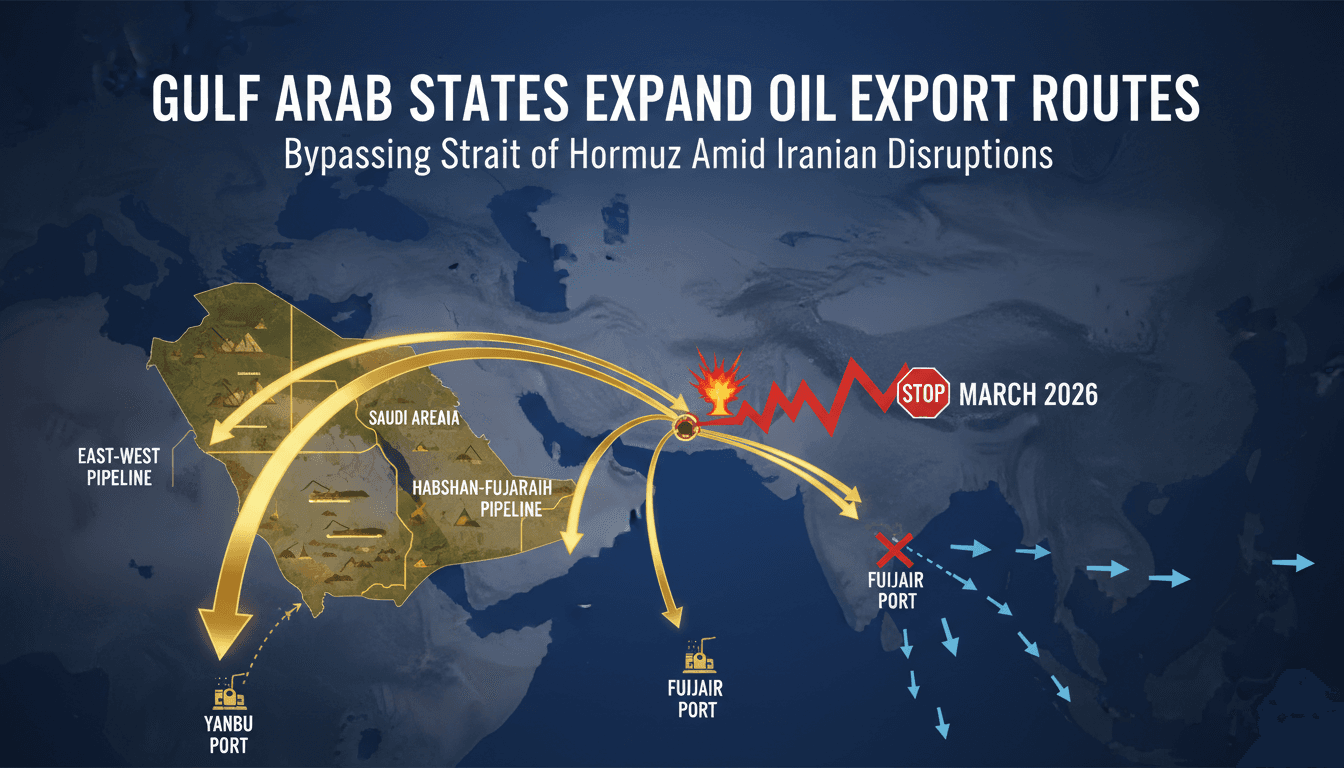
In response, Gulf Arab States, particularly Saudi Arabia and the UAE, have accelerated efforts to develop alternative oil export routes. Saudi Arabia has increased its exports through the Yanbu port on the Red Sea, while the UAE has expanded operations at Fujairah terminals on the Gulf of Oman. Iraq is also exploring the revival of the Haditha-Baniyas pipeline to facilitate oil transport to Mediterranean ports. These initiatives are aimed at reducing reliance on the Strait of Hormuz and mitigating Iranian influence over oil flows.
Despite these efforts, challenges persist. The alternative routes currently cover only about half of the previous volume of oil transported through the strait, and security threats from Houthi forces targeting Red Sea ports remain a concern. Additionally, the timeline for significant infrastructure upgrades, such as doubling Fujairah's output by 2027, is lengthy, and sporadic attacks continue to disrupt operations. The U.S. Navy's presence in the region has been crucial in directing traffic and ensuring some level of security, but the risk of further Iranian aggression looms large.
As Gulf nations invest heavily in bypass infrastructure, the implications for global oil markets are profound. The volatility in oil prices, with Brent crude rising 20-30% from prewar levels, reflects the uncertainty surrounding these developments. The shift towards alternative routes may become a permanent feature of the energy landscape, driven by the sunk costs of new infrastructure and the ongoing geopolitical tensions in the region.
Who feels it first (and how)
- Oil producers in the Gulf, who are diversifying their export routes to maintain revenue.
- Global consumers, particularly in energy-dependent sectors, facing higher fuel prices due to increased crude costs.
- Investors in energy markets, who must navigate the volatility stemming from geopolitical tensions and supply chain disruptions.
What to watch next
- Infrastructure developments: Monitor the progress of pipeline and port expansions, as successful upgrades could stabilize oil flows.
- Geopolitical tensions: Keep an eye on Iranian actions and U.S. responses, as escalations could further disrupt oil markets.
- Global oil prices: Watch for fluctuations in Brent crude prices, which will reflect the ongoing impacts of these geopolitical shifts.
The Strait of Hormuz is currently experiencing reduced oil traffic due to Iranian disruptions.
Gulf nations will continue to invest in alternative routes to mitigate risks associated with the strait.
The long-term stability of oil prices and supply chains in the wake of these geopolitical changes remains uncertain.
Frequently Asked Questions
- Why it matters?
- The Gulf Arab States' pivot to alternative oil export routes is reshaping global energy security and pricing dynamics.
- What happened (in 30 seconds)?
- Iranian attacks have restricted commercial shipping through the Strait of Hormuz since March 2026, disrupting about 20% of global oil flows. Gulf nations are expanding alternative routes via pipelines and non-Hormuz ports to mitigate Iranian leverage amid ongoing regional conflict. U.S. naval oversight is currently directing traffic through the strait, but disruptions have halved pre-conflict oil shipments.
- What's really happening?
- Since March 2026, the Strait of Hormuz has faced significant disruptions due to Iranian military actions, which have included attacks on vessels and mining operations. This critical waterway, which previously facilitated the transit of around 20 million barrels of oil daily, has seen traffic drop to less than half of its pre-conflict levels. The situation escalated following U.S. and Israeli airstrikes on Iran that began on February 28, 2026, prompting Iranian retaliation and a series of maritim
- Who feels it first (and how)?
- Oil producers in the Gulf, who are diversifying their export routes to maintain revenue. Global consumers, particularly in energy-dependent sectors, facing higher fuel prices due to increased crude costs. Investors in energy markets, who must navigate the volatility stemming from geopolitical tensions and supply chain disruptions.
- What to watch next?
- Infrastructure developments: Monitor the progress of pipeline and port expansions, as successful upgrades could stabilize oil flows. Geopolitical tensions: Keep an eye on Iranian actions and U.S. responses, as escalations could further disrupt oil markets. Global oil prices: Watch for fluctuations in Brent crude prices, which will reflect the ongoing impacts of these geopolitical shifts.
Conservative-leaning political and national coverage.
"The Washington Times is a conservative-leaning newspaper known for its political coverage and advocacy of right-of-center viewpoints."
— A47 Editor
The Fate of Hormuz: Iranian attacks force Gulf nations to find work-arounds to war-zone waterway
The ongoing crisis in the Strait of Hormuz has prompted Gulf nations to seek alternative routes for oil exports, as Iranian attacks have heightened tensions in this critical maritime passage. This shift aims to alleviate the global supply crunch whil...
Corporate leadership, finance, technology, and market trends.
"Fortune covers financial trends, leadership, and innovation with a pragmatic editorial approach."
— A47 Editor
The global ‘freedom of the seas’ is dying in the Strait of Hormuz—and everyone, everywhere, could pay the tolls
Iran's recent proposal to implement a toll system for ships navigating the Strait of Hormuz has raised significant concerns about the future of maritime trade in this critical waterway, which is vital for global oil transport. This move could lead to...
Global business headlines with AI angles.
"General business outlet that frequently covers AI."
— A47 Editor
U.S.-Iran Tensions Keep The Strait Of Hormuz Closed With No End in Sight. Stocks Declined.
Tensions between the U.S. and Iran have escalated, leading to the closure of the Strait of Hormuz, a critical waterway for global oil shipments. A recent report indicates that Iranian leadership is taking steps to widen the conflict, further complica...
Markets desk coverage, trading insights, and investor updates.
"WSJ’s markets reporting provides in-depth analysis and context for investors."
— A47 Editor
Oil Futures Rise as Hormuz Shipping Remains Constrained
Oil futures have risen as tensions between the U.S. and Iran over the Strait of Hormuz continue, with President Trump indicating a lack of urgency in resolving the conflict. This geopolitical strife has led to concerns about shipping constraints in t...
RT is a Russian state-funded network covering global events from a Russian perspective.
"RT is widely criticized for promoting pro-Kremlin narratives and is considered by many to be a state propaganda outlet."
— A47 Editor
‘Dark’ oil trade still flowing despite Hormuz disruption – Bloomberg
Despite ongoing disruptions in the Strait of Hormuz due to escalating tensions between the U.S. and Iran, Gulf producers are reportedly continuing to transport crude oil using tankers with transponders turned off. This 'dark' oil trade highlights the...