
Mass Unauthorized Migrant Crossings into Ceuta from Morocco Result in Humanitarian Crisis
Here's what it means for you.
The ongoing migrant crisis in Ceuta could influence European migration policies, affecting global labor markets and international relations.
Why it matters
The crisis highlights the fragility of border management in Europe and the potential for increased migration pressures that could reshape labor dynamics.
What happened (in 30 seconds)
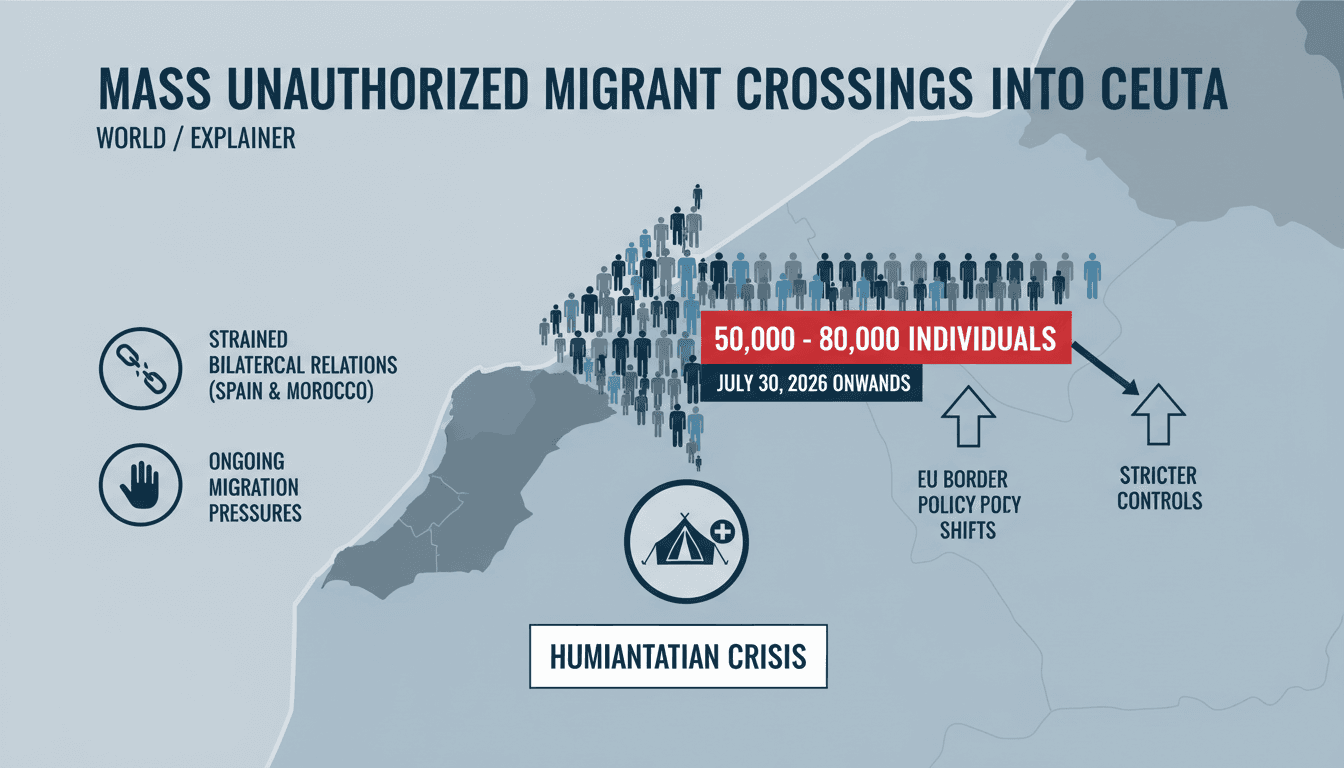
- Mass crossings began on July 30, 2026, with estimates of 50,000 to 80,000 migrants entering Ceuta from Morocco.
- At least 111 deaths were reported due to drowning and stampedes amid the chaotic influx.
- Spanish authorities initiated rapid returns, with 48,000 to 70,000 migrants sent back to Morocco by July 31.
The context you actually need
- Ceuta's geographical position as an EU border adjacent to Morocco makes it a hotspot for migration attempts.
- Strained relations between Spain and Morocco over migration control agreements have contributed to the crisis.
- Smuggling networks have facilitated irregular migration, exacerbating the situation as economic conditions in North Africa worsen.
What's really happening
The migrant crisis in Ceuta is a culmination of various factors, including geopolitical tensions, economic instability in North Africa, and the ongoing challenges of managing migration flows into Europe. On July 30, 2026, a significant surge of migrants, primarily young men from Morocco, breached the border into Ceuta, a Spanish exclave. This event was not an isolated incident but rather a reflection of the escalating pressures on migration routes due to deteriorating conditions in their home countries.
The Spanish Interior Ministry reported that between 50,000 and 80,000 individuals crossed into Ceuta within a short timeframe, overwhelming local infrastructure and resources. The immediate response involved Spanish forces and local authorities managing the influx, which tragically resulted in at least 111 deaths from drowning and stampedes. The rapid return of migrants was facilitated through cooperation between Spain and Morocco, with estimates indicating that approximately 48,000 to 70,000 individuals were sent back by July 31.
This crisis has broader implications for European migration policy. The European Union's response has been mixed, with some member states praising Spain's swift actions while others criticized perceived failures in border management. The situation has reignited debates about the effectiveness of current migration policies and the need for enhanced border controls across the EU. Additionally, far-right political groups have seized upon the crisis to advocate for stricter immigration measures, framing the surge as a consequence of Spanish policies.
The humanitarian aspect cannot be overlooked. The mayor of Ceuta described the conditions as unsustainable, calling for the establishment of detention facilities to manage the remaining migrants. As of now, estimates suggest that between 3,000 and 11,000 migrants still remain in Ceuta, straining local resources and prompting emergency measures.
The crisis also underscores the role of smuggling networks that exploit vulnerable populations seeking better opportunities in Europe. These networks thrive in environments where economic conditions are dire, and political instability prevails, leading to increased irregular migration attempts. The situation in Ceuta is emblematic of a larger trend in migration patterns, where individuals are willing to risk their lives for the chance of a better future.
Who feels it first (and how)
- Local authorities in Ceuta: Strained resources and emergency measures to manage the influx.
- Migrants: Facing dangerous conditions and uncertain futures.
- European policymakers: Under pressure to address migration issues and border management.
- Businesses in Ceuta: Potential impacts on local economies due to resource strain and changing demographics.
What to watch next
- EU policy discussions: Watch for changes in migration policies and border management strategies in response to the crisis.
- Return agreements with Morocco: Monitor the effectiveness and humanitarian implications of accelerated return processes.
- Political shifts in Europe: Observe how far-right groups leverage the crisis to influence immigration policies across the continent.
The number of migrants who crossed into Ceuta and the immediate humanitarian impact.
Increased political pressure on EU member states to reform migration policies.
The long-term effects on local economies and social dynamics in Ceuta and surrounding regions.
Frequently Asked Questions
- Why it matters?
- The crisis highlights the fragility of border management in Europe and the potential for increased migration pressures that could reshape labor dynamics.
- What happened (in 30 seconds)?
- Mass crossings began on July 30, 2026, with estimates of 50,000 to 80,000 migrants entering Ceuta from Morocco. At least 111 deaths were reported due to drowning and stampedes amid the chaotic influx. Spanish authorities initiated rapid returns, with 48,000 to 70,000 migrants sent back to Morocco by July 31.
- What's really happening?
- The migrant crisis in Ceuta is a culmination of various factors, including geopolitical tensions, economic instability in North Africa, and the ongoing challenges of managing migration flows into Europe. On July 30, 2026, a significant surge of migrants, primarily young men from Morocco, breached the border into Ceuta, a Spanish exclave. This event was not an isolated incident but rather a reflection of the escalating pressures on migration routes due to deteriorating conditions in their home co
- Who feels it first (and how)?
- Local authorities in Ceuta: Strained resources and emergency measures to manage the influx. Migrants: Facing dangerous conditions and uncertain futures. European policymakers: Under pressure to address migration issues and border management. Businesses in Ceuta: Potential impacts on local economies due to resource strain and changing demographics.
- What to watch next?
- EU policy discussions: Watch for changes in migration policies and border management strategies in response to the crisis. Return agreements with Morocco: Monitor the effectiveness and humanitarian implications of accelerated return processes. Political shifts in Europe: Observe how far-right groups leverage the crisis to influence immigration policies across the continent.
Global political, business, and cultural coverage from WSJ international desks.
"The Wall Street Journal offers extensive international reporting with a reputation for financial insight and a center-right editorial stance."
— A47 Editor
The Tiny Spanish Territory of Ceuta Is Grappling With a New Migrant Crisis
An estimated 5,000 people are living in open-air, makeshift camps that have popped up across the exclave of Ceuta.
24/7 international news from a French perspective in multiple languages.
"France 24 is viewed as a globally focused outlet with balanced coverage and a European perspective."
— A47 Editor
In Ceuta, migrants stranded at Europe’s gates await their fate
In Ceuta, a Spanish enclave, approximately 70,000 migrants attempted to cross from Morocco, leading to a humanitarian crisis. Many of those who chose to remain have settled on El Trampolin beach, where they await their uncertain futures. The situatio...
Global coverage of politics, crises, and international affairs.
"HuffPost provides progressive-oriented reporting on international developments, often focusing on humanitarian and social justice issues."
— A47 Editor
A Physicist, A Soccer Player, A Teen: The Lives Lost In The Ceuta Tragedy
A recent surge of over 60,000 migrants from Morocco attempted to cross into Spain's Ceuta enclave, resulting in a humanitarian crisis marked by at least 72 reported fatalities. This tragic event highlights the dire circumstances faced by many individ...
RT is a Russian state-funded network covering global events from a Russian perspective.
"RT is widely criticized for promoting pro-Kremlin narratives and is considered by many to be a state propaganda outlet."
— A47 Editor
WATCH hundreds of migrants demand asylum in Spanish enclave
Hundreds of Moroccan migrants have gathered in Ceuta, a Spanish enclave, demanding asylum as the region faces a significant influx of migrants, overwhelming local authorities. This protest follows a recent surge where approximately 60,000 migrants cr...