
Ceasefires in the Middle East collapse amid escalating violence
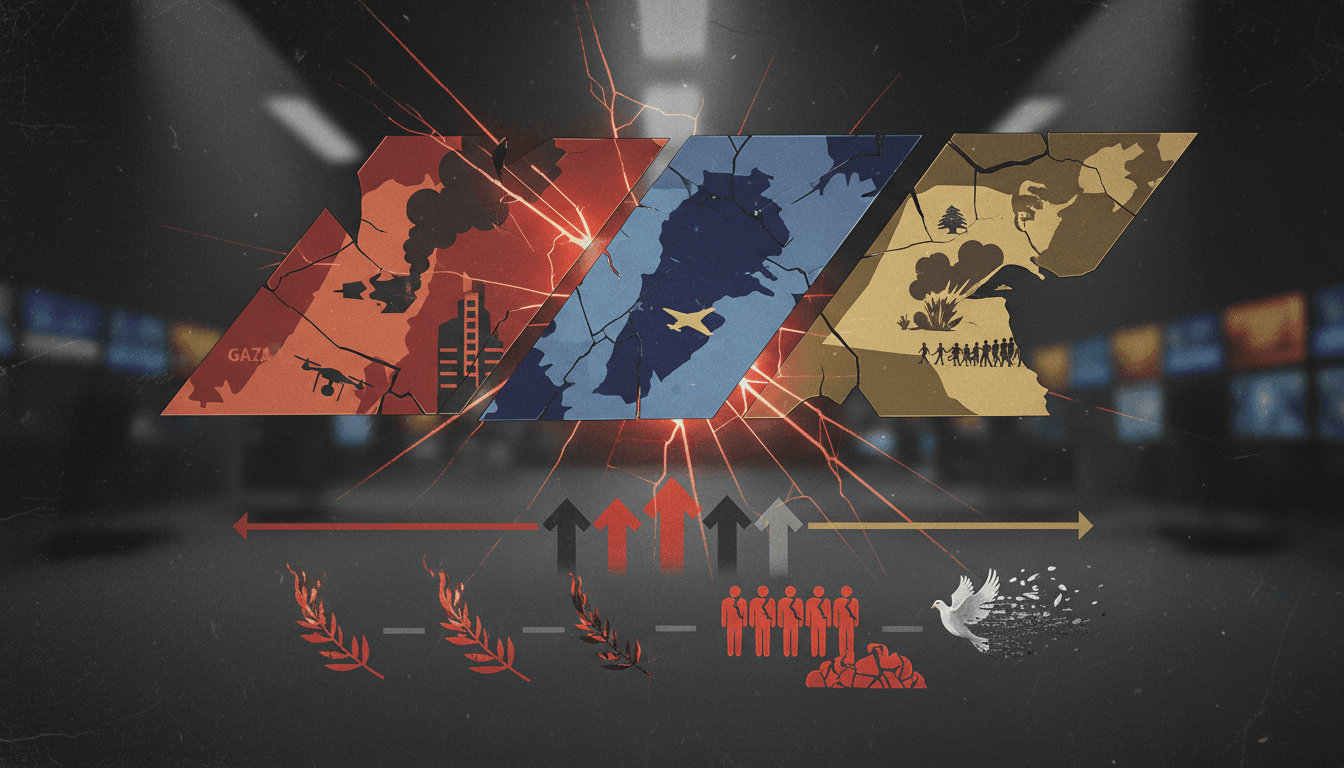
Here's what it means for you.
The failure of U.S.-brokered ceasefires in the Middle East signals a troubling trend for regional stability and international relations. As violence escalates, businesses and policymakers must prepare for potential disruptions in trade and security. The humanitarian crisis is deepening, which could lead to increased calls for intervention and support from the international community. The ongoing conflict may also affect energy markets, particularly with tensions surrounding the Strait of Hormuz. Stakeholders should closely monitor developments as they could have far-reaching implications for global diplomacy and economic stability.
What happened
Ceasefires in the Middle East have collapsed, resulting in continued violence across Gaza, Lebanon, and Kuwait. Recent military operations, including Iranian drone attacks and Israeli airstrikes, have exacerbated the situation, leading to significant casualties. In Kuwait, a drone attack resulted in one death and over 60 injuries, highlighting the immediate human cost of the conflict.
Israeli forces remain actively deployed in both Gaza and Lebanon, despite the existence of ceasefires. Hezbollah has also engaged in retaliatory actions, launching rockets into northern Israel. This ongoing cycle of violence underscores the fragility of peace efforts in the region.
The Context
The current escalation is rooted in a complex web of geopolitical tensions involving multiple state and non-state actors. U.S. President Donald Trump has characterized the ceasefires as merely a shift to "shooting in a more moderate manner," rather than a true cessation of hostilities. The involvement of Iran, particularly through drone attacks, complicates the situation further, as it raises concerns about regional security and the potential for wider conflict.
The timeline of events has seen rapid developments, with Iranian drones attacking Kuwait's airport on June 3, 2026, followed by President Trump's comments on June 4, 2026. The ongoing violence not only destabilizes the region but also poses challenges for diplomatic negotiations aimed at achieving lasting peace.
Takeaway
The outlook for the Middle East remains bleak as military actions persist and diplomatic efforts struggle to gain traction. Stakeholders should monitor U.S.-Iran negotiations closely, as any shifts in these discussions could significantly impact regional stability. Additionally, responses from Israel and Hezbollah following ongoing military exchanges will be crucial in determining the trajectory of the conflict.
As the situation evolves, the potential for further escalation looms large, making it imperative for international actors to engage proactively in seeking resolutions. The humanitarian impact continues to grow, emphasizing the urgent need for effective diplomatic interventions.
News from the United States including domestic politics, society, and culture.
"The Guardian is known for its progressive editorial stance and in-depth analysis, often advocating for social justice, environmental issues, and liberal values."
— A47 Editor
Friday briefing: How Gaza, Lebanon and Iran have found themselves caught in an escalation without end
Recent escalations in the Middle East have seen increased military actions, with Iran launching drone attacks in the Persian Gulf and the U.S. responding with strikes on Qeshm Island. This week, Lebanon has also experienced a rise in bombings, contri...
International coverage from The Guardian's global desks.
"The Guardian is known for its progressive editorial stance and in-depth analysis."
— A47 Editor
Friday briefing: How Gaza, Lebanon and Iran have found themselves caught in an escalation without end
Recent escalations in the Middle East have seen increased military actions, with Iran launching drone attacks in the Persian Gulf and the U.S. responding with strikes on Qeshm Island. This week, Lebanon has also experienced a rise in bombings, contri...
Regional coverage and analysis focused on politics, diplomacy, and business across the Middle East.
"Al-Monitor is known for analytical reporting on Middle East politics and policy developments."
— A47 Editor
Explainer-How Trump's ceasefires are failing to stop Middle East violence
Despite U.S.-arranged ceasefires, violence continues in Gaza, southern Lebanon, northern Israel, and Kuwait, with Israeli airstrikes and Hezbollah rocket attacks reported this week. President Trump remarked that ceasefires in the region involve a mod...
24/7 international news from a French perspective in multiple languages.
"France 24 is viewed as a globally focused outlet with balanced coverage and a European perspective."
— A47 Editor
Trump denies impasse in Iran talks after fresh strikes on Gulf countries
A fragile ceasefire between the U.S. and Iran has been further strained following an Iranian drone attack on Kuwait's airport, which resulted in one death and numerous injuries. This attack came after U.S. military strikes on Iranian radar sites on Q...
European coverage of Middle East politics and security issues.
"France 24 offers international reporting with a European editorial perspective."
— A47 Editor
Trump denies impasse in Iran talks after fresh strikes on Gulf countries
A fragile ceasefire between the U.S. and Iran has been further strained following an Iranian drone attack on Kuwait's airport, which resulted in one death and numerous injuries. This attack came after U.S. military strikes on Iranian radar sites on Q...
International coverage of politics, security, and social issues.
"Global News is a mainstream Canadian outlet with a centrist editorial stance, focusing on factual reporting."
— A47 Editor
U.S., Iran continue trading strikes as peace talks drag on for weeks
The ongoing military exchanges between the U.S. and Iran have intensified, with the U.S. conducting self-defense strikes on Iranian radar and drone control sites, while Iran retaliated by targeting a U.S. air base. These developments occur amidst sta...
Global political, business, and cultural coverage from WSJ international desks.
"The Wall Street Journal offers extensive international reporting with a reputation for financial insight and a center-right editorial stance."
— A47 Editor
The Three Mideast Ceasefires That Look Like War Right Now
In recent weeks, military operations have escalated in Gaza, Lebanon, and the Persian Gulf, with Israeli airstrikes intensifying despite ongoing ceasefires. These actions have resulted in significant casualties and heightened tensions in the region, ...