
Somali Pirates Hijack Tanker Sibu 1 in Gulf of Aden
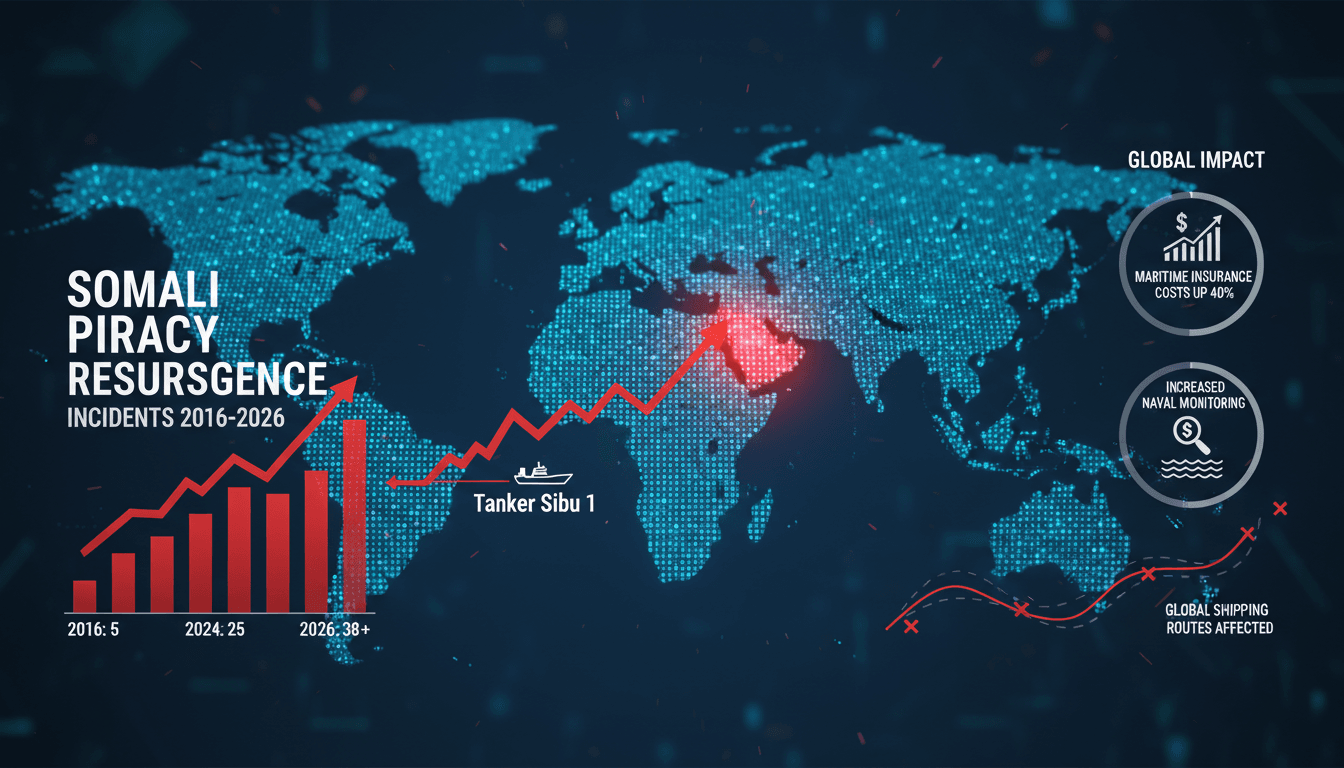
Here's what it means for you.
Increased piracy risks could lead to higher shipping costs and insurance premiums, impacting global trade routes.
Why it matters
The resurgence of Somali piracy threatens a critical maritime corridor that carries 12-15% of global trade by value.
What happened (in 30 seconds)
- On August 20, 2026, six armed men seized the product tanker Sibu 1 in the Gulf of Aden and diverted it toward Somalia.
- The vessel, previously under U.S. sanctions for ties to Iranian petroleum transport, transmitted a distress call before being boarded.
- Maritime authorities are investigating the incident, with no confirmed details on the crew's status reported yet.
The context you actually need
- Somali piracy peaked between 2008 and 2012, leading to significant vessel seizures and ransoms, but had declined due to international naval patrols.
- Recent incidents, including the hijacking of another tanker and a cargo ship, indicate a resurgence of piracy activities in the region.
- The Sibu 1, managed by a Dubai-based company, links this incident to broader regional tensions affecting shipping routes critical for global trade.
What's really happening
The hijacking of the Sibu 1 marks a significant moment in the ongoing struggle against piracy in the Gulf of Aden, a vital shipping lane connecting the Arabian Sea to the Red Sea and the Suez Canal. This incident is not an isolated event; it reflects a troubling trend of increasing piracy activity that has been observed in recent months. The Sibu 1, a 32,238-deadweight-tonne oil products tanker, was seized approximately 136 nautical miles east of Al Mukalla, Yemen, a location that underscores the vulnerability of vessels operating in this region.
The attackers, identified as six armed men, boarded the vessel after it issued a distress call, indicating a premeditated operation. The Sibu 1 had previously been flagged under Palau as Seamull and is currently registered under the Eritrean flag. Its management by Dubai-based Qatrat Alnada Almasi Ship Management ties the incident to UAE commercial interests, raising concerns about the implications for maritime security and insurance costs.
The resurgence of piracy can be attributed to several factors, including the weakening of international naval patrols and the increasing operational capabilities of armed groups in Somalia. Recent hijackings, such as that of the Cameroon-flagged cargo ship Lutuf, highlight a growing trend that could disrupt shipping lanes crucial for global trade. The Gulf of Aden is particularly significant, as it typically handles a substantial portion of the world's maritime traffic.
As piracy risks rise, shipping companies may face increased insurance premiums and operational costs, which could lead to higher prices for consumers. Additionally, the potential for rerouting vessels around Africa to avoid piracy hotspots could further complicate global supply chains. The maritime industry must now grapple with the implications of this incident, as heightened caution and increased naval monitoring become necessary to safeguard shipping interests.
Who feels it first (and how)
- Shipping companies: Increased insurance costs and potential rerouting expenses.
- Maritime insurers: Higher premiums due to elevated piracy risks.
- Consumers: Possible price increases on goods transported through affected shipping routes.
- Regional economies: Countries reliant on maritime trade may experience economic impacts from disrupted shipping lanes.
What to watch next
- Increased naval presence: Watch for potential deployments of international naval forces to the Gulf of Aden to combat piracy.
- Insurance market shifts: Monitor changes in maritime insurance premiums and policies as companies reassess risk levels.
- Further incidents: Keep an eye on the frequency of piracy incidents in the region, which could indicate a broader trend.
The Sibu 1 was hijacked and diverted toward Somalia.
Increased maritime insurance costs and heightened naval monitoring in the Gulf of Aden.
The current status of the crew aboard the Sibu 1 and the long-term implications for global shipping routes.
Frequently Asked Questions
- Why it matters?
- The resurgence of Somali piracy threatens a critical maritime corridor that carries 12-15% of global trade by value.
- What happened (in 30 seconds)?
- On August 20, 2026, six armed men seized the product tanker Sibu 1 in the Gulf of Aden and diverted it toward Somalia. The vessel, previously under U.S. sanctions for ties to Iranian petroleum transport, transmitted a distress call before being boarded. Maritime authorities are investigating the incident, with no confirmed details on the crew's status reported yet.
- What's really happening?
- The hijacking of the Sibu 1 marks a significant moment in the ongoing struggle against piracy in the Gulf of Aden, a vital shipping lane connecting the Arabian Sea to the Red Sea and the Suez Canal. This incident is not an isolated event; it reflects a troubling trend of increasing piracy activity that has been observed in recent months. The Sibu 1, a 32,238-deadweight-tonne oil products tanker, was seized approximately 136 nautical miles east of Al Mukalla, Yemen, a location that underscores th
- Who feels it first (and how)?
- Shipping companies: Increased insurance costs and potential rerouting expenses. Maritime insurers: Higher premiums due to elevated piracy risks. Consumers: Possible price increases on goods transported through affected shipping routes. Regional economies: Countries reliant on maritime trade may experience economic impacts from disrupted shipping lanes.
- What to watch next?
- Increased naval presence: Watch for potential deployments of international naval forces to the Gulf of Aden to combat piracy. Insurance market shifts: Monitor changes in maritime insurance premiums and policies as companies reassess risk levels. Further incidents: Keep an eye on the frequency of piracy incidents in the region, which could indicate a broader trend.
English-language digital publication covering business, politics, technology, and current affairs.
"The Arabian Post mixes original and syndicated-style coverage with a broad regional and global business-news orientation."
— A47 Editor
Armed men seize tanker and steer towards Somalia
Armed men have seized the Seamull tanker off the coast of Yemen, diverting it towards Somalia, marking a significant escalation in piracy activities in the Gulf of Aden. This incident highlights the ongoing maritime security threats in the region, ex...
Global news coverage with extensive reporting on Middle Eastern conflicts and geopolitics.
"Al Jazeera is a Qatar-based broadcaster known for wide regional coverage and alternative perspectives."
— A47 Editor
Gunmen seize tanker off Yemen amid resurgence of Somali piracy
Gunmen have seized the Seamull tanker off the coast of Yemen, marking a significant escalation in piracy activities in the Gulf of Aden. This incident highlights the ongoing maritime security threats in the region, as the tanker was reportedly divert...
Comprehensive coverage of Middle Eastern and global issues.
"Al Jazeera is a prominent voice from the Global South, especially the Middle East, with an emphasis on underreported stories."
— A47 Editor
Gunmen seize tanker off Yemen amid resurgence of Somali piracy
Gunmen have seized the Seamull tanker off the coast of Yemen, marking a significant escalation in piracy activities in the Gulf of Aden. This incident highlights the ongoing maritime security threats in the region, as the tanker was reportedly divert...
Arabic-language coverage of political affairs and current events.
"Okaz political coverage typically follows mainstream Saudi framing on national and regional affairs."
— A47 Editor
مسلحون صوماليون يستولون على سفينة قبالة سواحل اليمن
Armed Somali militants have seized a ship off the coast of Yemen, as reported by the British Maritime Trade Operations on Thursday. Six armed individuals boarded the vessel, which has since altered its course towards Somalia. The incident occurred ap...
International news, politics, and culture.
"Sky News is a UK-based 24-hour channel known for fast-breaking news and political coverage."
— A47 Editor
Tanker boarded by six gunmen off Yemen
A tanker has been boarded by six gunmen off the coast of Yemen, marking a significant escalation in maritime security threats in the region. This incident highlights the ongoing risks faced by vessels operating in these waters, as reported by UKMTO.