
DR Congo Ebola Outbreak Declared Public Health Emergency of International Concern
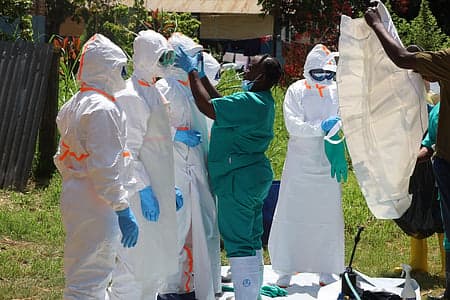
Here's what it means for you.
As the Ebola outbreak in the Democratic Republic of the Congo escalates, global health systems remain on high alert, impacting international travel and trade.
Why it matters
The outbreak poses a significant risk of international spread, which could affect global health security and economic stability.
What happened (in 30 seconds)
- Ebola outbreak declared: The Democratic Republic of the Congo (DRC) officially declared an Ebola outbreak on May 15, 2026, with the Bundibugyo strain confirmed.
- Rapid escalation: By mid-August, nearly 5,000 cases and over 2,300 deaths were reported, marking it the deadliest outbreak in DRC history.
- High spread risk: WHO warns of a high risk of further international spread due to ongoing conflict, insecurity, and population movements.
The context you actually need
- Chronic insecurity: The outbreak occurs in a region plagued by armed conflict and weak health infrastructure, complicating response efforts.
- Historical patterns: This is the 17th Ebola outbreak in DRC, following trends of previous epidemics exacerbated by displacement and cross-border movements.
- Lack of treatments: The Bundibugyo strain currently lacks approved vaccines or specific treatments, with clinical trials still ongoing.
What's really happening
The 2026 Ebola outbreak in the Democratic Republic of the Congo has rapidly escalated into a public health crisis, primarily affecting the northeastern provinces of Ituri, Haut-Uele, Nord-Kivu, Sud-Kivu, and Tshopo. Declared on May 15, 2026, the outbreak was confirmed after laboratory tests identified the Bundibugyo strain of the virus. This strain is particularly concerning as it lacks approved vaccines or specific treatments, leaving health authorities with limited options for containment.
By late May, the World Health Organization (WHO) declared the situation a Public Health Emergency of International Concern (PHEIC), highlighting the outbreak's potential for widespread impact. The speed of transmission has been alarming; within three months, the number of cases surged to seven times more than the initial phase of the 2013-2016 West Africa epidemic, with five times the number of deaths. As of August 19, 2026, the DRC reported nearly 5,290 confirmed cases and 2,516 deaths, making it the deadliest Ebola outbreak in the country's history.
The outbreak's dynamics are exacerbated by ongoing conflict and insecurity in the region, which hinder effective health responses. Armed groups and a weak state presence have created an environment where health infrastructure is inadequate, making it difficult to implement effective surveillance and containment measures. Additionally, population movements due to conflict and economic necessity have facilitated the virus's spread across borders, with confirmed cases already reported in Uganda.
WHO emergency committee meetings have underscored the importance of enhanced surveillance and decentralized response efforts. The organization has called for international cooperation to bolster health systems and improve cross-border preparedness. The DRC and Ugandan governments have ramped up their efforts, focusing on surveillance, contact tracing, and community engagement, supported by WHO and other partners. The U.S. has also stepped in, providing over $162 million in assistance for response efforts and humanitarian aid.
Despite these efforts, the situation remains precarious. The lack of approved vaccines and treatments for the Bundibugyo strain means that health authorities are relying on traditional containment measures, which may not be sufficient given the outbreak's rapid escalation. The ongoing conflict and instability in the region further complicate these efforts, making it crucial for the international community to remain vigilant and responsive.
Who feels it first (and how)
- Health workers: Increased risk of exposure and burnout due to high case loads and inadequate resources.
- Local communities: Direct impact from illness and loss of life, alongside economic disruptions.
- International travelers: Heightened health screenings and potential travel restrictions as countries respond to the outbreak.
- Aid organizations: Increased demand for resources and support in managing the outbreak and its consequences.
What to watch next
- International response: Monitor how countries and organizations mobilize resources and support for containment efforts, which could influence global health policies.
- Case trends: Watch for changes in case numbers and mortality rates, as these will indicate the outbreak's trajectory and effectiveness of response measures.
- Vaccine developments: Keep an eye on clinical trials for potential vaccines or treatments for the Bundibugyo strain, which could alter the outbreak's management.
The outbreak is ongoing, with high case numbers and mortality rates reported.
Continued international cooperation and support will be necessary to manage the outbreak and prevent further spread.
The long-term impact on regional health systems and economies remains uncertain, particularly if the outbreak continues to escalate.
Frequently Asked Questions
- Why it matters?
- The outbreak poses a significant risk of international spread, which could affect global health security and economic stability.
- What happened (in 30 seconds)?
- Ebola outbreak declared: The Democratic Republic of the Congo (DRC) officially declared an Ebola outbreak on May 15, 2026, with the Bundibugyo strain confirmed. Rapid escalation: By mid-August, nearly 5,000 cases and over 2,300 deaths were reported, marking it the deadliest outbreak in DRC history. High spread risk: WHO warns of a high risk of further international spread due to ongoing conflict, insecurity, and population movements.
- What's really happening?
- The 2026 Ebola outbreak in the Democratic Republic of the Congo has rapidly escalated into a public health crisis, primarily affecting the northeastern provinces of Ituri, Haut-Uele, Nord-Kivu, Sud-Kivu, and Tshopo. Declared on May 15, 2026, the outbreak was confirmed after laboratory tests identified the Bundibugyo strain of the virus. This strain is particularly concerning as it lacks approved vaccines or specific treatments, leaving health authorities with limited options for containment. By
- Who feels it first (and how)?
- Health workers: Increased risk of exposure and burnout due to high case loads and inadequate resources. Local communities: Direct impact from illness and loss of life, alongside economic disruptions. International travelers: Heightened health screenings and potential travel restrictions as countries respond to the outbreak. Aid organizations: Increased demand for resources and support in managing the outbreak and its consequences.
- What to watch next?
- International response: Monitor how countries and organizations mobilize resources and support for containment efforts, which could influence global health policies. Case trends: Watch for changes in case numbers and mortality rates, as these will indicate the outbreak's trajectory and effectiveness of response measures. Vaccine developments: Keep an eye on clinical trials for potential vaccines or treatments for the Bundibugyo strain, which could alter the outbreak's management.
Comprehensive coverage of Middle Eastern and global issues.
"Al Jazeera is a prominent voice from the Global South, especially the Middle East, with an emphasis on underreported stories."
— A47 Editor
Ebola outbreak ‘growing faster, wider’ as DRC death toll passes 2,500: UN
The Ebola outbreak in the Democratic Republic of Congo (DRC) is escalating rapidly, with the death toll surpassing 2,500, as reported by the UN. This epidemic is characterized by its unprecedented spread and is exacerbated by ongoing conflict, fundin...
Global news coverage with extensive reporting on Middle Eastern conflicts and geopolitics.
"Al Jazeera is a Qatar-based broadcaster known for wide regional coverage and alternative perspectives."
— A47 Editor
Ebola outbreak ‘growing faster, wider’ as DRC death toll passes 2,500: UN
The Ebola outbreak in the Democratic Republic of Congo (DRC) is escalating rapidly, with the death toll surpassing 2,500, as reported by the UN. This epidemic is characterized by its unprecedented spread and is exacerbated by ongoing conflict, fundin...
International news, politics, and culture.
"Sky News is a UK-based 24-hour channel known for fast-breaking news and political coverage."
— A47 Editor
More than 2,500 dead in DR Congo Ebola outbreak, UN says
The Ebola outbreak in the Democratic Republic of Congo (DRC) has resulted in over 2,500 deaths, with the virus spreading to an area larger than France, according to a UN coordinator. Healthcare workers are struggling to manage the crisis as fatalitie...
Regional and international reporting focused on Middle Eastern politics, diplomacy, and economics.
"Asharq Al-Awsat is a Saudi-owned international newspaper reflecting mainstream Gulf political perspectives."
— A47 Editor
UN: DR Congo Ebola Outbreak 'Growing Exponentially'
The Ebola outbreak in the Democratic Republic of the Congo (DRC) is escalating rapidly, with the United Nations reporting that the situation is 'growing exponentially.' The outbreak has already claimed over 2,100 lives, marking it as the deadliest in...
Medical reporting with scientific depth and public service tone.
"NPR is a nonprofit media organization offering thoughtful, in-depth journalism and storytelling, often with a liberal or progressive slant."
— A47 Editor
Congo's Ebola outbreak reaches 5,000 cases as it outpaces response efforts
The Ebola outbreak in the Democratic Republic of Congo has reached a staggering 5,021 confirmed cases and 2,378 deaths, marking it as the fastest-growing epidemic in history. The rapid spread of the virus is outpacing response efforts, raising alarms...
International stories from NPR’s global desk.
"NPR is an American public media organization known for thoughtful reporting and a slightly left-leaning editorial tone."
— A47 Editor
Congo's Ebola outbreak reaches 5,000 cases as it outpaces response efforts
The Ebola outbreak in the Democratic Republic of Congo has reached a staggering 5,021 confirmed cases and 2,378 deaths, marking it as the fastest-growing epidemic in history. The rapid spread of the virus is outpacing response efforts, raising alarms...
24/7 international news from a French perspective in multiple languages.
"France 24 is viewed as a globally focused outlet with balanced coverage and a European perspective."
— A47 Editor
🔴 Ebola in DR Congo: More than 5,000 cases reported amid fears of international spread
The Democratic Republic of Congo (DRC) is currently facing a severe Ebola outbreak, with over 5,000 confirmed cases reported and significant fears of international spread. This outbreak has escalated rapidly, becoming the deadliest in the country's h...
A curated Gulf News feed featuring major stories across news, business, opinion, and lifestyle.
"Gulf News is a major UAE newspaper whose featured stories feed reflects a broad editorial mix shaped for a Gulf audience."
— A47 Editor
DR Congo Ebola outbreak 'far from being under control', poses 'high risk' of spread: WHO chief
The World Health Organization (WHO) has declared that the Ebola outbreak in the Democratic Republic of the Congo (DRC) is 'far from being under control' and poses a 'high risk' of further spread. As of now, the outbreak has resulted in 1,751 deaths a...
UAE-based newspaper covering Gulf politics, society, and international developments.
"Gulf News is one of the UAE’s most prominent English-language publications."
— A47 Editor
DR Congo Ebola outbreak 'far from being under control', poses 'high risk' of spread: WHO chief
The World Health Organization (WHO) has declared that the Ebola outbreak in the Democratic Republic of the Congo (DRC) is 'far from being under control' and poses a 'high risk' of further spread. As of now, the outbreak has resulted in 1,751 deaths a...